

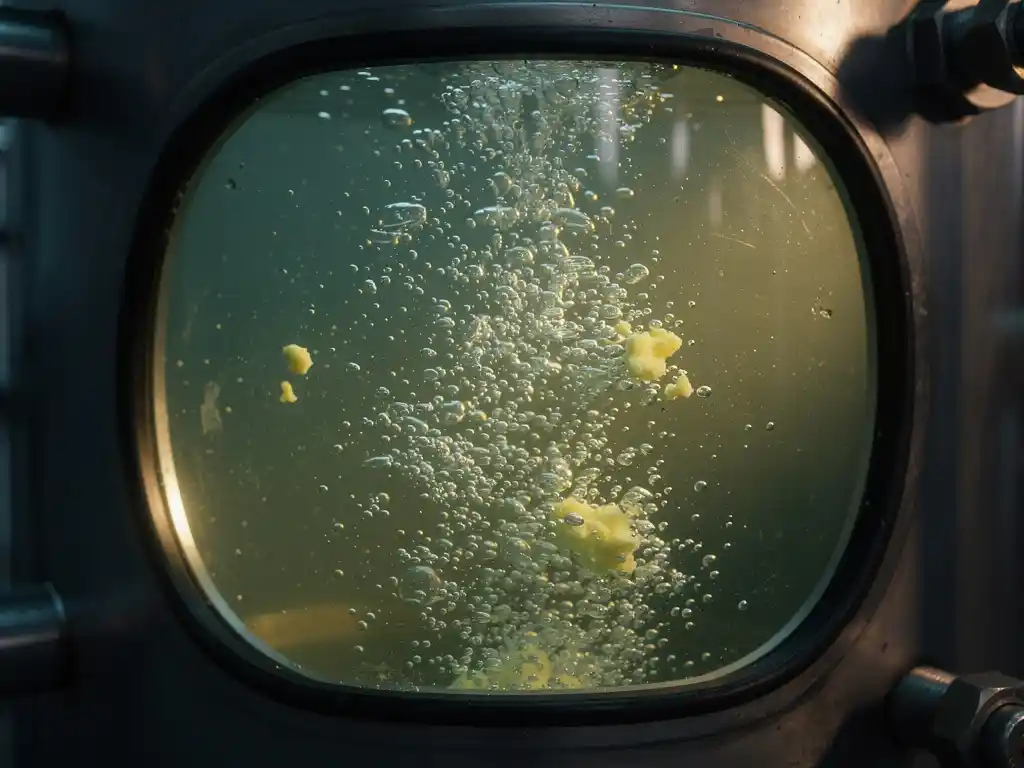
Microaeration works in biogas desulfurization by introducing small, controlled amounts of air or oxygen directly into the biogas stream or digester headspace, enabling naturally occurring sulfur-oxidizing bacteria to convert hydrogen sulfide (H₂S) into elemental sulfur. The bacteria use the oxygen to oxidize H₂S, effectively removing it from the gas before it causes corrosion, safety hazards, or equipment damage. The sections below unpack the chemistry, system types, performance factors, and limitations of this approach in practical biogas applications. If you have specific questions about your situation, feel free to get in touch with our team.
What happens to H₂S during microaeration in biogas?
During microaeration in biogas desulfurization, sulfur-oxidizing bacteria oxidize hydrogen sulfide into elemental sulfur using the small quantity of oxygen introduced into the system. The reaction converts H₂S gas into solid sulfur particles that deposit on surfaces inside the digester or biogas system, physically removing the compound from the gas phase and significantly reducing H₂S concentrations.
The key biological actors are Thiobacillus and related sulfur-oxidizing microorganisms that occur naturally in anaerobic digesters. These bacteria thrive at the interface between the anaerobic environment and the trace oxygen supplied by microaeration. They use H₂S as an electron donor and oxygen as the electron acceptor, producing elemental sulfur as the primary byproduct under oxygen-limited conditions.
The stoichiometry is straightforward: two molecules of H₂S react with one molecule of oxygen to produce two atoms of elemental sulfur and two molecules of water. Because the oxygen supply is deliberately kept very low, the reaction stops at elemental sulfur rather than continuing to sulfate. This is important for biogas quality, as sulfate formation would reintroduce sulfur compounds into the liquid phase and could potentially regenerate H₂S through sulfate-reducing bacteria already present in the digester.
In practice, microaeration can reduce H₂S concentrations from several thousand parts per million down to a few hundred, depending on operating conditions. The deposited sulfur accumulates on the digester walls, packing material, or biofilm carriers and must be managed over time to prevent excessive buildup.
What are the main types of microaeration systems used in biogas plants?
The two main types of microaeration systems used in biogas plants are digester headspace injection and external biogas recirculation systems. In headspace injection, air or pure oxygen is introduced directly above the liquid surface inside the digester. In recirculation systems, a portion of the biogas is drawn off, mixed with air or oxygen in a separate vessel or pipeline, and returned to the digester or gas train.
Digester headspace injection
Headspace injection is the simpler and more common approach, particularly in agricultural biogas plants. A small air pump or oxygen dosing unit feeds gas through a diffuser or perforated pipe positioned in the digester headspace. The bacteria colonize the liquid surface and any submerged media, forming a biofilm that intercepts the H₂S rising from the liquid. This method requires minimal additional infrastructure but offers limited control over oxygen distribution and can be sensitive to fluctuations in H₂S load.
External recirculation systems
External recirculation systems give operators more precise control over the oxygen-to-H₂S ratio. By treating a defined volume of biogas in a separate reaction vessel packed with carrier material, these systems maintain more stable conditions for the sulfur-oxidizing biofilm and are better suited to plants with higher or more variable H₂S concentrations. They are also easier to monitor and adjust without interfering with digester biology.
How does microaeration compare to chemical H₂S removal methods?
Microaeration is generally lower in operating cost and more sustainable than chemical H₂S removal methods such as iron chloride dosing or activated carbon filtration, but it offers less precise control over outlet H₂S concentrations and is slower to respond to sudden changes in gas composition. Chemical methods can achieve more consistent and lower H₂S levels, while microaeration relies on biological activity that takes time to adapt.
Iron chloride or iron oxide dosing works by precipitating iron sulfide directly in the digester liquid or on a fixed bed. It is effective and reliable but generates chemical waste, requires ongoing reagent procurement, and adds operational cost. Activated carbon adsorption can reduce H₂S to very low levels, but the carbon media saturates and must be replaced or regenerated, making it expensive at scale.
Microaeration avoids consumable chemicals entirely. The bacteria are self-sustaining as long as conditions remain suitable, and the elemental sulfur byproduct is largely inert and manageable. For biogas plants targeting moderate H₂S reductions, the biological route offers a compelling cost and simplicity advantage. However, when outlet H₂S must reliably stay below strict thresholds for grid injection or sensitive equipment, chemical polishing steps are often added downstream of microaeration rather than used as a standalone alternative.
For more demanding applications involving sour gas streams with complex compositions, biological desulfurization technologies like THIOPAQ O&G integrate gas sweetening with sulfur recovery in a single unit, going well beyond what simple microaeration can achieve.
What factors affect microaeration performance in biogas desulfurization?
Microaeration performance in biogas desulfurization is primarily affected by the oxygen dosing rate, the H₂S concentration in the incoming gas, temperature, pH, and the availability of biofilm surface area for bacterial colonization. Getting the oxygen-to-H₂S ratio right is the most critical operational variable, as too little oxygen leaves H₂S unreacted while too much risks oxidizing methane or pushing the reaction toward sulfate rather than elemental sulfur.
- Oxygen dosing rate: The ratio of oxygen supplied to H₂S present determines both removal efficiency and the form of sulfur produced. Operators typically target a molar ratio that favors elemental sulfur formation, which requires careful monitoring and adjustment.
- H₂S inlet concentration: Higher inlet concentrations require proportionally more oxygen and more active biofilm. Plants with highly variable feedstocks, such as co-digesters accepting multiple waste streams, can experience H₂S spikes that overwhelm a fixed microaeration setup.
- Temperature: Sulfur-oxidizing bacteria are most active within the mesophilic range typical of most digesters. Thermophilic digesters operating above 50°C can reduce bacterial activity and lower removal efficiency.
- pH: The biofilm bacteria prefer slightly acidic to neutral conditions. A pH shift in the digester liquid can inhibit bacterial activity and reduce H₂S oxidation rates.
- Biofilm surface area: Systems with structured packing or carrier media provide more surface for bacterial colonization, improving contact between the bacteria, H₂S, and oxygen. Bare digester walls offer less surface and less consistent performance.
- Retention time: The longer the biogas is in contact with the active biofilm under the right oxygen conditions, the greater the H₂S reduction achieved.
Reliable H₂S measurement is essential for tuning microaeration correctly. Without accurate, continuous hydrogen sulfide detection at the digester outlet, operators cannot know whether the oxygen dose is adequate or whether conditions have shifted. An H₂S meter or H₂S detector positioned downstream of the treatment zone provides the data needed to adjust dosing in real time and avoid both underperformance and methane dilution.
When is microaeration not sufficient for biogas desulfurization?
Microaeration is not sufficient for biogas desulfurization when H₂S concentrations are very high, when outlet gas must meet strict pipeline or grid injection specifications, when the biogas contains other sulfur compounds beyond H₂S, or when the application requires consistent, verifiable hydrogen sulfide levels below a defined threshold value that biological variability cannot reliably guarantee.
Several specific scenarios push beyond what microaeration can handle on its own:
- High-sulfur feedstocks: Digesters processing protein-rich or sulfate-rich materials such as slaughterhouse waste, certain industrial effluents, or high-sulfate manures can generate H₂S concentrations that exceed the practical treatment capacity of a microaeration system without very large biofilm areas and tightly controlled dosing.
- Grid injection requirements: Natural gas grid operators typically impose very low H₂S threshold values, often in the single-digit parts per million range. Microaeration alone rarely achieves these levels consistently, and a downstream polishing step using chemical or advanced biological treatment becomes necessary.
- CHP engine protection: Combined heat and power engines are sensitive to hydrogen sulfide, and engine manufacturers often specify maximum H₂S concentrations that microaeration may not reliably meet during load swings or feedstock changes.
- Sour gas and refinery applications: In oil and gas processing, gas streams with high H₂S content and complex compositions require dedicated sour gas treatment technologies. Microaeration is a digester-scale tool and is not designed for the high-pressure, high-concentration environments encountered in upstream gas processing or refinery fuel gas systems.
When microaeration reaches its limits, more advanced biogas cleaning and upgrading technologies take over. Biological desulfurization processes that operate in dedicated reactors with precise control over bacterial activity, oxygen supply, and sulfur removal offer a step change in performance for demanding applications. Understanding where microaeration ends and where more robust gas treatment begins is essential for designing a reliable biogas desulfurization strategy. To discuss which approach fits your specific gas composition and outlet requirements, get in touch with Paqell, and we will help you find the right solution.
Frequently Asked Questions
How do I know if microaeration is working correctly in my biogas plant?
The most reliable indicator is continuous H₂S measurement at the digester outlet — if concentrations are falling within the expected range and remaining stable, the system is performing as intended. You should also monitor oxygen levels in the biogas to confirm they remain below 1–2% by volume, which indicates the dosing rate is controlled and methane dilution is not occurring. Unexpected spikes in H₂S, rising oxygen content, or a drop in methane percentage are all warning signs that the oxygen-to-H₂S ratio needs adjustment.
What are the most common mistakes operators make when setting up microaeration?
The most frequent mistake is overdosing oxygen in an attempt to achieve faster or deeper H₂S removal, which risks diluting the methane content, pushing sulfur oxidation toward sulfate, and potentially disrupting the anaerobic digestion process itself. Underdosing is equally common and results in poor H₂S removal while giving operators a false sense that the system is running. A third common error is neglecting biofilm management — failing to monitor or periodically clean accumulated elemental sulfur from surfaces can eventually restrict gas flow or reduce bacterial activity.
How long does it take for a new microaeration system to reach full H₂S removal performance?
A new microaeration system typically requires a startup period of two to six weeks before the sulfur-oxidizing biofilm is sufficiently established to deliver consistent H₂S removal. During this period, H₂S reduction will be partial and variable as bacterial populations colonize the available surfaces and adapt to the local conditions. Providing structured packing or carrier media from the outset can shorten this startup phase by giving bacteria more surface area to colonize quickly.
Can microaeration be combined with other desulfurization methods for better results?
Yes, and this is actually a common approach in plants that need to meet strict outlet H₂S specifications. Microaeration is often used as a cost-effective first stage to reduce H₂S from several thousand ppm down to a few hundred, followed by a chemical polishing step such as activated carbon adsorption or iron oxide filtration to achieve the final low-concentration target. This staged approach reduces the load on the downstream chemical treatment, extending media life and lowering overall operating costs compared to relying on chemical methods alone.
Does microaeration affect methane content or overall biogas quality?
Microaeration can dilute the methane content of biogas if the air or oxygen dosing rate is not carefully controlled, since any nitrogen introduced with air remains in the gas stream and reduces the calorific value. Using pure oxygen instead of air eliminates the nitrogen dilution problem and allows tighter control over the dosing volume. Provided the oxygen dose is correctly sized relative to the H₂S load, the impact on methane content is minimal and well within acceptable limits for most biogas applications.
What should I do if H₂S levels spike unexpectedly despite running microaeration?
An unexpected H₂S spike usually signals a change in feedstock composition, an increase in organic loading, or a disruption to the biofilm caused by a pH or temperature shift in the digester. The first step is to check whether the oxygen dosing rate is still proportional to the new H₂S load and increase it incrementally if needed, while monitoring biogas oxygen content to avoid overdosing. If spikes are frequent due to variable feedstocks, consider upgrading to an external recirculation system with automated oxygen control, which responds more reliably to fluctuating H₂S concentrations than a fixed headspace injection setup.
Is microaeration suitable for small-scale or farm biogas plants, or is it mainly for large industrial digesters?
Microaeration is particularly well suited to small and medium-scale agricultural biogas plants precisely because of its simplicity and low cost — a basic headspace injection setup requires only a small air pump, a timer or flow controller, and minimal maintenance. Large industrial digesters can also use microaeration, but they are more likely to require external recirculation systems with tighter process control to handle higher and more variable H₂S loads. For very large or high-specification applications, dedicated biological desulfurization reactors offer a more robust and scalable solution than microaeration alone.
