

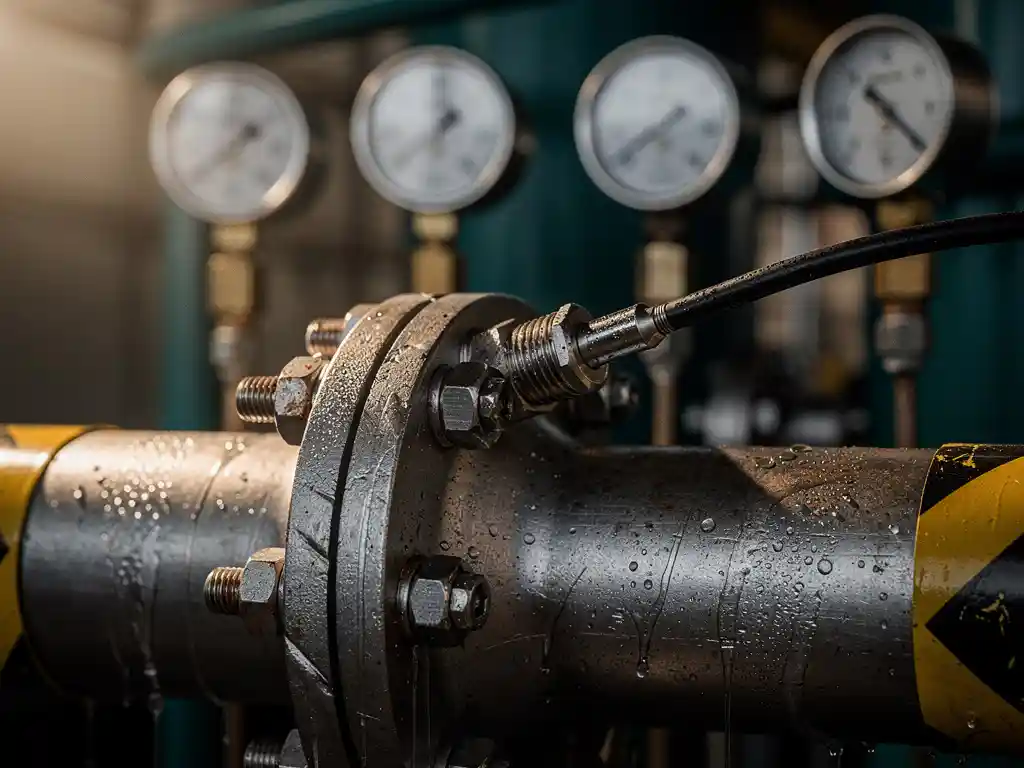
H2S measurement is the process of detecting and quantifying hydrogen sulfide concentration in a gas stream, typically expressed in parts per million (ppm), parts per billion (ppb), milligrams per cubic meter (mg/m³), or volume percentage (vol%). The method used depends on the expected concentration range, the composition of the gas, and the purpose of the measurement. If you have specific questions about H2S measurement in your operations, feel free to get in touch with Paqell’s team. The sections below cover the most common questions about measurement units, conversion, safety thresholds, and the factors that affect accuracy.
How is H2S concentration measured in gas streams?
H2S concentration in gas streams is measured using electrochemical sensors, colorimetric tubes, optical analyzers, or continuous online gas analyzers, depending on the required accuracy, concentration range, and process conditions. Each method detects hydrogen sulfide using a different physical or chemical principle, and the right choice depends on whether you need a portable spot check or continuous process monitoring.
In oil and gas operations, continuous online analyzers are the standard for process streams. Technologies such as UV fluorescence, lead acetate tape analyzers, and tunable diode laser absorption spectroscopy (TDLAS) are widely used. These instruments provide real-time readings and can be integrated directly into control systems for automated responses.
For personal safety monitoring, portable H2S detectors using electrochemical cells are the most common tool. Workers carry these devices in areas where hydrogen sulfide may be present, and the detector triggers an alarm when concentrations approach dangerous thresholds. In field applications such as sour gas treatment or biogas upgrading, both personal monitors and fixed-point detectors are typically deployed together.
What units are used to express H2S levels?
H2S levels are most commonly expressed in parts per million (ppm) or parts per billion (ppb) for low concentrations, milligrams per cubic meter (mg/m³) for occupational and environmental reporting, and volume percentage (vol%) for high-concentration process streams such as sour gas or acid gas.
The choice of unit depends on context. Safety and occupational health standards almost universally use ppm because it is practical for the concentration ranges relevant to human exposure. Process engineers working with gas sweetening or sulfur recovery systems often work in vol% or mol% because the concentrations in raw sour gas can reach several percent by volume.
In biogas desulfurization applications, ppm is the dominant unit because hydrogen sulfide in biogas typically ranges from a few hundred to several thousand ppm before treatment. After biological desulfurization, concentrations can be reduced to single-digit ppm levels, making the unit well-suited to the measurement range.
How do you convert between H2S measurement units?
Converting between H2S measurement units requires knowing the molecular weight of hydrogen sulfide (34.08 g/mol) and the conditions under which the gas is measured. At standard conditions (0°C and 1 atm), 1 ppm of H2S is approximately equal to 1.54 mg/m³. At 25°C and 1 atm, 1 ppm equals approximately 1.42 mg/m³.
The most frequently needed conversions are:
- ppm to mg/m³ (at 25°C): multiply ppm by 1.42
- mg/m³ to ppm (at 25°C): divide mg/m³ by 1.42
- ppm to vol%: divide ppm by 10,000
- vol% to ppm: multiply vol% by 10,000
- ppb to ppm: divide ppb by 1,000
Temperature and pressure affect the mg/m³ conversion because gas volume changes with conditions, while ppm and vol% are dimensionless ratios that remain constant regardless of temperature and pressure. When comparing measurements from different instruments or reporting frameworks, always verify which reference conditions apply to avoid errors in compliance reporting or process control decisions.
What H2S levels are considered dangerous or acceptable?
H2S becomes dangerous to human health at concentrations above 10 ppm with prolonged exposure, and it is immediately life-threatening above 100 ppm. Regulatory bodies set occupational exposure limits (OELs) that define acceptable levels for workers, typically between 1 and 5 ppm as a time-weighted average and 10 to 15 ppm as a short-term exposure limit.
Key thresholds widely recognized in occupational health and industry guidelines include:
- 0.01 to 1.5 ppm: Detectable by smell; the characteristic rotten egg odor of hydrogen sulfide is noticeable in this range
- 2 to 5 ppm: Typical occupational exposure limits for an 8-hour working day in many jurisdictions
- 10 to 20 ppm: Eye and respiratory irritation begins; short-term exposure limits are often set here
- 50 to 100 ppm: Serious health effects including loss of smell (olfactory fatigue), making the gas undetectable by scent alone
- Above 100 ppm: Rapidly incapacitating; hydrogen sulfide poisoning can occur within minutes
- 500 ppm and above: Immediately dangerous to life and health (IDLH); unconsciousness and death can occur within minutes
A critical hazard of hydrogen sulfide inhalation at high concentrations is that the sense of smell is overwhelmed and the gas becomes undetectable by odor alone. This makes relying on the hydrogen sulfide smell as a warning signal extremely dangerous at elevated concentrations. Continuous H2S detection equipment is therefore essential in any environment where concentrations could rise unpredictably.
Why does H2S measurement accuracy matter in oil and gas operations?
Accurate H2S measurement matters in oil and gas operations because it directly affects worker safety, regulatory compliance, process efficiency, and equipment integrity. An inaccurate reading can mean the difference between a safe working environment and a life-threatening hydrogen sulfide exposure, or between a compliant gas product and one that damages pipelines and downstream equipment.
From a process perspective, H2S concentration data drives decisions in gas sweetening and sulfur recovery systems. If a hydrogen sulfide meter under-reads, a desulfurization unit may be operated at insufficient capacity, allowing H2S to pass through into product gas above specification. Over-reading can lead to unnecessary chemical consumption or oversized treatment systems.
Accurate measurement is also essential for verifying the performance of H2S removal technologies. In biological desulfurization processes, inlet and outlet H2S concentrations are continuously monitored to confirm that removal efficiency meets target specifications and to detect any process upsets early. The THIOPAQ O&G technology by Paqell, for example, relies on reliable concentration data to maintain optimal biological activity and sulfur recovery performance.
What factors affect the accuracy of H2S measurements?
The accuracy of H2S measurements is affected by sensor technology, cross-interference from other gases, temperature and pressure conditions, calibration frequency, and the physical condition of the measurement equipment. Understanding these factors is essential for anyone relying on H2S detection data for safety or process control decisions.
Sensor and instrument limitations
Electrochemical sensors used in portable H2S detectors are sensitive to temperature extremes and humidity, both of which can shift the baseline reading. They also have a finite lifespan and degrade over time, meaning a sensor that was accurate when new may give unreliable readings months later without recalibration or replacement. Optical methods such as TDLAS are less susceptible to these effects but require clean optical paths and precise alignment.
Cross-interference from other compounds
Many gases that co-occur with hydrogen sulfide in oil and gas or biogas streams can interfere with measurement. Carbon dioxide, methane, sulfur dioxide, and volatile organic compounds can all affect certain sensor types, either suppressing or amplifying the H2S reading. In complex gas matrices such as refinery fuel gas or raw biogas, selecting an analyzer with appropriate selectivity for the specific gas composition is critical for obtaining reliable data.
Sampling system design also plays a significant role. Condensation in sample lines, reactive surfaces in tubing, and inadequate flow rates can all cause H2S to be absorbed or react before it reaches the analyzer, leading to systematically low readings. Regular maintenance, appropriate materials selection, and consistent calibration against certified reference gas mixtures are the practical foundations of accurate H2S measurement in demanding process environments.
Reliable H2S measurement is a prerequisite for safe and efficient gas treatment operations. Whether you are evaluating measurement equipment, reviewing your detection setup, or exploring biological desulfurization solutions, get in touch with Paqell to discuss your specific requirements.
Frequently Asked Questions
How often should H2S detection equipment be calibrated?
Calibration frequency depends on the instrument type, the operating environment, and applicable regulatory requirements, but a general best practice is to perform bump tests daily and full calibrations at least every 3 to 6 months for electrochemical sensors in demanding environments. Portable detectors used in high-risk areas should be bump-tested before each use to confirm the sensor responds correctly. Always follow the manufacturer’s recommendations and any site-specific safety protocols, and replace sensors that fail to meet calibration tolerances rather than adjusting readings manually.
What is the difference between a fixed-point H2S detector and a portable one, and when should each be used?
Fixed-point detectors are permanently installed at specific locations where H2S release is most likely — such as near flanges, valves, or process equipment — and provide continuous monitoring with integration into plant alarm and control systems. Portable detectors are worn by individual workers and provide personal protection as they move through different areas of a facility. Best practice in sour gas treatment, biogas upgrading, and similar operations is to use both: fixed detectors for area monitoring and early warning, and personal monitors as a last line of defense for individual workers.
Can I rely on the smell of rotten eggs as a warning sign for H2S exposure?
No — relying on odor alone is dangerous and should never be used as a primary safety measure. While hydrogen sulfide is detectable by smell at very low concentrations (as low as 0.01 ppm), olfactory fatigue sets in at concentrations above roughly 50–100 ppm, causing the sense of smell to shut down entirely. This means that at the concentrations most likely to cause serious harm, the gas becomes completely odorless, giving no warning at all. Continuous electronic detection equipment is the only reliable safeguard.
What are the most common mistakes made when setting up an H2S sampling system?
The most frequent errors involve the sampling line itself: using materials such as certain plastics or uncoated metals that react with or absorb H2S, allowing condensation to form in sample lines, and running sample lines at insufficient flow rates that allow the gas to react before reaching the analyzer. These issues consistently produce artificially low readings, which is particularly dangerous in safety-critical applications. Using inert materials such as PTFE or stainless steel, heat-tracing sample lines, and maintaining adequate purge flow rates are the key steps to avoiding these systematic errors.
How do I know which H2S analyzer technology is right for my specific application?
The right technology depends on four main factors: the concentration range you need to measure, the composition of the gas matrix, whether you need continuous online monitoring or periodic spot checks, and the required measurement accuracy. For trace-level detection in clean gas streams, TDLAS or UV fluorescence analyzers offer high selectivity and sensitivity. For complex gas matrices with interfering compounds, a technology with high chemical selectivity — such as TDLAS — is preferable over electrochemical sensors. Consulting with a gas treatment specialist who understands your process conditions is the most reliable way to match the analyzer to the application.
What H2S concentration limits typically apply to pipeline-quality or product gas specifications?
Pipeline operators and end-user specifications for natural gas typically require H2S concentrations below 4 ppm (approximately 5.7 mg/m³), though limits as low as 1 ppm are required in some markets or for specific downstream applications such as fuel cells or certain chemical processes. Biogas used for injection into the gas grid or for combined heat and power (CHP) applications is similarly subject to strict H2S limits, often in the range of 5 to 200 ppm depending on the jurisdiction and end use. Always verify the specific specification that applies to your gas product, as non-compliance can cause equipment damage, regulatory penalties, or contract violations.
How does biological desulfurization affect H2S measurement requirements compared to chemical treatment methods?
Biological desulfurization processes such as THIOPAQ Ou0026G require continuous, accurate inlet and outlet H2S monitoring because the biological activity of the sulfur-oxidizing bacteria responds dynamically to changes in H2S load, nutrient supply, and operating conditions. This means measurement data is used not just for compliance verification but as an active process control input. Chemical scavenging methods, by contrast, are often managed based on chemical dosing rates rather than real-time gas analysis, though outlet monitoring is still recommended to confirm performance. The higher process sensitivity of biological systems makes reliable, low-drift analyzers especially important.
Related Articles
- What are the environmental benefits of gas sweetening in oil and gas?
- What is hydrogen sulfide and where does it come from?
- What is a quick scan for H2S removal technology selection?
- How does desulfurization reduce corrosion in downstream equipment?
- What are the physical and chemical properties of hydrogen sulfide?
Related Articles
- What is the role of sour gas treatment in LNG production?
- How does hydrogen sulfide removal reduce operational downtime?
- How does activated carbon desulfurization compare to biological methods?
- How do hydrogen sulfide hazards differ between indoor and outdoor environments?
- What to do after inhaling H2S?
