

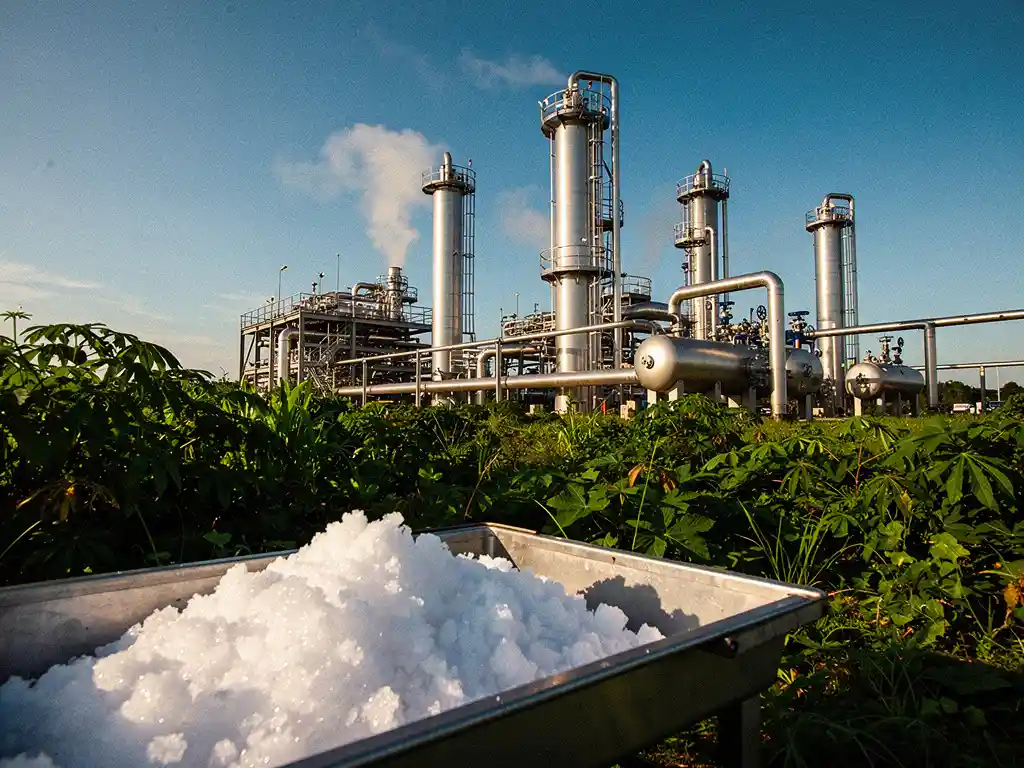
Gas sweetening delivers significant environmental benefits by removing hydrogen sulfide and other sulfur compounds from sour gas before it enters pipelines, processing facilities, or combustion systems. Without this treatment, burning or venting sour gas releases sulfur dioxide and other toxic compounds directly into the atmosphere, contributing to air pollution, acid rain, and serious health hazards. The sections below unpack each environmental dimension in detail, from the pollutants removed to the long-term consequences of skipping treatment entirely. If you have specific questions about your application, feel free to get in touch, and we are happy to help.
How does gas sweetening reduce harmful emissions?
Gas sweetening reduces harmful emissions by converting or removing sulfur compounds, primarily hydrogen sulfide, before the gas is burned or distributed. When sour gas combusts without prior treatment, hydrogen sulfide oxidizes into sulfur dioxide, a potent air pollutant. By treating the gas upstream, sweetening prevents those emissions from ever forming, rather than capturing them after the fact.
The environmental logic is straightforward: removing H₂S at the source is far more effective than attempting to scrub exhaust gases after combustion. Treated gas burns cleanly, producing primarily carbon dioxide and water vapor rather than a mixture that includes sulfur oxides. This upstream intervention is what makes gas sweetening one of the most impactful emission-reduction steps available in sour gas treatment operations.
Beyond sulfur dioxide, sweetening also reduces the risk of fugitive emissions. Sour gas that leaks from pipelines or equipment releases hydrogen sulfide directly into the surrounding environment. Sweetened gas, by contrast, carries a dramatically lower toxic burden if containment is ever compromised.
What pollutants does gas sweetening remove from sour gas?
Gas sweetening primarily removes hydrogen sulfide from sour gas, but depending on the process used, it can also address carbon dioxide, mercaptans, and other sulfur-containing compounds. Hydrogen sulfide is the dominant target because of its toxicity, corrosivity, and its tendency to form sulfur dioxide when combusted. Removing it is both an environmental and a safety priority.
In natural gas and refinery streams, the concentration of H₂S can range from trace amounts to several percent by volume. At any concentration, uncontrolled release poses risks. Beyond H₂S, sour gas often contains:
- Carbon dioxide (CO₂): A greenhouse gas that, when present in high concentrations, reduces the calorific value of the gas and contributes to climate impact if vented.
- Mercaptans (thiols): Organic sulfur compounds with extremely low odor thresholds and environmental persistence.
- Carbonyl sulfide (COS): A sulfur compound that can form during processing and contributes to acid rain precursors if released.
By targeting these compounds through desulfurization, gas sweetening ensures that the treated gas stream meets quality specifications while protecting the surrounding environment from chronic low-level contamination.
What happens to the sulfur recovered during gas sweetening?
The sulfur recovered during gas sweetening is converted into solid elemental sulfur, which can be reused as a valuable material rather than disposed of as waste. This closed-loop outcome is one of the most environmentally attractive features of modern sulfur recovery processes, turning a hazardous byproduct into a usable resource.
Elemental sulfur recovered from gas treatment has well-established downstream uses. Its most common destination is agriculture, where it serves as a soil amendment and fertilizer ingredient. Sulfur is an essential plant nutrient, and recovered elemental sulfur meets the quality requirements for this application directly.
In biological desulfurization processes like THIOPAQ O&G, natural bacteria convert H₂S into solid elemental sulfur within a single integrated unit. The sulfur produced is non-hazardous, stable, and ready for agricultural or industrial use without further chemical processing. This stands in contrast to processes that produce sulfuric acid or other sulfur compounds requiring additional handling steps. You can explore the range of gas treatment applications where sulfur recovery is integrated into the treatment process.
How does biological gas sweetening compare to chemical methods environmentally?
Biological gas sweetening has a lower environmental footprint than most chemical methods because it uses naturally occurring bacteria as the catalyst, eliminating the need for hazardous reagents and producing a benign solid byproduct. Chemical methods such as amine scrubbing followed by a Claus unit are effective but involve more complex chemical inputs, higher energy consumption, and more demanding waste streams.
Reagent use and waste generation
Chemical sweetening processes typically require continuous dosing of amines, caustics, or other chemical solvents. These reagents must be regenerated or replaced, and their degradation products can create disposal challenges. Biological processes, by contrast, rely on microorganisms that self-regulate and sustain themselves, requiring only minimal nutrients and no hazardous chemical additions.
Energy consumption and byproduct quality
Amine-based systems require significant thermal energy to regenerate the solvent, contributing to the overall carbon footprint of the operation. Biological systems operate at ambient temperatures and pressures, reducing energy demand substantially. The elemental sulfur produced biologically is also cleaner and more directly usable than the sulfur compounds generated in some chemical pathways, reducing the burden on downstream processing and disposal infrastructure.
Does gas sweetening help companies meet environmental regulations?
Yes, gas sweetening directly supports compliance with environmental regulations that govern sulfur emissions, air quality, and the handling of toxic gases. In most jurisdictions, pipeline specifications, combustion standards, and workplace safety regulations all set strict limits on H₂S content, making sour gas treatment a regulatory requirement rather than an optional upgrade.
In 2026, regulatory pressure on sulfur emissions continues to tighten across major oil and gas producing regions. Emission trading schemes, national air quality standards, and international frameworks increasingly require operators to demonstrate measurable reductions in sulfur oxide emissions. Gas sweetening is the primary technical mechanism through which those reductions are achieved.
Beyond direct emission limits, environmental permitting for new or expanded facilities often requires operators to demonstrate best available techniques for pollution control. Biological desulfurization technologies are recognized as low-impact, proven solutions that satisfy these requirements while offering favorable cost profiles. For operators assessing their compliance position, a technology scan can help identify the most suitable treatment approach for a specific gas stream.
What are the long-term environmental impacts of not sweetening sour gas?
Not sweetening sour gas leads to persistent, compounding environmental damage over time. Chronic hydrogen sulfide emissions degrade air quality, harm ecosystems, corrode infrastructure, and expose communities near production sites to serious health risks. The longer sour gas goes untreated, the broader and harder to reverse those impacts become.
Acid rain is one of the most well-documented long-term consequences. When sulfur dioxide from combusted sour gas reacts with atmospheric moisture, it forms sulfuric acid, which deposits on soils, water bodies, and vegetation over wide geographic areas. Repeated acid deposition acidifies soils and freshwater ecosystems, reducing biodiversity and impairing agricultural productivity over years and decades.
Infrastructure corrosion is another slow-moving but serious consequence. Hydrogen sulfide is highly corrosive to metals, and untreated sour gas accelerates the degradation of pipelines, processing equipment, and storage facilities. Corroded infrastructure increases the risk of uncontrolled releases, which in turn amplify environmental exposure. The cumulative cost of deferred treatment, measured in equipment failure, remediation, and environmental liability, consistently exceeds the cost of installing proper desulfurization from the outset.
Communities located near sour gas operations face long-term health impacts from hydrogen sulfide inhalation even at sub-acute concentrations. Chronic low-level exposure is associated with respiratory and neurological effects, making the absence of gas sweetening a public health issue as well as an environmental one. Taking action early is always the more responsible and cost-effective path. Get in touch to discuss how biological gas sweetening can address your specific sour gas challenges.
Frequently Asked Questions
How do I know if my gas stream requires sweetening before it can be used or transported?
The clearest indicator is measuring the H₂S concentration in your gas stream against the applicable pipeline or end-use specifications, which typically set maximum H₂S limits in the range of 4–6 ppm for sales gas. If your gas exceeds those thresholds, sweetening is required before distribution or combustion. A gas composition analysis combined with a review of your local regulatory requirements will tell you both whether treatment is needed and how aggressive that treatment needs to be.
Can gas sweetening technology be retrofitted to an existing facility, or does it require a greenfield installation?
Most gas sweetening technologies, including biological desulfurization systems, are designed to integrate with existing infrastructure and can be retrofitted without requiring a complete facility rebuild. The key factors to assess are available footprint, inlet gas composition, pressure conditions, and the current processing setup. A technology scan of your specific gas stream and site conditions is the most reliable way to determine which solution fits your existing layout and operational constraints.
What happens if H₂S concentrations in the gas stream fluctuate significantly over time?
Variable H₂S concentrations are a common operational reality, and modern sweetening systems are designed to handle a degree of fluctuation without losing performance. Biological systems are particularly well-suited to variable loads because the microbial population can adapt to changing sulfur inputs within certain ranges. However, extreme or rapid swings in H₂S content may require buffer capacity, flow controls, or system sizing adjustments to ensure consistent treated-gas quality — all factors that should be addressed during the design phase.
Is the elemental sulfur recovered from gas sweetening actually marketable, or is it difficult to sell?
Elemental sulfur recovered from gas sweetening has a well-established and active global market, with agriculture representing the largest demand segment as a soil amendment and fertilizer input. The marketability of your recovered sulfur depends on its purity, form (prilled, granular, or slurry), and proximity to agricultural or industrial buyers. Biologically produced elemental sulfur is typically high-purity and non-hazardous, which makes it straightforward to handle and positions it favorably for direct sale without additional chemical processing.
How does gas sweetening contribute to a company's broader ESG or sustainability reporting?
Gas sweetening generates measurable, quantifiable emission reductions — specifically in sulfur dioxide and hydrogen sulfide — that can be directly reported under environmental performance metrics in ESG frameworks such as GRI, SASB, or company-specific sustainability targets. Beyond emissions data, the adoption of low-impact technologies like biological desulfurization demonstrates alignment with best available techniques standards, which strengthens the governance and environmental credibility of a sustainability report. For operators under investor or regulatory scrutiny, documented desulfurization performance is increasingly expected as a baseline disclosure.
What are the most common mistakes operators make when selecting a gas sweetening technology?
One of the most frequent mistakes is selecting a technology based on H₂S removal efficiency alone, without accounting for the full gas composition, including CO₂, mercaptans, and water content, which can significantly affect process performance and byproduct quality. Another common error is underestimating the total cost of ownership of chemical-based systems, particularly the ongoing reagent costs, waste disposal requirements, and energy consumption for solvent regeneration. Evaluating technologies against the complete operational and environmental profile of your gas stream, rather than headline removal rates, leads to far better long-term outcomes.
Are there gas sweetening solutions suitable for smaller or remote operations that cannot support large processing infrastructure?
Yes, compact and modular gas sweetening units are specifically designed for smaller flow rates, remote locations, and operations where large-scale infrastructure is impractical. Biological desulfurization systems, in particular, are available in skid-mounted configurations that require minimal utilities, no hazardous chemical supply chains, and low maintenance overhead — making them well-suited for offshore platforms, remote wellheads, or smaller biogas facilities. The key is matching the technology scale and design to the actual gas volumes and site conditions rather than defaulting to oversized solutions built for large refineries.
Related Articles
Related Articles
- What is a hydrogen sulfide meter and when do you need one on site?
- How is desulfurization applied in biogas upgrading to biomethane?
- What is sour gas desulfurization and how does it differ from sweet gas treating?
- How does H2S form in crude oil refining?
- At what concentration does H2S become immediately life-threatening?
