

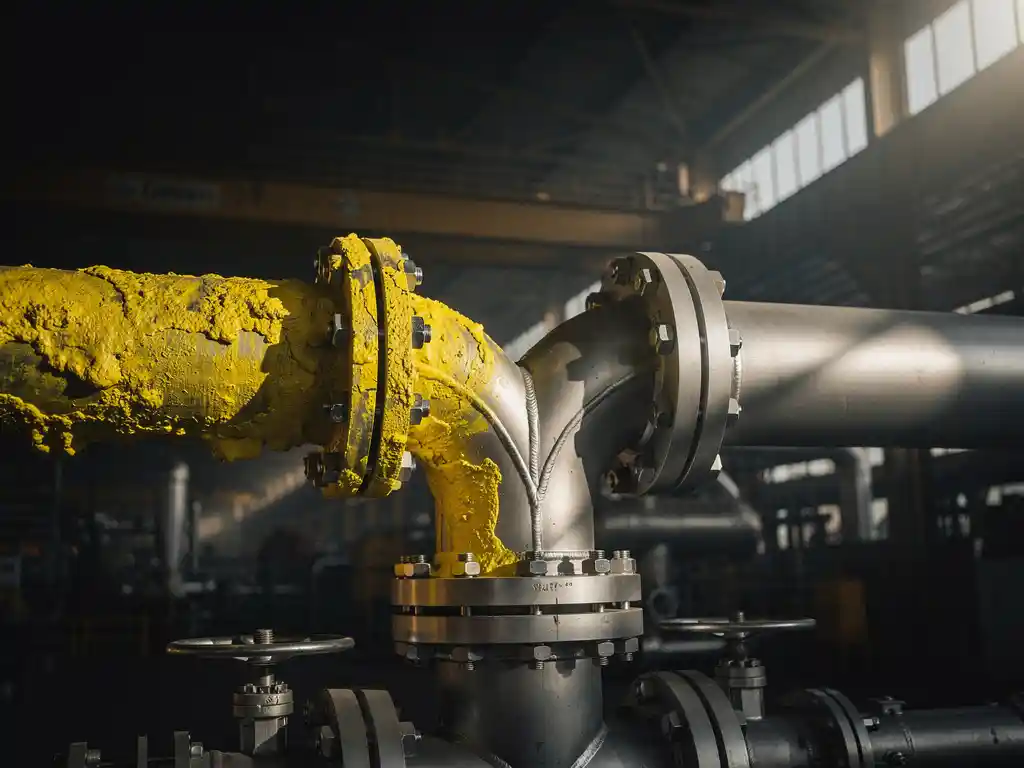
The difference between H2S removal and total sulfur removal in gas treatment comes down to scope. H2S removal targets hydrogen sulfide specifically, while total sulfur removal addresses all sulfur-containing compounds present in a gas stream, including mercaptans, carbonyl sulfide (COS), carbon disulfide (CS₂), and other organic sulfur species. For many upstream applications, removing H2S is sufficient, but pipeline specifications, downstream processing requirements, and end-use standards often demand that every trace of sulfur be eliminated. This article walks through the key distinctions, the technologies involved, and how to determine which approach your application requires. If you have a specific gas treatment challenge, feel free to get in touch, and we are happy to help you find the right solution.
What types of sulfur compounds are found in natural gas?
Natural gas and associated gas streams can contain a range of sulfur compounds, not just hydrogen sulfide. The most common are hydrogen sulfide (H₂S), mercaptans (also called thiols, such as methanethiol and ethanethiol), carbonyl sulfide (COS), carbon disulfide (CS₂), and dimethyl sulfide (DMS). Each compound behaves differently in gas treatment processes and poses distinct challenges for removal.
Hydrogen sulfide is typically the dominant sulfur compound in sour gas and is the primary driver of corrosion, toxicity, and odor problems. Mercaptans are organic sulfur compounds that occur naturally in gas reservoirs and are also added deliberately to odorize distribution gas. COS and CS₂ are less common but appear in certain refinery gas streams, biogas, and gas produced alongside heavy crude. The combined concentration of all these species is what defines the total sulfur content of a gas stream, and understanding this full picture is essential before selecting a gas sweetening or desulfurization approach.
What does H2S removal actually target in gas treatment?
H2S removal targets hydrogen sulfide as a single, specific compound. In gas treatment, this means designing a process to reduce H₂S concentration to a defined threshold, whether that is a pipeline specification, a safety limit, or a feed requirement for downstream equipment. The process does not address other sulfur species unless they happen to be co-removed as a side effect.
Hydrogen sulfide is the priority target because it is acutely toxic, highly corrosive, and the primary cause of sulfur-related problems in gas infrastructure. Even at low concentrations, H₂S causes stress corrosion cracking in steel pipelines and pressure vessels. At elevated concentrations, hydrogen sulfide poisoning becomes a serious safety risk, with hydrogen sulfide inhalation capable of causing rapid incapacitation. Hydrogen sulfide symptoms range from eye and throat irritation at low levels to loss of consciousness and fatality at high concentrations, which is why H2S detection and H2S measurement are critical in any facility handling sour gas.
Technologies focused on H2S removal include amine absorption, biological desulfurization, and iron-based scavengers. Biological processes such as THIOPAQ O&G are particularly well suited to small and mid-scale sour gas streams, converting H₂S directly into elemental sulfur using naturally occurring bacteria, combining gas desulfurization with sulfur recovery in a single unit.
What does total sulfur removal include that H2S removal doesn’t?
Total sulfur removal goes beyond hydrogen sulfide to capture all sulfur-containing molecules in a gas stream. This includes mercaptans, COS, CS₂, and other organic sulfur compounds that H2S-specific processes leave untouched. Meeting a total sulfur specification requires either a broader treatment technology or a combination of unit operations working in sequence.
In practice, total sulfur removal matters most when gas is destined for liquefied natural gas (LNG) production, fuel cells, catalytic processes, or markets with strict pipeline quality standards. Many of these end uses set total sulfur limits in the low parts-per-million range, meaning even small residual concentrations of mercaptans or COS can cause catalyst poisoning, equipment fouling, or product quality failures. Achieving these specifications typically requires dedicated treatment steps beyond conventional H2S removal, such as hydrodesulfurization, COS hydrolysis, or molecular sieve adsorption.
How do treatment technologies differ between H2S-only and total sulfur targets?
Treatment technologies differ significantly depending on whether the target is H2S alone or total sulfur. H2S-specific processes are designed around the chemistry of hydrogen sulfide, while total sulfur removal requires technologies that can handle a chemically diverse range of compounds, each with different reactivity, solubility, and removal mechanisms.
Technologies for H2S removal
Amine-based absorption (using solvents such as MDEA or DEA) is the most widely used method for H2S removal in large-scale gas sweetening. For smaller or more challenging streams, biological desulfurization offers a cost-effective alternative. Iron-sponge and liquid redox processes are also used for low-volume or high-H₂S-concentration streams. These technologies are optimized for hydrogen sulfide and generally offer limited removal of organic sulfur compounds. You can explore the range of gas treatment applications where biological H2S removal delivers strong results.
Technologies for total sulfur removal
Achieving total sulfur targets typically requires a multi-stage approach. Hydrodesulfurization (HDS) converts organic sulfur compounds into H₂S under elevated temperature and pressure with a catalyst, after which the H₂S is removed by conventional means. COS hydrolysis reactors convert carbonyl sulfide to H₂S and CO₂. Activated carbon and molecular sieve adsorbers capture trace mercaptans and residual sulfur species. In biogas upgrading and biogas cleaning applications, a combination of biological desulfurization followed by fine polishing is common when very low total sulfur levels are required.
When is H2S removal sufficient, and when is total sulfur removal required?
H2S removal is sufficient when the primary concern is corrosion control, safety compliance, or meeting a pipeline specification that only sets an H2S limit. Total sulfur removal is required when the gas must meet a combined sulfur specification, when downstream processes are sensitive to organic sulfur compounds, or when the gas is destined for high-purity applications such as LNG, hydrogen production, or fuel cell feedstocks.
For upstream oil and gas production, field gas processing, and many refinery fuel gas applications, an H2S threshold value is the governing limit, and targeted H2S removal is entirely appropriate. Regulatory frameworks in many jurisdictions set H2S concentration limits for worker safety and pipeline acceptance, and meeting these does not require total sulfur control. However, when gas enters a liquefaction train or feeds a catalyst bed, total sulfur specifications become the binding constraint, and a more comprehensive treatment strategy is needed.
What happens if organic sulfur compounds are left untreated?
Leaving organic sulfur compounds untreated causes a range of downstream problems depending on the application. Mercaptans and COS can poison catalysts used in reforming, methanation, and fuel cell processes, leading to rapid performance degradation and costly catalyst replacement. In LNG production, organic sulfur compounds can freeze and block heat exchangers. In gas distribution networks, residual mercaptans contribute to odor complaints even when H2S has been fully removed.
In industrial combustion applications, burning gas with high organic sulfur content generates sulfur dioxide (SO₂) emissions, which contribute to air quality problems and may breach environmental permits. For biogas desulfurization projects feeding combined heat and power (CHP) units, engine manufacturers typically specify strict total sulfur limits because even low concentrations of organic sulfur compounds accelerate engine wear and lubricant degradation. Treating only H2S while ignoring the broader sulfur profile creates a false sense of compliance that can result in equipment failures, regulatory penalties, and unplanned downtime. A proper assessment of the full sulfur composition of any gas stream is the starting point for designing an effective treatment solution. To discuss the right approach for your specific gas stream, get in touch with our team.
Frequently Asked Questions
How do I find out what sulfur compounds are actually present in my gas stream before choosing a treatment technology?
The starting point is a detailed gas composition analysis using certified laboratory methods such as gas chromatography with a sulfur-selective detector (GC-SCD) or GC-FPD. This analysis should specifically target H₂S, total mercaptans, COS, CS₂, and other organic sulfur species rather than relying on a simple H₂S reading alone. Many operators underestimate their total sulfur load because field instruments are calibrated only for H₂S, which can lead to undersized or mismatched treatment systems. Commissioning a full sulfur speciation test before selecting a technology is the most reliable way to avoid costly redesigns later.
Can an existing H2S removal unit be retrofitted or upgraded to handle total sulfur removal?
In many cases, yes — but it depends on the technology already in place and the specific sulfur compounds that need to be addressed. An amine absorber designed for H₂S removal can sometimes be adapted with a different solvent blend or supplemented with a downstream polishing step, such as a molecular sieve adsorber or activated carbon bed, to capture residual mercaptans and COS. Biological desulfurization systems can similarly be followed by fine-polishing stages for applications requiring very low total sulfur levels. A process engineer should evaluate the existing unit’s capacity, the target specification, and the sulfur species involved before committing to a retrofit approach.
What are the most common mistakes operators make when specifying a gas desulfurization system?
The most frequent mistake is designing a system around H₂S concentration alone without accounting for the full sulfur profile of the gas stream, which can result in a system that meets the H₂S specification but fails total sulfur limits. A second common error is underestimating variability in feed gas composition — sulfur content in produced gas can fluctuate significantly with reservoir pressure, water cut, and production rate, so treatment systems need to be designed with appropriate turndown capacity and flexibility. Finally, operators sometimes overlook the impact of COS and mercaptans on downstream equipment, only discovering the problem after catalyst deactivation or engine wear has already occurred.
Are there situations where targeting total sulfur removal is overkill and adds unnecessary cost?
Yes — for many upstream and midstream applications, total sulfur removal is not required and pursuing it would add capital and operating cost without a corresponding benefit. If the gas is destined for direct combustion in a boiler or flare, or if the applicable pipeline specification only sets an H₂S limit, then a targeted H₂S removal process is entirely appropriate and cost-effective. The key is to match the treatment scope to the actual end-use specification and regulatory requirements rather than defaulting to the most comprehensive solution available. Conducting a proper gap analysis between your current gas composition and your target specification will clarify exactly how much treatment is needed.
How does biogas differ from natural gas in terms of total sulfur treatment challenges?
Biogas typically has a simpler sulfur profile than natural gas — H₂S is usually the dominant sulfur compound, which makes biological desulfurization a well-suited and cost-effective primary treatment. However, biogas fed into upgrading units or used in fuel cells and CHP engines may still require polishing steps to remove trace mercaptans, siloxanes, or other contaminants that can accumulate depending on the feedstock. Engine and fuel cell manufacturers often set strict total sulfur limits (sometimes below 1 ppm), so even after effective H₂S removal, a secondary adsorption stage may be necessary. The specific feedstock — whether landfill gas, anaerobic digestion of wastewater sludge, or agricultural waste — significantly influences the sulfur speciation and therefore the treatment design.
What total sulfur concentration limits are typically required for LNG production and fuel cell applications?
LNG liquefaction trains typically require total sulfur levels below 10 mg/Nm³ (roughly 7 ppm by volume), with some specifications tightening to below 5 mg/Nm³ to protect cryogenic heat exchangers from fouling and blockage caused by freezing sulfur compounds. Fuel cell applications are even more demanding — proton exchange membrane (PEM) fuel cells, for example, often require total sulfur below 0.1 ppm to prevent sulfur poisoning of the platinum catalyst. These thresholds are orders of magnitude lower than typical pipeline H₂S limits, which underscores why a multi-stage treatment approach is necessary for these high-purity end uses. Always verify the exact specification with your equipment supplier, as limits can vary by technology and manufacturer.
Is there a single technology that can handle both H2S and total sulfur removal in one step?
No single technology reliably handles the full spectrum of sulfur compounds in a single pass across all applications, which is why multi-stage treatment trains are the industry norm for total sulfur targets. Hydrodesulfurization (HDS) comes closest to a broad-spectrum approach by converting most organic sulfur compounds into H₂S, which is then removed by a downstream absorber — but HDS requires elevated temperatures and pressures and is better suited to refinery and large-scale gas processing contexts. For smaller-scale or lower-pressure applications, a combination of biological H₂S removal followed by activated carbon or molecular sieve polishing is a practical and cost-effective solution. The right combination depends on gas composition, flow rate, pressure, and the target specification.
Related Articles
- What are the environmental benefits of gas sweetening in oil and gas?
- What are the community health risks of hydrogen sulfide from industrial sources?
- What are the costs of hydrogen sulfide treatment in industrial plants?
- What are the operating costs of different desulfurization technologies?
- What is biogas upgrading and how does desulfurization fit into the process?
Related Articles
- How does chronic hydrogen sulfide poisoning develop over time?
- What is the difference between an SCBA and a supplied-air respirator for H2S?
- What is amine gas treating and how does it remove sulfur compounds?
- What are the physical and chemical properties of hydrogen sulfide?
- How do you develop an H2S emergency response plan?
