

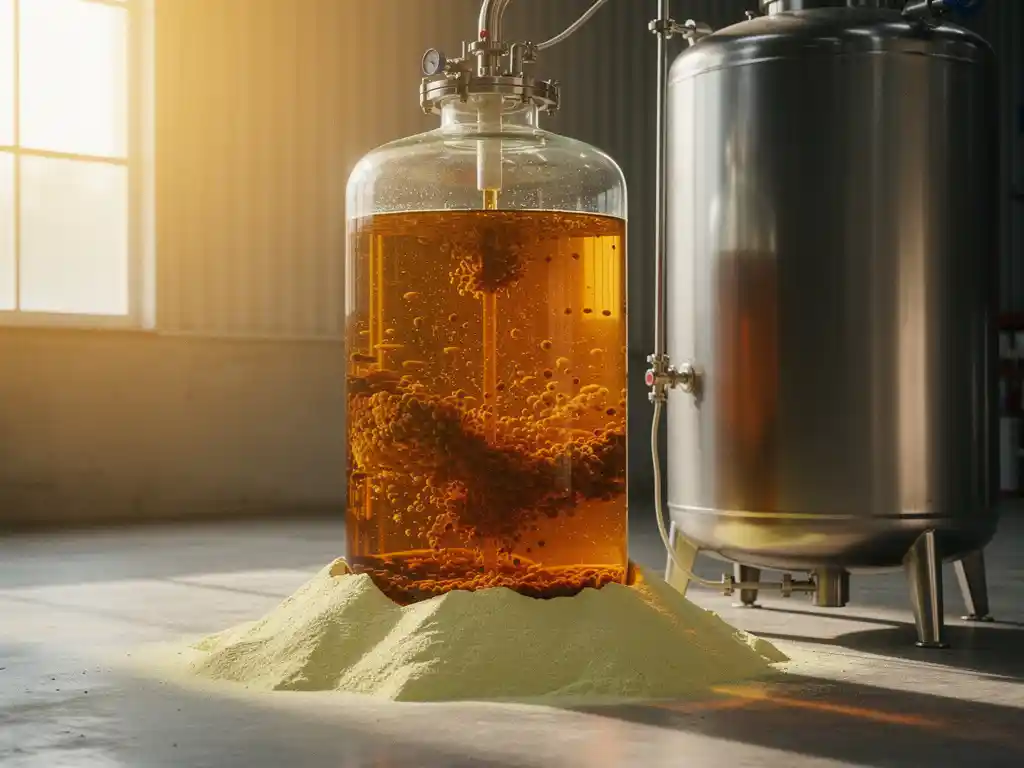
Biological H2S removal and chemical scrubbing both reduce hydrogen sulfide concentrations in biogas, but they work through fundamentally different mechanisms and suit different operational contexts. Biological desulfurization uses naturally occurring microorganisms to convert H2S into elemental sulfur, while chemical scrubbing relies on reactive compounds such as iron chloride or sodium hydroxide to neutralize or precipitate the sulfide. If you are unsure which approach fits your installation, feel free to get in touch, and we are happy to help you assess your options. This article walks through how each method works, where they differ, and which conditions favor one over the other.
What are the main methods for removing H2S from biogas?
The two primary categories for biogas desulfurization are biological treatment and chemical scrubbing. Biological methods use sulfur-oxidizing bacteria to convert hydrogen sulfide into solid elemental sulfur or sulfate. Chemical methods use reagents such as iron salts, caustic solutions, or activated carbon to bind, precipitate, or adsorb H2S from the gas stream. Both approaches are commercially proven and widely deployed across biogas upgrading and gas treatment applications.
Beyond these two categories, physical absorption and membrane separation are also used in specific high-purity applications, but biological and chemical routes dominate the majority of biogas cleaning installations because of their cost-effectiveness and scalability. The choice between them depends on the H2S concentration in the raw biogas, the required outlet specification, available infrastructure, and operational preferences.
How does biological H2S removal actually work?
Biological H2S removal works by introducing sulfur-oxidizing bacteria into a controlled environment where they use oxygen to oxidize hydrogen sulfide into elemental sulfur. The bacteria act as a living catalyst, converting a toxic and corrosive gas into a manageable solid byproduct. This process requires only a small, controlled air injection into the biogas stream or a dedicated bioreactor vessel.
In practice, there are two common configurations. The first is in-situ dosing, where a small amount of air or oxygen is injected directly into the digester headspace, allowing naturally present bacteria to grow on the biogas-liquid interface and consume H2S before it leaves the digester. The second is an external bioreactor, where the biogas passes through a dedicated biological scrubber containing a bacterial community supported on a packing medium. External systems offer tighter control over outlet concentrations and are better suited to high H2S loads.
The sulfur produced by the bacteria is non-hazardous and can often be used in agriculture as a soil amendment, which gives biological desulfurization a distinct circular economy advantage over chemical methods that generate liquid or solid waste requiring disposal.
How does chemical scrubbing remove H2S from biogas?
Chemical scrubbing removes H2S from biogas by reacting hydrogen sulfide with a chemical reagent that either precipitates it as a solid compound or absorbs it into a liquid phase. The most common reagents are iron chloride or iron sulfate dosed into the digester slurry, caustic solutions such as sodium hydroxide used in wet scrubbers, and impregnated activated carbon used in dry adsorption filters.
Iron salt dosing
Iron salt dosing is one of the simplest chemical approaches. When iron chloride or iron sulfate is added directly to the digester, it reacts with dissolved sulfide in the liquid phase to form an iron sulfide precipitate before the H2S can volatilize into the gas. This method is effective at moderate H2S concentrations but requires continuous chemical supply and produces a sulfide-laden digestate that must be managed carefully.
Caustic and activated carbon scrubbing
Caustic wet scrubbers pass biogas through an alkaline liquid where H2S is absorbed and neutralized. These systems can achieve very low outlet concentrations but require chemical replenishment and generate spent scrubbing liquor. Activated carbon filters adsorb H2S onto a porous surface and are commonly used as a polishing step after primary treatment. The carbon media becomes saturated over time and must be replaced or regenerated, which adds to operational cost and waste handling.
What are the key differences between biological and chemical H2S removal?
The key difference between biological and chemical H2S removal is the nature of the conversion agent and what it produces. Biological systems use self-sustaining bacteria that regenerate naturally, produce solid elemental sulfur as a reusable byproduct, and require minimal chemical inputs. Chemical systems consume reagents continuously, generate waste streams or spent media, and do not self-renew.
From an operational standpoint, biological systems tend to have lower ongoing costs once established because the bacteria grow on inexpensive nutrients and air. Chemical systems often have lower upfront capital costs for simple configurations such as iron dosing, but reagent consumption and waste disposal costs accumulate over time. For hydrogen sulfide concentrations above a few thousand parts per million, biological systems are generally more cost-effective at scale. Chemical polishing steps remain useful for achieving very low outlet specifications that biological systems alone may not consistently reach.
Biological systems also respond more gradually to sudden changes in H2S load, while chemical dosing can be adjusted quickly. This makes chemical methods more responsive in unstable or highly variable feedstock conditions.
When should biological treatment be chosen over chemical scrubbing?
Biological H2S removal is the better choice when the biogas stream has moderate to high H2S concentrations, when continuous chemical supply is inconvenient or costly, and when the operator wants to minimize hazardous waste generation. It is particularly well-suited to stable biogas production where H2S loads are predictable and the process can be tuned over time.
Biological treatment is also preferable when the recovered sulfur has an agricultural end-use, turning a waste product into a revenue or cost-offset stream. For larger installations or those targeting sour gas treatment with significant sulfur loads, a dedicated biological unit delivers consistent performance with lower long-term operating expenditure than chemical alternatives. Operators who prioritize sustainability credentials also tend to favor biological routes because they avoid the consumption and disposal of hazardous chemicals entirely.
Chemical scrubbing remains the more practical choice for very small systems, for applications requiring rapid startup, or as a final polishing stage to meet stringent pipeline or grid injection specifications downstream of a biological unit.
What are the limitations of biological H2S removal in biogas applications?
The main limitations of biological H2S removal are a slower response to load fluctuations, sensitivity to temperature and pH conditions, and the need for controlled oxygen dosing to avoid methane dilution or explosion risk. The bacterial community requires a stable environment to perform consistently, and process upsets such as toxic shock from cleaning agents or antibiotics in feedstock can temporarily impair performance.
In-situ biological systems also carry an inherent risk of oxygen ingress into the biogas if air injection is not precisely controlled, which can reduce the calorific value of the gas and create safety concerns. External bioreactor systems manage this risk more effectively but require greater capital investment. Additionally, biological systems are not always capable of reaching the very low H2S concentrations demanded by some gas grid injection standards without a downstream polishing step.
Despite these limitations, biological desulfurization remains one of the most practical and cost-effective approaches for the majority of biogas cleaning applications, especially where H2S concentrations are in the hundreds to thousands of parts per million range and stable operating conditions can be maintained. Understanding which method fits your specific gas composition and operational context is the most important factor in making the right choice. Get in touch to discuss your biogas desulfurization requirements with our specialists.
Frequently Asked Questions
Can biological and chemical H2S removal methods be combined in the same biogas system?
Yes, combining both methods is a well-established practice and often delivers the best overall performance. A common configuration uses biological treatment as the primary desulfurization stage to handle the bulk of the H2S load cost-effectively, followed by a chemical polishing step — such as an activated carbon filter or caustic scrubber — to achieve the very low outlet concentrations required for grid injection or sensitive downstream equipment. This hybrid approach balances low operating costs with consistent outlet quality.
How do I know if my biogas H2S concentration is too high for in-situ biological treatment?
In-situ biological treatment (air injection into the digester headspace) is generally effective for H2S concentrations up to around 2,000–5,000 ppm, depending on digester design and operating conditions. If your raw biogas consistently exceeds this range, or if your outlet specification is particularly stringent, an external bioreactor will give you significantly better control and reliability. Regular gas composition monitoring using an H2S analyzer is the most reliable way to assess whether your current or planned system is appropriately sized for your load.
What are the most common mistakes operators make when running a biological H2S removal system?
The most frequent mistake is over-injecting air or oxygen to compensate for performance dips, which risks diluting the methane content of the biogas and can create flammability hazards. Another common error is neglecting the impact of feedstock changes — introducing antibiotics, biocides, or cleaning agents into the digester can cause a toxic shock that significantly impairs the bacterial community. Maintaining stable temperature and pH conditions and monitoring oxygen levels in the biogas output are the most important operational disciplines for keeping a biological system performing consistently.
How long does it take for a biological H2S removal system to reach stable performance after startup?
An in-situ biological system typically reaches stable performance within two to six weeks after air injection begins, as the naturally occurring sulfur-oxidizing bacteria gradually establish a working population at the gas-liquid interface. External bioreactor systems can be pre-seeded with an active bacterial culture to accelerate startup, often reaching target performance within one to three weeks. During the startup period, it is advisable to have a chemical backup — such as iron salt dosing — in place to protect downstream equipment from elevated H2S levels.
Does the elemental sulfur produced by biological desulfurization require any special handling or disposal?
Elemental sulfur produced by biological desulfurization is non-hazardous and generally straightforward to handle. In in-situ systems, it accumulates in the digester and is typically removed with the digestate, which can then be land-applied as a sulfur-rich soil amendment — a genuine circular economy benefit. In external bioreactor systems, sulfur is periodically flushed from the packing medium as a slurry. Unlike the spent reagents and liquors generated by chemical scrubbing, biological sulfur byproducts do not require hazardous waste disposal, which simplifies compliance and reduces operational costs.
Is chemical scrubbing still worth considering for a large-scale biogas plant, or is biological treatment always better at scale?
For large-scale plants with high and stable H2S loads, biological treatment is almost always more cost-effective over the long term due to the significant savings on reagent procurement and waste disposal. However, chemical scrubbing retains a clear role even at scale when used as a downstream polishing step, when the plant operates with highly variable or intermittent feedstocks that make biological system tuning difficult, or during planned or unplanned biological system downtime. A well-designed large installation often incorporates both, with chemical treatment sized as a contingency and polishing measure rather than the primary removal stage.
What monitoring and instrumentation is recommended for a biogas desulfurization system?
At a minimum, continuous or frequent H2S measurement at both the inlet and outlet of the desulfurization system is essential for verifying performance and protecting downstream equipment such as gas engines, compressors, or upgrading units. For biological systems, monitoring dissolved oxygen in the biogas output helps prevent methane dilution from over-injection, while pH and temperature sensors in the digester or bioreactor support stable bacterial activity. For chemical systems, reagent dosing rates and spent media saturation indicators are the critical parameters to track. Investing in reliable online instrumentation pays back quickly by preventing costly equipment corrosion and unplanned downtime.
Related Articles
- What are the occupational exposure limits for hydrogen sulfide in Europe?
- What are the community health risks of hydrogen sulfide from industrial sources?
- How does biogas cleaning differ from biogas upgrading?
- What are the early symptoms of H2S poisoning?
- What is biogas upgrading and how does desulfurization fit into the process?
Related Articles
- What is the future of hydrogen sulfide management in the energy transition?
- How does iron sponge desulfurization work and what are its limits?
- How do you calibrate a hydrogen sulfide gas detector correctly?
- Where is H2S gas commonly found?
- What technologies are used for H2S abatement in industrial plants?
