

The main alternatives to the Claus process for sulfur recovery are biological desulfurization, liquid redox processes, and direct oxidation technologies. These alternatives are particularly relevant for smaller or mid-scale operations, sour gas streams with challenging compositions, or facilities where the capital and operational complexity of a full Claus plant cannot be justified. The sections below walk through each option, explain when to choose them, and compare their practical trade-offs. If you have questions about which technology fits your specific situation, feel free to get in touch, and we are happy to help.
Which sulfur recovery technologies compete with the Claus process?
The primary alternatives to the Claus process are biological desulfurization, liquid redox sulfur recovery, and direct oxidation processes such as the Lo-Cat and SulFerox systems. Each of these technologies converts hydrogen sulfide (H₂S) into recoverable elemental sulfur, but through fundamentally different chemical or biological mechanisms that suit different feed gas conditions and plant scales.
The Claus process has been the industry standard for large-scale sulfur recovery from sour gas for decades. It performs well when H₂S concentrations are high and feed volumes are large. However, it requires significant infrastructure, a trained operating team, and a tail gas treatment unit to meet modern emissions standards. When those conditions are not met, operators increasingly turn to the alternatives listed above.
- Biological desulfurization: Uses naturally occurring bacteria to oxidize H₂S to elemental sulfur in a single integrated unit.
- Liquid redox processes: Use iron-chelate solutions to absorb and chemically oxidize H₂S at ambient temperatures.
- Direct catalytic oxidation: Converts H₂S directly to sulfur over a catalyst bed, typically used for dilute streams or tail gas clean-up.
How does biological desulfurization work as a Claus alternative?
Biological desulfurization removes H₂S from gas streams by using naturally occurring, sulfur-oxidizing bacteria to convert hydrogen sulfide into solid elemental sulfur. The bacteria act as a self-regulating biological catalyst, making the process stable, safe, and well suited to small and mid-scale sour gas streams with variable or unfavorable compositions.
In a biological desulfurization system, the sour gas is first absorbed into an alkaline scrubbing liquid inside a contactor. The H₂S dissolves into the liquid as bisulfide (HS⁻). The enriched liquid is then transferred to a bioreactor, where naturally occurring Thiobacillus-type bacteria oxidize the bisulfide to elemental sulfur using a controlled supply of air. The sulfur precipitates as fine solid particles that can be separated and recovered.
Paqell’s THIOPAQ O&G technology integrates gas sweetening and sulfur recovery into a single unit, which eliminates the need for separate amine treatment and Claus train infrastructure. The bacteria are non-hazardous, self-regulating, and do not require chemical replenishment, which keeps operating costs low. This approach is particularly effective for sour gas treatment in applications such as natural gas, refinery fuel gas, and flare gas streams. You can explore the full range of supported applications to see where biological desulfurization fits.
What are liquid redox sulfur recovery processes?
Liquid redox sulfur recovery processes use an iron-chelate solution to absorb H₂S from a gas stream and chemically oxidize it to elemental sulfur at near-ambient temperatures. The most widely deployed systems are Lo-Cat and SulFerox, both of which operate on the same fundamental iron-mediated oxidation chemistry.
In a liquid redox system, the sour gas contacts the iron-chelate solution in an absorber vessel. The ferric iron (Fe³⁺) in the solution oxidizes the dissolved H₂S directly to elemental sulfur, while the iron is simultaneously reduced to the ferrous state (Fe²⁺). The solution is then regenerated by oxidizing the ferrous iron back to ferric iron using air in a separate vessel. The sulfur particles are filtered or floated off as a slurry.
Liquid redox processes work well for gas streams with low to moderate H₂S concentrations and are often used where a Claus unit would be oversized or impractical. Their main limitations include higher operating costs due to chelate degradation and make-up requirements, sensitivity to contaminants such as hydrocarbons or oxygen, and the need to manage a continuous liquid inventory. For very dilute streams or biogas applications, biological alternatives often offer a simpler and more cost-effective path.
When is the Claus process not the right choice?
The Claus process is not the right choice when H₂S concentrations are too low to sustain stable combustion in the thermal stage, when feed gas volumes are small, or when the capital investment for a multi-stage Claus train and tail gas unit cannot be recovered over the project lifetime. Unfavorable gas compositions, such as high CO₂ content or variable H₂S loads, also reduce Claus efficiency significantly.
In practical terms, Claus plants are generally only cost-effective above a certain sulfur production threshold, often cited in industry experience as several tonnes of sulfur per day. Below that threshold, the fixed costs of the thermal furnace, catalytic converters, and tail gas treatment dominate. Operators processing small sour gas streams at remote locations, offshore platforms, or smaller refineries face economics that strongly favor simpler, single-unit alternatives.
Gas composition matters equally. The Claus process requires a precise H₂S-to-SO₂ ratio for efficient conversion, and high CO₂ concentrations dilute the feed and reduce flame stability. Biological and liquid redox alternatives are far less sensitive to these compositional challenges, making them the preferred route for desulfurization of lean or variable sour gas streams.
How do Claus alternatives compare on cost and complexity?
Biological desulfurization and liquid redox processes both offer lower capital investment and simpler operations than a full Claus train, particularly at smaller scales. Biological systems tend to have the lowest total cost of ownership because they use self-regulating bacteria rather than consumable chemicals, while liquid redox systems carry ongoing chelate costs but can handle a wider range of feed conditions without biological management.
Capital and installation costs
A Claus plant requires a thermal stage, multiple catalytic reactor beds, condensers, and a tail gas treatment unit to meet emissions limits. This translates into significant engineering, procurement, and construction costs. Biological desulfurization integrates absorption and sulfur recovery into one compact unit, reducing both footprint and installation complexity. Liquid redox systems are also more compact than Claus, though they require absorber and regeneration vessels along with filtration equipment.
Operating costs and maintenance
Claus plants demand skilled operators and regular catalyst replacement. Liquid redox systems require chelate top-up and careful management of solution chemistry. Biological systems are self-regulating: the bacteria adapt to load changes automatically, reducing the need for operator intervention. Utility consumption for biological systems is also modest, typically limited to air supply and modest heat input. For operators looking to reduce total cost of ownership, a preliminary technology scan can help identify which approach is most economical for a specific feed gas profile.
What happens to the sulfur recovered by these alternative processes?
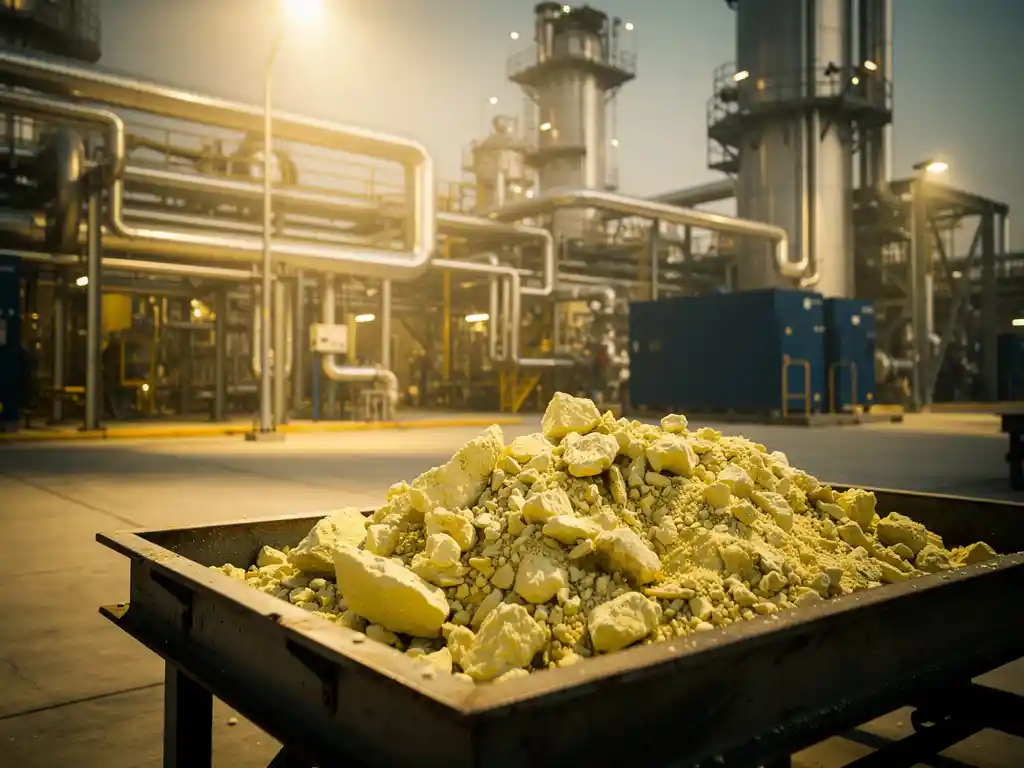
The elemental sulfur recovered by biological desulfurization and liquid redox processes is typically a wet slurry or filter cake of solid sulfur particles. This recovered sulfur is non-hazardous and can be used directly in agricultural applications as a soil amendment or fertilizer input, which gives it a clear and established end-use market.
Sulfur recovered through biological desulfurization is particularly well suited to agricultural use because the biological process produces fine, dispersible sulfur particles with no toxic by-products. In contrast, Claus plants produce liquid sulfur that is degassed and solidified into prills or blocks for transport, which requires additional handling infrastructure.
Liquid redox processes also produce a sulfur slurry, though its purity and physical form depend on the operating conditions and the presence of any contaminants in the feed gas. In most cases, the recovered sulfur from both alternative technologies meets the quality requirements for fertilizer-grade applications, supporting a circular use of what would otherwise be a waste stream from hydrogen sulfide removal.
Choosing the right alternative to the Claus process depends on your gas volume, H₂S concentration, available capital, and long-term operating model. Biological desulfurization, liquid redox systems, and direct oxidation each solve the sulfur recovery challenge in a different way, and the best fit is rarely obvious without a detailed look at the feed gas characteristics. Get in touch with Paqell to discuss which technology best matches your specific sour gas treatment needs.
Frequently Asked Questions
Can biological desulfurization handle sudden spikes or fluctuations in H₂S concentration?
Yes, biological desulfurization systems are notably resilient to load variability. The sulfur-oxidizing bacteria self-regulate their activity in response to changes in H₂S feed concentration, meaning the process adapts without requiring manual intervention or chemical dosage adjustments. That said, very extreme or rapid swings in H₂S load should be evaluated during the design phase to ensure the bioreactor volume and air supply are adequately sized for the expected operating envelope.
What minimum H₂S concentration is needed for these alternative technologies to work effectively?
Biological desulfurization and liquid redox processes can handle H₂S concentrations that are far too low to sustain stable combustion in a Claus thermal furnace, making them suitable for streams with H₂S levels from a few hundred ppm up to several percent by volume. Liquid redox systems like Lo-Cat are typically applied in the low-to-moderate concentration range, while biological systems such as THIOPAQ Ou0026G can efficiently treat lean sour gas streams that would be uneconomical for any thermal process. The exact lower threshold depends on gas flow rate and the desired sulfur recovery efficiency, so a feed gas analysis is always the recommended starting point.
How do I know whether biological desulfurization or a liquid redox process is the better fit for my application?
The decision generally comes down to feed gas composition, contaminant profile, and total cost of ownership priorities. Biological systems are preferred when the gas stream is relatively clean of heavy hydrocarbons and when minimizing ongoing chemical costs is a priority, since the bacteria require no consumable reagents beyond air. Liquid redox processes may be more suitable when the feed conditions are outside the tolerance range of biological systems, for example due to high hydrocarbon content or specific temperature constraints. Running a technology scan against your actual feed gas profile is the most reliable way to make this comparison objectively.
Are there any contaminants in sour gas that can damage or inhibit these alternative processes?
Both biological and liquid redox systems have sensitivities that operators should account for during feed gas characterization. Heavy hydrocarbons, aromatic compounds, and certain trace metals can inhibit bacterial activity in biological systems or cause foaming and chelate degradation in liquid redox units. Oxygen ingress is particularly problematic for liquid redox systems because it disrupts the iron redox chemistry and accelerates chelate breakdown. A thorough feed gas analysis covering not just H₂S and CO₂ but also trace contaminants is an essential step before selecting and sizing any alternative sulfur recovery technology.
What emissions profile can I expect from biological desulfurization compared to a Claus plant?
Biological desulfurization operates at near-ambient conditions and does not involve combustion, which means it produces no SO₂ emissions from a thermal stage and no requirement for a tail gas treatment unit to meet regulatory limits. The process vents a small volume of treated gas after sulfur removal, which can be further managed depending on site-specific emissions requirements. This is a significant advantage over conventional Claus plants, which require a dedicated tail gas clean-up unit to reduce SO₂ and residual H₂S to acceptable discharge levels, adding both capital cost and operational complexity.
Is it possible to retrofit an existing sour gas treatment facility with a biological or liquid redox system?
Retrofitting is technically feasible for both technologies and has been done successfully in refinery, biogas, and natural gas processing contexts. Biological desulfurization units are compact and modular, which makes them relatively straightforward to integrate into existing gas handling infrastructure without major civil works. The key engineering considerations for any retrofit are available plot space, tie-in points for the sour gas feed and sweetened gas outlet, and the handling and disposal route for the recovered sulfur slurry. Engaging with a technology provider early in the retrofit planning process helps identify any site-specific constraints before detailed engineering begins.
What happens if my sour gas stream grows significantly in volume or H₂S load over time — can these technologies scale up?
Both biological desulfurization and liquid redox systems can be scaled up, though the approach differs. Biological systems can often be expanded by increasing bioreactor volume or adding parallel contactors, and because the bacteria self-regulate, scaling up does not fundamentally change the operational model. Liquid redox systems scale by increasing solution inventory and vessel sizing, though operating costs rise proportionally with throughput due to chelate consumption. For operations with a strong growth trajectory, it is worth modelling the long-term cost curve of each technology against projected feed volumes, as there is a crossover point at higher sulfur production rates where a Claus plant may become the more economical choice.
