

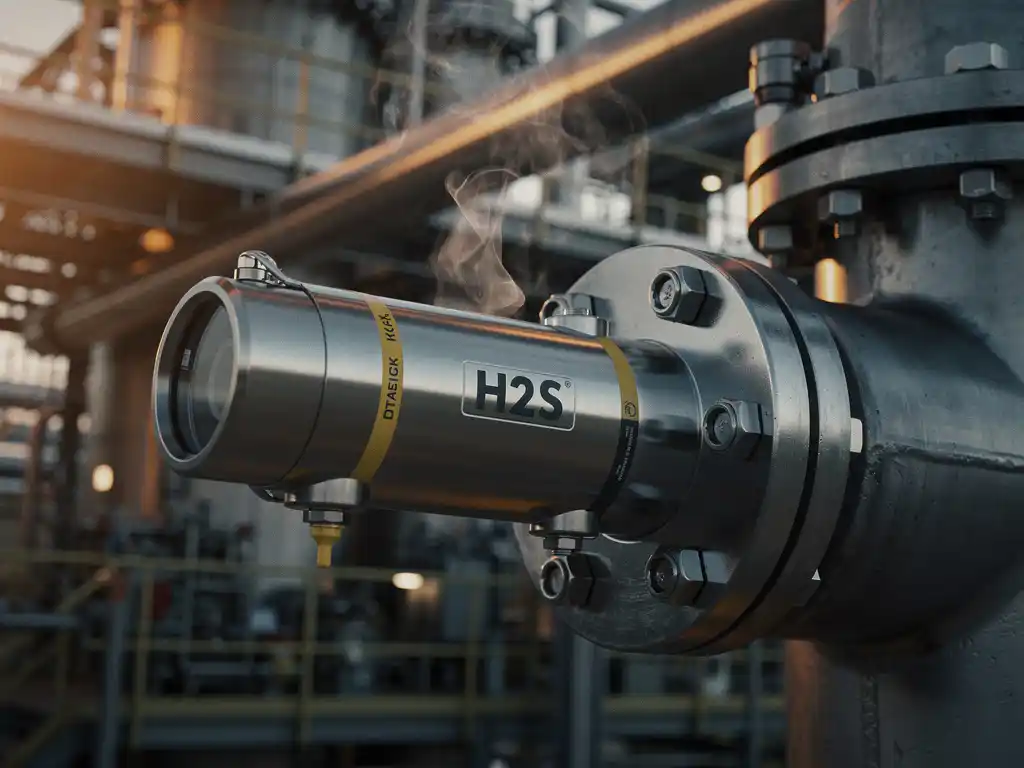
In 2026, H2S sensor technology has advanced significantly, with modern electrochemical, optical, and solid-state sensors offering faster response times, greater sensitivity at lower concentrations, and improved resistance to cross-interference from other gases. The most notable developments center on wireless connectivity, AI-assisted diagnostics, and longer sensor lifespans that reduce maintenance burdens in demanding environments. If you have specific questions about hydrogen sulfide detection for your application, feel free to get in touch, and we are happy to help. The sections below address the most common questions about where H2S detection technology stands today.
How accurate are modern H2S sensors compared to older models?
Modern H2S sensors are substantially more accurate than older models, with many current electrochemical and optical sensors capable of detecting hydrogen sulfide concentrations as low as 0.1 parts per million. Older catalytic and basic electrochemical sensors typically had detection floors of 1 to 5 ppm and were more susceptible to drift, cross-sensitivity, and temperature-related errors. Today’s sensors maintain tighter calibration over longer intervals and produce fewer false positives.
The improvement in accuracy comes from several converging advances. Sensor electrode materials have become more selective, meaning the sensor responds specifically to H2S rather than reacting to similar gases like sulfur dioxide or mercaptans. Temperature compensation circuitry is now standard in most industrial-grade hydrogen sulfide detectors, which eliminates one of the most common sources of measurement error in field conditions. Signal processing algorithms built into the sensor electronics further filter noise and stabilize readings in environments with fluctuating humidity or pressure.
For applications where precise H2S measurement matters, such as monitoring threshold values for worker safety or verifying gas quality in sour gas treatment, this improvement in baseline accuracy translates directly into more reliable decision-making and fewer unnecessary shutdowns triggered by erroneous readings.
What new detection technologies are being used in H2S sensors?
The dominant new detection technologies in H2S sensors in 2026 are laser-based optical sensing, metal oxide semiconductor sensors with nanostructured materials, and photoionization detection adapted for low-concentration sulfide measurement. These technologies complement the established electrochemical cell approach rather than replacing it entirely, with each suited to different concentration ranges and environmental conditions.
Laser and optical sensing
Tunable diode laser absorption spectroscopy allows a hydrogen sulfide meter to measure gas concentration by passing a laser beam through the sample and analyzing how much light is absorbed at wavelengths specific to H2S. This approach is highly selective, immune to the electrode degradation that affects electrochemical sensors, and well suited to continuous monitoring in pipelines or enclosed process environments. It is increasingly used in high-value gas treatment and sulfur recovery installations where downtime from sensor failure is costly.
Nanostructured metal oxide sensors
Metal oxide sensors have existed for decades, but nanostructured variants developed in recent years offer dramatically improved sensitivity and faster recovery times after exposure to high H2S concentrations. These sensors work by measuring changes in electrical resistance when hydrogen sulfide molecules interact with the metal oxide surface. The nanoscale surface area increases the number of reaction sites, which lowers the detection threshold and speeds up the sensor’s return to baseline after a concentration spike.
How do wireless and IoT-connected H2S sensors work in 2026?
Wireless and IoT-connected H2S sensors in 2026 transmit real-time gas concentration data over mesh radio networks, cellular connections, or low-power wide-area protocols to centralized monitoring platforms accessible from any device. The sensor itself contains the detection element, onboard processing, a radio transmitter, and a battery or energy-harvesting power source, eliminating the need for wired signal cables across large or hazardous sites.
In practice, a wireless H2S detector reports readings at configurable intervals, typically every few seconds to every minute, and triggers immediate alerts when concentrations approach or exceed the H2S threshold value set for that location. The data stream feeds into cloud-based dashboards where safety managers can view historical trends, set alarm thresholds, and receive notifications on mobile devices. Many platforms now integrate with site-wide safety management systems, so an H2S alarm can automatically trigger ventilation systems, lock access points, or notify emergency response teams.
Battery life has improved considerably. Devices using low-power radio protocols can now operate for one to three years on a single battery pack under normal monitoring conditions, which makes deployment in remote locations, offshore platforms, and unmanned gas processing sites far more practical than it was even a few years ago.
What is the role of AI in H2S gas detection systems?
AI plays an increasingly active role in H2S gas detection by analyzing sensor data patterns to distinguish genuine hazardous events from false alarms, predict sensor degradation before it causes measurement errors, and correlate hydrogen sulfide readings with process conditions to identify the likely source of a leak or concentration spike. These capabilities move detection systems from passive monitoring toward active safety intelligence.
Predictive maintenance is one of the most practically valuable AI applications. By tracking how a sensor’s baseline signal drifts over time, an AI model can flag sensors approaching end-of-life weeks before they fail or produce inaccurate readings. This is particularly relevant in sour gas environments where high H2S concentrations accelerate sensor wear. Rather than replacing sensors on a fixed schedule, operators can act on actual condition data, which reduces both maintenance costs and the risk of running a degraded sensor.
AI-assisted source localization is another emerging capability. When multiple wireless sensors across a site report elevated hydrogen sulfide readings, algorithms can model the likely emission point based on concentration gradients, wind direction data, and process flow information. This shortens the time between detection and intervention in facilities handling sour gas or running desulfurization processes.
How long do H2S sensors last before they need replacing?
Most electrochemical H2S sensors have a rated service life of one to three years, though actual lifespan depends heavily on average exposure concentration, temperature, humidity, and the presence of sensor-poisoning contaminants. Optical and laser-based sensors generally last longer, with some rated for five or more years, because they have no consumable electrode that depletes with use.
In high-H2S environments such as sour gas processing or biogas desulfurization, electrochemical sensors at the lower end of the lifespan range are common because sustained exposure to elevated hydrogen sulfide concentrations accelerates the depletion of the electrolyte and sensing electrode. Regular bump testing, which involves briefly exposing the sensor to a known concentration of H2S to verify it responds correctly, is the most reliable way to confirm a sensor is still functioning within specification between scheduled replacements.
Sensor manufacturers increasingly embed usage counters and condition monitoring into the sensor electronics, so the device itself reports remaining service life rather than relying on operators to track installation dates manually. This is especially useful in large installations with dozens or hundreds of hydrogen sulfide detectors distributed across a site.
Which H2S sensor type is best for sour gas and oil and gas applications?
For sour gas and oil and gas applications, electrochemical sensors remain the industry standard for personal and area safety monitoring due to their low cost, portability, and well-understood behavior, while optical or laser-based sensors are preferred for fixed continuous monitoring in process streams where high accuracy and long service intervals are priorities. The best choice depends on the specific measurement need, concentration range, and maintenance capacity of the site.
In upstream and midstream gas treatment, where gas sweetening and sour gas treatment applications involve continuous exposure to H2S at process-relevant concentrations, fixed optical sensors mounted at critical points in the gas flow path offer the combination of accuracy and durability that electrochemical cells struggle to provide over extended periods. For worker safety monitoring in the same environment, wearable electrochemical H2S detectors remain practical and cost-effective.
Solid-state and metal oxide sensors are gaining traction in applications where sensor size and power consumption matter more than absolute precision, such as embedded monitoring in pipeline inspection tools or remote wellhead installations. For biogas applications, including biogas desulfurization and biogas upgrading processes, sensors must tolerate a gas matrix that includes methane, carbon dioxide, and moisture alongside H2S, which makes selectivity a key selection criterion. Electrochemical sensors with interference-compensating designs or optical sensors with narrow-band detection are the most reliable choices in those conditions.
Selecting the right H2S detection approach for a specific gas treatment or sulfur recovery process involves weighing concentration range, required accuracy, maintenance access, and the composition of the surrounding gas matrix. For guidance on how biological desulfurization fits into your overall H2S removal strategy, scan your project or get in touch with the Paqell team directly.
Frequently Asked Questions
How do I know when it's time to calibrate versus replace an H2S sensor?
Calibration is appropriate when a sensor still responds correctly to a bump test but shows minor drift in its baseline reading — this is a normal part of sensor aging and can be corrected through span adjustment. Replacement is necessary when the sensor fails to respond adequately to a known H2S concentration during bump testing, when it consistently reads outside its specified accuracy range after calibration, or when the manufacturer’s rated service life has been reached. In high-H2S environments, bump testing every day before entering a hazardous area is best practice, as it gives you the earliest possible warning that a sensor is no longer reliable.
Can H2S sensors be used reliably in outdoor environments with extreme temperatures or humidity?
Most industrial-grade electrochemical H2S sensors are rated for operation across a temperature range of roughly -20°C to +50°C, but performance can degrade at the extremes of that range without proper temperature compensation circuitry. High humidity is a particular challenge because it can affect the electrolyte concentration in electrochemical cells and cause condensation on optical sensor windows, both of which introduce measurement errors. For harsh outdoor deployments — such as offshore platforms, arctic wellheads, or tropical biogas sites — look for sensors with IP67 or higher ingress protection ratings, built-in temperature and humidity compensation, and housings designed to prevent condensation buildup inside the sensor cavity.
What are the most common mistakes operators make when deploying H2S detection systems?
The most frequent mistake is poor sensor placement — mounting detectors at head height in areas where H2S, being heavier than air, tends to accumulate at ground level or in low-lying confined spaces, which means a sensor may not detect a dangerous buildup until concentrations are already high. Another common error is skipping regular bump tests and relying solely on the sensor’s self-diagnostic indicators, which do not always catch gradual sensitivity loss. Finally, many operators underestimate the impact of cross-interfering gases on electrochemical sensors in complex gas matrices — in environments containing sulfur dioxide, mercaptans, or high CO2, selecting sensors with interference-compensating designs or optical detection is critical to avoiding false readings.
How does H2S sensor data integrate with existing safety management or SCADA systems?
Modern wireless H2S detectors and fixed monitoring controllers typically support standard industrial communication protocols such as Modbus, HART, 4–20 mA analog output, or OPC-UA, which makes integration with existing SCADA, DCS, or safety instrumented systems straightforward in most industrial settings. Cloud-connected IoT sensors additionally offer REST API or MQTT data streams that feed directly into software-based safety management platforms without requiring dedicated hardware integration. The key step is confirming that your chosen sensor or monitoring controller supports the specific protocol your control system expects, and that alarm thresholds configured in the sensor match the setpoints defined in your site’s safety procedures.
Are there H2S sensor options suitable for monitoring inside biogas upgrading or desulfurization processes specifically?
Yes, but sensor selection for biogas applications requires careful attention to the gas matrix, since H2S sensors in these environments must perform reliably in the presence of high methane, elevated CO2, water vapor, and sometimes siloxanes — all of which can interfere with or physically damage certain sensor types. Electrochemical sensors with cross-interference compensation for CO2 and SO2, or narrow-band optical sensors tuned specifically to H2S absorption wavelengths, are the most dependable choices. For biological desulfurization processes in particular, where H2S concentrations can swing rapidly as microbial activity fluctuates, sensors with fast response times and wide dynamic measurement ranges are important to capture the full picture of process performance.
What H2S concentration thresholds should I be configuring my alarm setpoints to?
Alarm setpoints should be based on the regulatory and occupational exposure standards applicable in your jurisdiction, as well as your site-specific risk assessment. As a widely used reference point, OSHA’s permissible exposure limit for H2S is 20 ppm as a ceiling value, while NIOSH recommends an immediately dangerous to life or health (IDLH) threshold of 50 ppm — many sites set a first-stage warning alarm at 1–5 ppm and a second-stage evacuation alarm at 10–15 ppm to provide adequate response time. For process monitoring rather than personal safety, setpoints are typically defined by process specifications or gas quality requirements rather than occupational exposure limits, and should be reviewed with your process engineer and safety officer to ensure they reflect actual operational risk.
Is it worth investing in AI-enabled H2S monitoring for a smaller facility, or is that technology only practical at large-scale sites?
AI-assisted monitoring is increasingly accessible to smaller facilities through cloud-based subscription platforms that apply machine learning analytics to sensor data without requiring on-site computing infrastructure or dedicated data science resources. For a smaller biogas plant or a single gas treatment unit, the most immediately practical AI benefit is predictive sensor maintenance — receiving an alert that a specific detector is degrading before it fails is valuable regardless of site size, since a missed H2S reading carries the same safety risk whether you have 10 sensors or 500. The more advanced capabilities, such as multi-sensor source localization and process-correlated anomaly detection, deliver greater return at larger, more complex sites, but even small facilities benefit from the false-alarm reduction and audit-trail logging that modern AI-enabled platforms provide.
Related Articles
Related Articles
- What biological processes break down hydrogen sulfide in treatment systems?
- What are the quality requirements for biomethane grid injection?
- How do you select the right respirator for H2S exposure?
- What first aid steps should you take after hydrogen sulfide inhalation?
- What is tail gas treatment in sulfur recovery units?
