

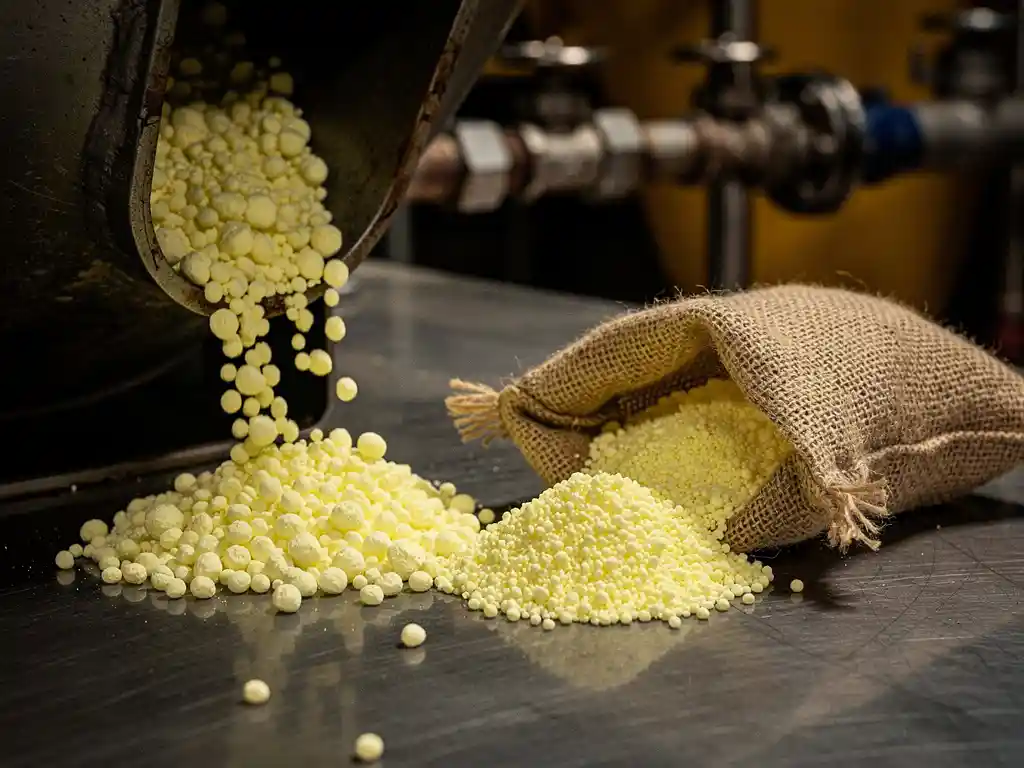
The main byproduct of gas desulfurization is elemental sulfur, which forms when hydrogen sulfide (H₂S) is removed from a gas stream and converted through chemical or biological processes. Depending on the technology used, secondary byproducts can include water, small volumes of carbon dioxide, and trace amounts of sulfate. How these byproducts are handled varies significantly by process type, and managing them well is central to operating a cost-effective, compliant desulfurization unit. If you have questions about a specific application, feel free to get in touch, and we are happy to help. The sections below work through the most common questions operators ask about desulfurization byproducts.
What happens to the sulfur removed during gas desulfurization?
When H₂S is removed from a gas stream during desulfurization, the sulfur it contains does not simply disappear. It is converted into a recoverable form, most commonly solid elemental sulfur or liquid sulfur, depending on the process. This transformation is what makes modern sulfur recovery possible, turning a hazardous contaminant into a manageable and often valuable material.
In conventional thermal processes like the Claus process, sulfur leaves the unit as molten liquid that solidifies on cooling. In biological desulfurization systems, the conversion happens at ambient temperature and pressure, producing a fine solid sulfur slurry. Either way, the sulfur must be separated, collected, and either stored, transported, or reused. The efficiency of that recovery step directly affects both the environmental footprint and the economics of the overall gas treatment operation.
What are the main byproducts of biological gas desulfurization?
Biological gas desulfurization produces three primary byproducts: elemental sulfur, water, and a small amount of sulfate. The elemental sulfur forms as a fine solid precipitate when naturally occurring bacteria oxidize H₂S in a controlled reactor environment. Water is generated as part of the biological reaction, and a minor fraction of the sulfur is further oxidized to sulfate, which remains dissolved in the process liquid.
These byproducts are notably less hazardous than those associated with chemical or thermal desulfurization routes. The bacteria involved are non-pathogenic and self-regulating, which simplifies handling. The sulfur slurry produced is non-toxic and relatively easy to separate from the process liquid using standard dewatering equipment. Sulfate levels in the bleed stream are typically low and can be managed within normal wastewater treatment frameworks, making biogas desulfurization and biological sour gas treatment attractive options from a waste management perspective.
Can the sulfur byproduct be reused or sold?
Yes, the elemental sulfur recovered during desulfurization can be reused, and in many cases it holds genuine commercial value. The most established outlet is agriculture, where elemental sulfur is applied directly as a soil amendment and fertilizer. It improves soil pH, supports plant nutrition, and is accepted in both conventional and organic farming, making it a straightforward route to beneficial reuse rather than disposal.
The suitability of recovered sulfur for sale depends on its purity and moisture content. Biological processes tend to produce a sulfur product with high purity because the reaction conditions are mild and selective. This compares favorably with sulfur from some thermal processes, which can contain trace contaminants that complicate downstream use. Operators running multiple gas treatment applications often find that consistent sulfur quality across their units makes logistics and sales agreements easier to manage.
In regions with active fertilizer markets, recovered sulfur can offset a portion of operating costs. Where local demand is limited, it can still be disposed of safely and at low cost compared with liquid or gaseous sulfur compounds, which require more complex handling.
How are liquid and gaseous byproducts managed in desulfurization units?
Liquid byproducts, primarily process water containing dissolved sulfate and trace nutrients, are typically managed through a controlled bleed from the recirculating liquid loop. This bleed stream is directed to wastewater treatment or, in some installations, used as a low-grade nutrient source. Gaseous byproducts, mainly treated gas with residual trace compounds, pass through downstream monitoring before entering pipelines or combustion systems.
In biological systems, liquid management is particularly straightforward because the process operates at near-ambient conditions and does not generate corrosive acid streams. The reactor liquid is alkaline and relatively benign, which reduces the demands placed on materials and containment infrastructure. Operators do need to monitor sulfate accumulation in the recirculating liquid and adjust the bleed rate accordingly to prevent inhibition of the bacterial population.
For gaseous byproducts, the treated gas leaving a biological desulfurization unit typically meets pipeline or combustion specifications for H₂S content. Residual gas-phase compounds are at concentrations well below H₂S threshold values for both safety and process quality standards. Continuous H₂S measurement at the unit outlet is standard practice and provides the data needed to confirm compliance and adjust operating parameters in real time.
What byproduct challenges arise with high H2S concentration gas streams?
High H₂S concentration gas streams generate larger volumes of sulfur byproduct per unit of gas treated, which intensifies the demands on sulfur handling, storage, and offtake logistics. The greater the H₂S load, the faster sulfur accumulates in the reactor or separator, and the more frequently dewatering and removal operations must take place. This can become a bottleneck if the downstream handling infrastructure is not sized correctly from the outset.
There are also process stability considerations. At very high H₂S concentrations, biological systems must be carefully balanced to prevent sulfide toxicity to the bacterial population. The bacteria are naturally self-regulating within a design envelope, but feeding rates, oxygen dosing, and liquid chemistry all require closer attention when inlet concentrations are elevated. Sulfate formation tends to increase proportionally with H₂S load, so bleed stream management becomes more active.
On the safety side, high-concentration sour gas streams demand robust H₂S detection infrastructure around the unit. Hydrogen sulfide hazards are well documented: even brief exposure to elevated concentrations can cause rapid incapacitation, and hydrogen sulfide poisoning can occur without adequate warning due to olfactory fatigue. Reliable H₂S detectors and clearly defined response protocols are non-negotiable for any facility handling high-concentration H₂S streams.
How does byproduct handling differ between desulfurization technologies?
Byproduct handling differs substantially between the main desulfurization technologies, primarily in the physical state of the sulfur produced, the secondary waste streams generated, and the infrastructure required to manage them.
Thermal and chemical processes
The Claus process and similar thermal routes produce liquid sulfur at high temperature, which must be handled in heated pipelines and storage vessels to prevent solidification. The process also generates sulfur dioxide as an intermediate, which requires careful containment and tail gas treatment to meet emissions standards. Amine-based gas sweetening units, used upstream of Claus plants, produce a rich acid gas stream and require regeneration energy, adding to the overall complexity and operating cost of byproduct management.
Biological processes
Biological desulfurization, such as the THIOPAQ O&G process, produces solid elemental sulfur at ambient conditions, eliminating the need for heated sulfur handling systems. The sulfur slurry is non-toxic, easy to dewater, and suitable for direct agricultural use. The absence of sulfur dioxide as a process intermediate removes a significant emissions management burden. Water is the main secondary byproduct and is managed through straightforward bleed and treatment rather than complex acid gas handling. This difference in byproduct profile is one of the reasons biological gas desulfurization carries lower total ownership costs for small and mid-scale applications.
Understanding how byproducts behave across different technologies helps operators match the right solution to their specific gas composition, throughput, and site constraints. To discuss the byproduct profile of a specific gas stream or explore whether biological desulfurization fits your operation, get in touch with the Paqell team. You can also use the THIOPAQ O&G scan tool to get a quick initial assessment of your application.
Frequently Asked Questions
How do I know if the sulfur byproduct from my desulfurization unit is pure enough to sell as fertilizer?
The key indicators are elemental sulfur content, moisture level, and the absence of heavy metal or hydrocarbon contamination. Biological desulfurization processes typically produce sulfur with purity levels above 90%, which is generally acceptable for agricultural use, but you should request a certified lab analysis before approaching buyers. Fertilizer distributors and soil amendment suppliers will usually specify minimum purity thresholds, and meeting these consistently is more important than achieving occasional peak quality. If you are unsure about your sulfur product’s suitability, the Paqell team can advise on typical quality parameters for THIOPAQ Ou0026G output.
What is the best way to get started with managing sulfur offtake if we have no existing sales agreements?
Start by quantifying your expected sulfur production rate based on your inlet H₂S concentration and gas flow, then contact regional agricultural cooperatives, fertilizer blenders, or soil amendment companies with that volume estimate. Even if immediate sale is not feasible, establishing a disposal route with a licensed waste handler as a fallback ensures you are never operationally blocked by sulfur accumulation. Many operators begin with disposal agreements and transition to sales contracts once they have demonstrated consistent product quality over several months of operation.
What happens to the sulfate in the bleed stream — does it require special wastewater treatment?
In most biological desulfurization installations, sulfate concentrations in the bleed stream are low enough to be handled within standard municipal or industrial wastewater treatment frameworks without special pre-treatment. The bleed liquid is alkaline and non-toxic, which means it does not typically require neutralization before discharge to a treatment facility. However, local discharge limits for sulfate vary by jurisdiction, so it is important to verify compliance with your regional environmental permit before commissioning. In some cases, the bleed stream can be repurposed as a nutrient-containing irrigation supplement, which eliminates disposal costs entirely.
Can biological desulfurization handle sudden spikes in H₂S concentration without producing hazardous byproduct surges?
Biological systems are inherently self-buffering to a degree — the bacterial population responds to increased H₂S load by increasing oxidation activity, but this adaptation takes time and has limits. Sudden, large concentration spikes can temporarily exceed the system’s biological capacity, leading to H₂S breakthrough in the treated gas and a short-term increase in sulfate formation in the process liquid. The best mitigation is upstream flow conditioning and inlet monitoring with automatic feed-rate controls that prevent the reactor from being overwhelmed. Properly designed systems include safety margins in their biological capacity specifically to accommodate realistic load variability.
How often does the sulfur slurry need to be removed from a biological desulfurization unit, and what equipment is typically used?
Removal frequency depends directly on your H₂S load — higher inlet concentrations produce sulfur faster and require more frequent dewatering cycles, which can range from daily in high-load applications to weekly or less in lower-load ones. Standard dewatering equipment such as centrifuges, belt filter presses, or decanter units are all compatible with biological sulfur slurry due to its non-toxic and non-corrosive nature. The dewatered sulfur cake typically contains 50–70% dry solids, making it straightforward to bag, bulk-load, or transport. Sizing the dewatering system generously at the design stage avoids it becoming a bottleneck as throughput grows.
What are the most common mistakes operators make when setting up byproduct handling for a new desulfurization unit?
The most frequent mistake is underestimating sulfur accumulation rates during the design phase, which leads to undersized storage or dewatering capacity that creates operational bottlenecks within the first months of operation. A second common error is failing to establish a confirmed offtake or disposal route before start-up, leaving operators scrambling for solutions once sulfur begins accumulating on-site. Finally, neglecting to monitor sulfate build-up in the recirculating liquid can lead to gradual inhibition of the bacterial population, reducing treatment efficiency over time without an obvious immediate cause. Building in regular liquid chemistry checks from day one prevents this from becoming a costly problem.
Is there a meaningful environmental advantage to biological desulfurization byproducts compared to thermal process byproducts?
Yes, the environmental profile is meaningfully better across several dimensions. Biological processes produce no sulfur dioxide as a process intermediate, which eliminates a significant air emissions management requirement that thermal routes like the Claus process must address through tail gas treatment. The solid sulfur byproduct is non-toxic and directly reusable, avoiding the energy-intensive heated handling infrastructure that liquid sulfur from thermal processes demands. Additionally, the absence of corrosive acid gas streams reduces the risk of containment failures that could result in environmental incidents, making biological desulfurization a lower-risk option from both a regulatory compliance and operational liability perspective.
Related Articles
- How to Choose a Continuous Alternative to Chemical H₂S Treatment
- How to Move from Consumable-Based H₂S Treatment to a Regenerative Process
- What safety measures are needed when operating a desulfurization unit?
- How does hydrogen sulfide affect the integrity of offshore pipelines?
- How is H2S removed from natural gas streams?
This content was generated with the help of AI and it may contain mistakes
