

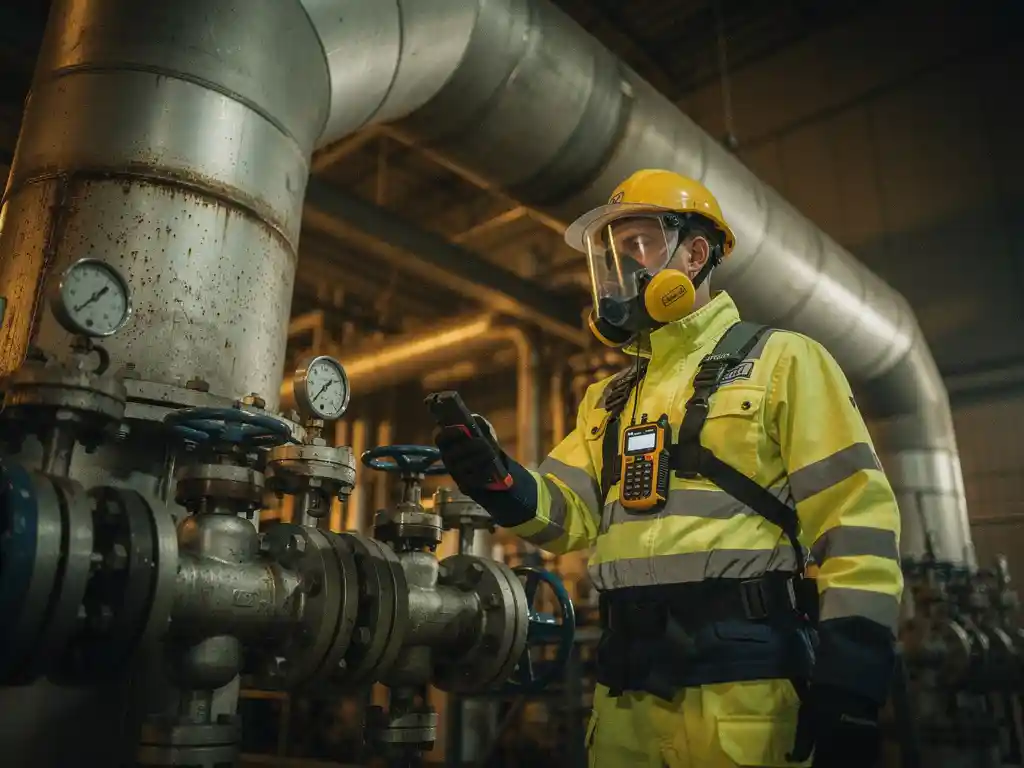
Operating a desulfurization unit safely requires a layered approach that combines hazard awareness, personal protective equipment, fixed gas detection, emergency protocols, and rigorous maintenance practices. The central danger is hydrogen sulfide (H₂S), a toxic gas present in sour gas streams that demands continuous vigilance from every worker on site. If you have specific questions about your facility’s setup, feel free to get in touch with the Paqell team. The sections below address the most critical safety questions for anyone working with or around desulfurization equipment.
What are the main hazards associated with H₂S in desulfurization units?
The main hazards of hydrogen sulfide in desulfurization units are its extreme toxicity at low concentrations, its flammability, and its ability to paralyze the sense of smell before reaching dangerous levels. H₂S is heavier than air, meaning it accumulates in low-lying areas such as pits, trenches, and confined spaces, where workers can encounter lethal concentrations without warning.
Hydrogen sulfide poisoning progresses rapidly. At concentrations around 10 ppm, workers may notice a characteristic rotten egg smell. Above 100 ppm, hydrogen sulfide symptoms include headaches, dizziness, and respiratory distress. Beyond 500 ppm, loss of consciousness can occur within minutes, and exposure at very high concentrations can be immediately fatal. The H₂S threshold value recognized by most occupational health authorities for short-term exposure sits well below levels that cause acute harm, which is why early detection is non-negotiable.
Beyond toxicity, H₂S is flammable within a specific concentration range in air, adding explosion risk to the hazard profile. Sour gas treatment facilities must therefore address both health and fire safety simultaneously.
What personal protective equipment is required for desulfurization unit workers?
Workers in desulfurization units require, at minimum, a personal H₂S detector, respiratory protection appropriate to the task, chemical-resistant gloves, protective eyewear, and flame-resistant clothing. The specific level of respiratory protection depends on the anticipated H₂S concentration and the nature of the work being performed.
For routine monitoring and inspection in areas where H₂S concentrations are expected to remain below the threshold value, a personal hydrogen sulfide detector worn on the lapel provides continuous real-time measurement and audible alarms. For confined space entry, maintenance tasks on pressurized equipment, or any situation where concentrations may exceed safe limits, self-contained breathing apparatus (SCBA) or supplied-air respirators are mandatory.
Flame-resistant clothing is essential because H₂S co-exists with flammable hydrocarbons in most gas treatment environments. Anti-static footwear and hard hats round out the standard personal protective equipment profile. Workers should never rely on the hydrogen sulfide smell as a warning signal, since the gas desensitizes the olfactory nerve at elevated concentrations, making smell an unreliable indicator of danger.
How do fixed gas detection systems work in desulfurization facilities?
Fixed gas detection systems in desulfurization facilities use permanently installed H₂S sensors positioned at strategic locations to continuously monitor air quality, trigger alarms at preset concentration thresholds, and feed data to a central control system. These systems provide facility-wide coverage that personal detectors alone cannot offer.
A typical fixed H₂S detection network includes sensors placed near potential leak points such as flanges, valves, pump seals, and vents, as well as in low-lying areas where the gas can accumulate. Each hydrogen sulfide detector in the network measures concentration in parts per million and communicates with a control panel that logs readings and activates visual and audible alarms when concentrations approach or exceed the H₂S threshold value.
Modern fixed systems often integrate with automated safety shutdowns, ventilation controls, and emergency notification systems. Electrochemical sensors are the most common technology for H₂S measurement in fixed installations because they offer good sensitivity at low concentrations and reasonable service life. Optical and catalytic bead sensors may supplement electrochemical units in areas where cross-sensitivity to other gases is a concern. Regular calibration of every hydrogen sulfide meter in the network is essential to maintain measurement accuracy.
What emergency response procedures apply to H₂S exposure incidents?
When an H₂S exposure incident occurs, the immediate priorities are removing the affected person from the hazardous atmosphere, calling for emergency medical assistance, and initiating rescue only by trained personnel equipped with appropriate respiratory protection. Unprotected rescuers must never enter a high-concentration H₂S environment, as secondary casualties are a well-documented risk.
Effective emergency response begins before an incident happens. Facilities must maintain written emergency response plans that cover evacuation routes, muster points, rescue procedures, and communication protocols. All workers should receive training in recognizing hydrogen sulfide symptoms, operating emergency escape breathing devices, and performing basic first aid for hydrogen sulfide inhalation.
First aid for H₂S inhalation focuses on moving the person to fresh air immediately, monitoring breathing, and beginning cardiopulmonary resuscitation if breathing stops. Medical personnel should be notified even if the person appears to recover quickly, since delayed pulmonary effects can occur after significant hydrogen sulfide inhalation. Facilities handling sour gas streams should maintain close coordination with local emergency services and ensure responders are briefed on the specific hazards of the site.
How do biological desulfurization processes affect safety compared to chemical alternatives?
Biological desulfurization processes generally present a more favorable safety profile than chemical alternatives because they operate at ambient temperature and pressure, use non-hazardous naturally occurring bacteria as the active agent, and avoid the storage and handling of aggressive chemical reagents such as caustic soda or liquid sulfur at elevated temperatures.
Technologies like THIOPAQ O&G convert H₂S into solid elemental sulfur using naturally occurring, self-regulating bacteria. The resulting sulfur product is a stable, non-toxic solid suitable for agricultural use, which eliminates the hazards associated with liquid sulfur handling in conventional Claus plants. There are no high-temperature reactors, no molten sulfur transfer lines, and no risk of sulfur fires or burns from hot liquid contact.
H₂S is still present in the incoming gas stream, so all standard hydrogen sulfide detection and personal protective equipment requirements remain in force. However, the absence of hazardous chemicals in storage, the lower operating pressures, and the reduced number of high-energy process steps collectively reduce the overall risk profile of the facility. This makes biological gas sweetening an attractive option not only on economic grounds but also from a process safety standpoint.
What maintenance and inspection practices reduce risk in desulfurization units?
Risk reduction in desulfurization units depends on a structured maintenance and inspection program that covers fixed H₂S detection equipment, pressure-containing components, safety instrumented systems, and confined space procedures. Allowing any of these elements to fall out of compliance directly increases the probability of a serious incident.
Key practices include the following:
- Calibration of H₂S detectors and meters: Every fixed and portable hydrogen sulfide detector should be calibrated against a certified reference gas on a schedule defined by the manufacturer and regulatory requirements. A hydrogen sulfide meter that reads low due to sensor drift can provide false confidence.
- Pressure equipment inspection: Flanges, valves, and pipework in contact with sour gas streams should be inspected for corrosion and leaks on a regular basis, using methods appropriate to the material and service conditions.
- Safety instrumented system testing: Emergency shutdown valves, high-H₂S alarms, and automatic isolation systems must be function-tested at defined intervals to verify they will operate correctly when needed.
- Confined space management: Any vessel or enclosed area that may contain residual H₂S must be subject to a formal confined space entry procedure, including atmospheric testing with a calibrated H₂S meter before entry and continuous monitoring during work.
- Permit-to-work systems: Hot work, line breaking, and equipment isolation should all be governed by formal permits that require hazard assessment and sign-off from a competent authority before work begins.
Maintaining detailed records of all inspections, calibrations, and corrective actions supports continuous improvement and provides evidence of due diligence. For facilities using biological desulfurization, the bacterial culture itself requires monitoring to confirm it remains active and effective, since a declining culture can lead to H₂S breakthrough into the treated gas stream. Explore the THIOPAQ O&G scan to assess how your current setup performs against best-practice benchmarks. If you want expert guidance on safety integration for your desulfurization unit, get in touch with Paqell directly.
Frequently Asked Questions
How often should portable H₂S detectors be calibrated, and what happens if calibration is skipped?
Most manufacturers and regulatory bodies recommend bump testing portable H₂S detectors before each use and performing a full calibration at least every 3–6 months, or more frequently in environments where the sensor is exposed to high concentrations or contaminants. Skipping calibration risks sensor drift going undetected, meaning the device may under-report actual H₂S concentrations and fail to alarm at the correct threshold — creating a false sense of security that can have fatal consequences. Always use a certified reference gas that matches the detector’s target concentration range, and document every calibration event as part of your facility’s compliance records.
What are the most common mistakes facilities make when setting up a confined space entry procedure for H₂S environments?
The most frequent mistakes include relying on a single pre-entry atmospheric test instead of continuous monitoring throughout the work, using an uncalibrated or bump-test-only H₂S meter for entry clearance, and failing to account for H₂S accumulation in the lowest points of the space since the gas is heavier than air. Another critical oversight is not briefing the standby person outside the confined space on rescue protocols and ensuring they have their own respiratory protection ready to use. A robust confined space procedure treats atmospheric monitoring as an ongoing activity, not a one-time checkbox.
Can workers develop a tolerance to H₂S over time, and does prior exposure offer any protection?
No — this is one of the most dangerous misconceptions in the industry. Workers do not develop a physiological tolerance to H₂S; in fact, repeated low-level exposure may impair the olfactory nerve more permanently over time, making the smell-based warning even less reliable for experienced personnel. Prior exposure offers no protective effect and can create overconfidence. This is precisely why instrumented detection — both fixed and personal — must never be substituted by relying on smell, regardless of how many years a worker has spent in sour gas environments.
How should a facility determine the right placement for fixed H₂S sensors to avoid coverage gaps?
Sensor placement should be guided by a formal hazard and operability (HAZOP) study or dispersion modelling that identifies likely leak sources, prevailing wind patterns, and low-lying accumulation zones specific to your plant layout. As a practical starting point, prioritize locations within 1–2 meters of high-risk leak points such as flanges, pump seals, and pressure relief vents, and place additional sensors at floor level or in pits where H₂S can pool. Coverage gaps often occur at the boundaries between process areas or in infrequently visited utility corridors, so periodic walk-through audits with a portable hydrogen sulfide meter can help validate that the fixed network is performing as intended.
What should a facility do if H₂S breakthrough is detected in the treated gas stream of a biological desulfurization unit?
H₂S breakthrough in a biological desulfurization unit typically signals a decline in bacterial culture activity, which can be caused by nutrient imbalance, pH drift, temperature excursions, or toxic compounds entering the system. The immediate operational response is to increase monitoring frequency on the outlet stream, notify downstream operators, and review recent process data for deviations in key biological parameters. On the safety side, treat the breakthrough as a potential H₂S release event — verify that fixed detectors in the area are active and alarming correctly, and restrict access to affected zones until the culture is restored and outlet concentrations return to normal. Paqell’s THIOPAQ Ou0026G scan can help diagnose the root cause and benchmark recovery steps against best-practice operating conditions.
Are there specific regulatory standards or industry codes that govern H₂S safety in desulfurization facilities?
Yes — several overlapping frameworks typically apply depending on your jurisdiction and industry sector. In the oil and gas industry, OSHA’s Process Safety Management (PSM) standard (29 CFR 1910.119) in the US and the equivalent COMAH regulations in the EU set overarching requirements for facilities handling toxic gases above threshold quantities. Industry-specific guidance is provided by standards such as ANSI/ASSE Z117.1 for confined space entry, NFPA 72 for gas detection alarm systems, and API RP 55 and API RP 505 for H₂S safety in petroleum operations. Always verify which national and local regulations apply to your specific facility, as requirements for permissible exposure limits, detector placement, and emergency response planning can vary significantly between regions.
How do you integrate H₂S safety training into onboarding for new workers at a desulfurization facility?
Effective onboarding should combine classroom or e-learning modules covering H₂S toxicology, recognition of hydrogen sulfide symptoms, and emergency response theory with hands-on practical sessions where workers don and operate SCBA equipment, practice using personal detectors, and walk through actual evacuation routes and muster points. New workers should be paired with an experienced buddy for their initial shifts in process areas and should not enter confined spaces or high-risk zones until they have completed and been assessed on the full training program. Refresher training at least annually — and immediately after any H₂S incident or near-miss — keeps knowledge current and reinforces a safety-first culture across the team.
Related Articles
Related Articles
- What are the alternatives to the Claus process for sulfur recovery?
- What are the regulatory requirements for H2S safety in Europe?
- What first aid steps should you take after hydrogen sulfide inhalation?
- What is the market outlook for gas desulfurization technology in 2026?
- What types of H2S gas detectors are available in 2026?
