

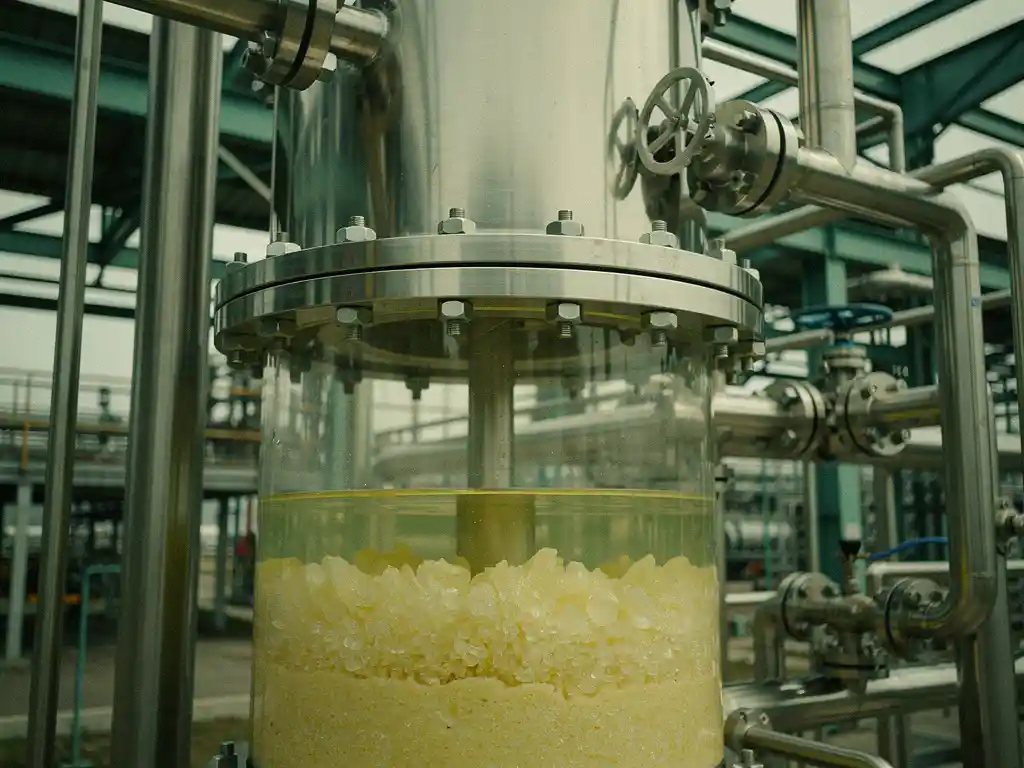
Desulfurization efficiency varies significantly across technologies, with biological processes typically achieving H₂S removal rates above 99% for small to mid-sized sour gas streams, while chemical and thermal methods can match or exceed this under specific conditions. The right technology depends on feed gas composition, flow volume, and whether sulfur recovery is a priority alongside gas sweetening. The sections below compare how each approach performs across the factors that matter most in real-world sour gas treatment. If you have questions about which process fits your application, feel free to get in touch with Paqell’s specialists.
Which desulfurization technology removes the most H₂S?
No single desulfurization technology universally removes the most hydrogen sulfide. For large, high-pressure gas streams with consistent compositions, amine-based gas sweetening combined with a Claus sulfur recovery unit can achieve very high H₂S removal. For small to mid-sized streams with variable or unfavorable gas compositions, biological desulfurization consistently delivers removal efficiencies above 99% in a single integrated unit.
The distinction matters because different technologies are optimized for different operating windows. Amine units excel when gas volumes are large and the economics of a downstream Claus plant are justified. Chemical scrubbing with iron chelates or caustic solutions can also reach very high removal rates but generates liquid waste streams that require further handling. Biological processes occupy a unique position: they treat the gas and recover elemental sulfur simultaneously, without generating hazardous byproducts, which makes them highly competitive under conditions where other technologies struggle.
How does biological desulfurization work compared to chemical processes?
Biological desulfurization uses naturally occurring, self-regulating bacteria to convert H₂S into solid elemental sulfur. The bacteria oxidize hydrogen sulfide in a controlled bioreactor, producing a manageable solid that can be reused in agriculture. Chemical processes, by contrast, rely on reactive solvents, oxidizing agents, or high-temperature reactions to remove or convert H₂S, often producing liquid or gaseous sulfur compounds as intermediates.
The biological mechanism
In a biological process such as THIOPAQ O&G, sour gas contacts an alkaline scrubbing liquid that absorbs H₂S. The sulfide-rich liquid is then fed to a bioreactor where sulfur-oxidizing bacteria convert dissolved sulfide to elemental sulfur under carefully maintained conditions. Because the bacteria are self-regulating, the process naturally adapts to fluctuations in H₂S concentration without operator intervention.
Chemical process mechanisms
Chemical desulfurization typically involves either absorption (amine scrubbing, caustic washing) or oxidation (iron-chelate processes, liquid redox systems). These methods are effective but require chemical replenishment, generate spent solvent or liquid waste, and often need separate downstream processing to recover or dispose of sulfur compounds. The operational complexity and chemical costs add up, particularly for smaller or more remote installations.
What factors affect desulfurization efficiency in sour gas treatment?
The main factors affecting desulfurization efficiency are H₂S concentration in the feed gas, gas flow rate, temperature, pressure, and the presence of co-contaminants such as CO₂, hydrocarbons, or oxygen. Each of these variables influences how well a given technology can absorb, react with, or biologically convert hydrogen sulfide under real operating conditions.
- H₂S inlet concentration: High concentrations can saturate chemical solvents quickly, while biological systems handle a wide range without proportional chemical cost increases.
- Gas flow rate and volume: Large volumes favor large-scale chemical or thermal processes; smaller volumes are better served by compact biological or chemical units.
- CO₂ content: High CO₂ levels compete with H₂S for absorption capacity in amine systems, reducing selectivity and efficiency.
- Temperature and pressure: Both affect absorption equilibria in chemical systems and bacterial activity in biological ones.
- Co-contaminants: Hydrocarbons, oxygen traces, and heavy metals can inhibit biological activity or degrade chemical solvents, reducing overall removal performance.
Understanding these factors before selecting a gas treatment application is essential to achieving consistent, long-term desulfurization performance.
How does sulfur recovery rate differ between desulfurization technologies?
Sulfur recovery rate differs substantially between technologies. The Claus process, used downstream of amine units, achieves sulfur recovery of roughly 95 to 98% in a standard two or three-stage configuration, with tail gas treatment pushing this higher. Biological desulfurization integrates gas cleaning and sulfur recovery in a single unit, achieving high recovery of elemental sulfur directly, without requiring a separate thermal plant.
Liquid redox and iron-chelate chemical processes also recover elemental sulfur but typically require additional sulfur separation and filtration steps. Caustic scrubbing does not recover sulfur at all; it simply transfers the sulfide to a liquid waste stream. For operators who need both gas sweetening and usable sulfur output from a compact installation, the integrated recovery offered by biological systems is a meaningful operational advantage.
When does a biological desulfurization process outperform conventional alternatives?
A biological desulfurization process outperforms conventional alternatives when treating small to mid-sized sour gas streams with unfavorable or variable gas compositions. Specifically, it excels where CO₂ content is high, where H₂S concentrations fluctuate, or where the gas volume does not justify the capital investment of a full Claus plant combined with an amine unit.
Biological systems also outperform chemical alternatives in remote or unmanned locations because the self-regulating nature of the bacteria reduces the need for continuous operator adjustment. There is no need to procure and replenish reactive chemicals on a regular schedule, which simplifies logistics significantly. Additionally, because the process produces non-hazardous elemental sulfur rather than liquid waste streams, it reduces the environmental compliance burden associated with waste disposal. For biogas desulfurization and biogas upgrading applications, biological treatment is often the most practical and cost-effective route available.
What are the operational costs that affect total desulfurization efficiency?
The operational costs most directly affecting total desulfurization efficiency are chemical consumption, energy use, maintenance requirements, and waste handling. These costs determine not just the expense of running a system, but how consistently it performs over time, since cost-driven shortcuts in chemical replenishment or maintenance often lead to efficiency degradation.
In amine-based systems, solvent degradation, foaming, and corrosion are recurring cost drivers that require ongoing chemical treatment and equipment inspection. Claus plants require precise temperature control across multiple reactors, adding energy and maintenance costs. Liquid redox chemical systems consume chelating agents that must be continuously replenished and managed as hazardous waste.
Biological systems have a different cost profile. Energy consumption is relatively low, chemical inputs are minimal (nutrients for the bacteria rather than reactive chemicals), and because the bacteria self-regulate, the system requires less hands-on operational oversight. The sulfur product is non-hazardous and can generate value as a soil amendment in agriculture, partially offsetting operational costs. When total cost of ownership is calculated across installation, operation, chemical supply, and waste disposal, biological desulfurization consistently offers a lower cost profile for the applications it is designed to serve. To explore whether this approach suits your specific gas treatment challenge, get in touch with Paqell or use the THIOPAQ O&G scan tool to assess your situation directly.
Frequently Asked Questions
Can biological desulfurization handle sudden spikes in H₂S concentration without process upset?
Yes, one of the key advantages of biological desulfurization systems like THIOPAQ Ou0026G is their inherent resilience to fluctuating H₂S loads. The sulfur-oxidizing bacteria self-regulate their activity in response to changes in sulfide availability, meaning the process naturally adjusts without requiring manual intervention or chemical dosage changes. That said, extreme or prolonged spikes beyond the design envelope should be discussed with your technology provider during the engineering phase to ensure the bioreactor is appropriately sized.
Is biological desulfurization suitable for offshore or remote unmanned installations?
Biological desulfurization is well-suited for remote and unmanned locations precisely because its self-regulating bacterial culture reduces the need for continuous operator presence and frequent chemical resupply logistics. Unlike amine or liquid redox systems that require regular solvent replenishment and monitoring, biological systems run on minimal nutrient inputs and produce a non-hazardous solid sulfur byproduct that is easy to manage. Operators should factor in connectivity for remote monitoring and periodic maintenance visits, but overall the operational footprint is significantly lower than conventional chemical alternatives.
What happens to the elemental sulfur produced by biological desulfurization — how is it handled and disposed of?
The elemental sulfur produced is a non-hazardous solid that can be used directly as a soil amendment or fertilizer in agriculture, giving it genuine commercial value rather than a disposal cost. It is typically harvested from the bioreactor as a sulfur slurry, which can be dewatered and stored or transported with standard equipment. This is a significant operational advantage over chemical processes that generate liquid sulfur compounds or spent solvents classified as hazardous waste, which carry both disposal costs and regulatory compliance obligations.
How do I know if my gas stream volume is too large or too small for a biological desulfurization unit?
Biological desulfurization is generally most competitive for small to mid-sized sour gas streams, though the exact threshold depends on H₂S concentration, gas composition, and project economics rather than flow rate alone. The best starting point is to use a screening tool like the THIOPAQ Ou0026G scan tool available on Paqell’s website, which evaluates your specific feed gas parameters against the technology’s operating envelope. For borderline cases or complex compositions, Paqell’s specialists can provide a more detailed feasibility assessment to determine whether a biological, chemical, or hybrid approach is the right fit.
Can biological desulfurization be retrofitted onto an existing gas treatment facility, or does it require a greenfield installation?
Biological desulfurization can be integrated into existing gas treatment facilities as a retrofit, and in many cases it is used to replace or supplement underperforming chemical scrubbing systems. The modular nature of biological units makes them relatively straightforward to install alongside existing infrastructure, provided there is adequate space and appropriate tie-in points for the gas and liquid circuits. A detailed engineering review of the existing facility layout, pressure profiles, and utility availability is recommended before committing to a retrofit design.
What are the most common mistakes operators make when selecting a desulfurization technology?
One of the most frequent mistakes is selecting a technology based solely on H₂S removal efficiency figures without accounting for total cost of ownership, including chemical supply, waste disposal, energy consumption, and maintenance complexity. Another common error is undersizing or oversizing the system by not fully characterizing the feed gas — particularly CO₂ content, flow variability, and co-contaminant levels — which leads to efficiency shortfalls or unnecessary capital expenditure. Finally, operators sometimes overlook the regulatory and logistical burden of managing hazardous waste streams generated by chemical processes, which can significantly erode the economic case for those technologies over time.
Does high CO₂ content in the feed gas negatively affect biological desulfurization the way it affects amine systems?
High CO₂ content is far less problematic for biological desulfurization than for amine-based systems. In amine scrubbing, CO₂ competes directly with H₂S for absorption capacity, reducing selectivity and increasing solvent regeneration costs. In biological systems, the alkaline scrubbing liquid is designed to selectively absorb H₂S, and while CO₂ can influence the pH balance of the scrubbing solution, this is managed through process control rather than representing a fundamental efficiency limitation. This makes biological desulfurization particularly attractive for biogas and other gas streams where CO₂ concentrations are inherently high.
Related Articles
Related Articles
- What is a personal hydrogen sulfide monitor and how does it work?
- What is desulfurization and why does it matter in industrial gas processing?
- What are the community health risks of hydrogen sulfide from industrial sources?
- What first aid is needed for H2S exposure?
- What are the limitations of hydrogen sulfide detection in hot environments?
