

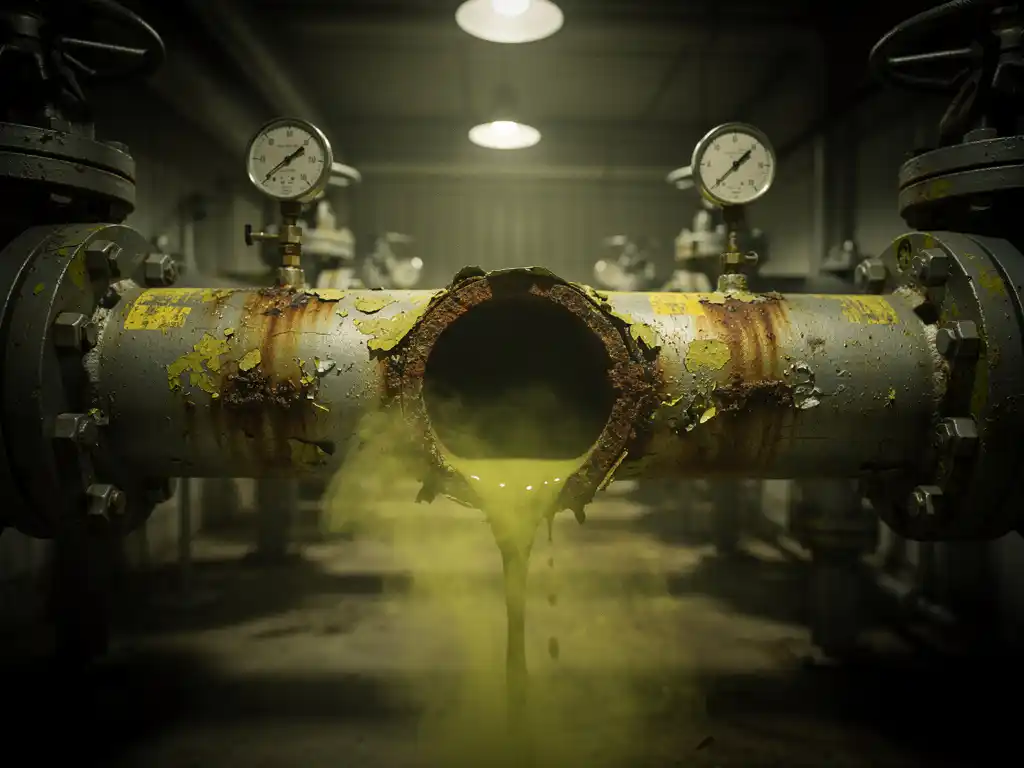
H2S biogas is natural gas or biomethane produced through anaerobic digestion that contains hydrogen sulfide (H₂S) as a contaminant. Biogas naturally contains H₂S because sulfur compounds in organic feedstocks are broken down by sulfate-reducing bacteria during the digestion process. The concentration of H₂S in biogas varies widely depending on the feedstock, but it must be removed before the gas can be safely used as fuel, injected into a grid, or upgraded to biomethane. The sections below walk through where this H₂S comes from, why it is hazardous, and how it is effectively removed. If you have questions about a specific application or situation, feel free to get in touch, and we are happy to help.
Where does H2S in biogas come from?
H₂S in biogas originates from the microbial breakdown of sulfur-containing organic compounds in the feedstock. During anaerobic digestion, sulfate-reducing bacteria convert sulfates, sulfites, and organic sulfur compounds into hydrogen sulfide gas, which then becomes part of the biogas mixture alongside methane and carbon dioxide.
The amount of H₂S produced depends heavily on what is being digested. Feedstocks rich in proteins and sulfur compounds, such as manure, slaughterhouse waste, and food processing residues, tend to generate significantly higher H₂S concentrations than feedstocks like energy crops or cellulosic material. In practice, H₂S concentrations in raw biogas can range from a few hundred parts per million (ppm) to several thousand ppm, with some manure-based digesters producing concentrations above 10,000 ppm. This wide variability is one reason why H₂S measurement and monitoring are essential parts of any biogas operation.
Why is H2S in biogas dangerous?
H₂S is dangerous because it is a highly toxic gas that poses serious risks to human health, equipment, and the environment even at low concentrations. Hydrogen sulfide is classified as a broad-spectrum poison that affects the nervous system, and it can be lethal at concentrations above 500 ppm with short exposure times.
Hydrogen sulfide hazards to human health
The health hazards of hydrogen sulfide are well established. At low concentrations, the characteristic rotten egg smell of hydrogen sulfide serves as a warning, but this is a deceptive safety signal. At higher concentrations, H₂S causes olfactory fatigue, meaning the sense of smell becomes paralyzed and the gas can no longer be detected by odor alone. Hydrogen sulfide symptoms from inhalation escalate quickly: low-level exposure causes eye and respiratory irritation, while higher concentrations lead to headaches, dizziness, and loss of consciousness. Hydrogen sulfide poisoning at concentrations above 700 ppm can cause rapid incapacitation and death. This is why H₂S detection equipment, including a reliable H₂S detector or H₂S meter, is a critical safety requirement wherever biogas is handled.
Hydrogen sulfide hazards to equipment and infrastructure
Beyond the direct threat to human health, H₂S is highly corrosive. When hydrogen sulfide comes into contact with moisture, it forms sulfuric acid, which aggressively attacks metal pipework, compressors, engines, and heat exchangers. Biogas used in combined heat and power (CHP) engines without prior desulfurization will cause accelerated wear, shortened maintenance intervals, and premature equipment failure. For biogas upgrading systems targeting biomethane grid injection, even trace levels of H₂S can breach grid quality specifications and damage downstream infrastructure.
What happens if H2S is not removed from biogas?
If H₂S is not removed from biogas before use, the consequences span safety incidents, equipment damage, regulatory non-compliance, and environmental harm. Untreated biogas with high H₂S content cannot legally or safely be used as a fuel, injected into a gas grid, or sold as biomethane in most jurisdictions.
From an operational standpoint, combustion of H₂S-laden biogas produces sulfur dioxide (SO₂), a harmful air pollutant that contributes to acid rain and respiratory problems. Engines and turbines burning untreated biogas will experience corrosion of internal components, leading to costly repairs and unplanned downtime. In addition, most national grid codes and biogas quality standards set strict H₂S threshold values, often below 5 ppm for biomethane, meaning biogas upgrading is not possible without effective prior desulfurization. Skipping H₂S removal is therefore not a viable shortcut but a technical and regulatory dead end.
How is H2S removed from biogas?
H₂S is removed from biogas through several established desulfurization methods, including biological desulfurization, chemical scrubbing, adsorption on iron-based media, and membrane separation. The right method depends on the H₂S concentration, required outlet quality, gas flow rate, and overall project economics.
Chemical and physical desulfurization methods
Iron oxide or iron hydroxide media, often called iron sponge or iron chelate systems, are commonly used for moderate H₂S concentrations. These systems adsorb H₂S onto a reactive medium that must be periodically regenerated or replaced. Chemical scrubbing with caustic solutions is another option for high-concentration streams, but it generates liquid waste that requires further treatment. Membrane-based separation can also achieve H₂S removal as part of broader biogas upgrading, though it is typically combined with other polishing steps to meet strict outlet specifications.
Biological desulfurization
Biological desulfurization uses naturally occurring sulfur-oxidizing bacteria to convert H₂S into elemental sulfur. In biogas applications, a small controlled amount of air or oxygen is introduced into the digester headspace or a dedicated bioreactor, allowing the bacteria to oxidize H₂S to solid elemental sulfur. This approach is highly cost-effective for many biogas plants because it avoids chemical consumption and produces a sulfur byproduct that can be used in agriculture. Paqell’s THIOPAQ O&G technology extends this biological principle to more demanding gas streams, integrating desulfurization and sulfur recovery in a single unit.
What are the benefits of biological H2S removal from biogas?
Biological H₂S removal offers lower operating costs, minimal chemical inputs, and the production of a usable elemental sulfur byproduct compared to chemical or physical alternatives. Because the process relies on self-regulating naturally occurring bacteria, it is inherently stable and does not require continuous chemical dosing or complex regeneration cycles.
The key advantages of biogas desulfurization using a biological process include:
- Low chemical consumption: The bacteria act as the catalyst, eliminating or greatly reducing the need for purchased chemicals.
- Sulfur recovery: The elemental sulfur produced is non-hazardous and can be applied as a soil amendment or fertilizer, creating a circular output from the waste treatment process.
- Operational simplicity: Biological systems are self-regulating within defined parameters, reducing the operator burden compared to chemical scrubbers.
- Scalability: Biological desulfurization can be designed for a wide range of biogas flow rates and H₂S concentrations.
- Environmental profile: No hazardous waste streams are generated, and the process does not produce secondary pollutants associated with chemical treatment.
For biogas plant operators weighing their options, biological desulfurization is often the most economically and environmentally attractive route, particularly for plants with high H₂S loads or those targeting circular economy credentials. The THIOPAQ O&G scan can help assess whether this approach fits a specific gas composition and project context.
What H2S concentration is acceptable in treated biogas?
The acceptable H₂S concentration in treated biogas depends on the intended end use. For biomethane grid injection, most European grid codes require H₂S levels below 5 ppm. For CHP engine applications, engine manufacturers typically specify a maximum of 100 to 250 ppm, though lower concentrations extend engine life significantly. For direct combustion in boilers, limits are generally less strict but still regulated by local air quality standards.
In practice, the H₂S threshold value for any given application is set by a combination of equipment manufacturer specifications, national grid standards, and environmental permits. Biogas upgrading to biomethane quality demands the most rigorous removal, often requiring a combination of a primary biological or chemical desulfurization step followed by a polishing stage to achieve the sub-5 ppm target reliably. Regular H₂S measurement using a calibrated H₂S meter or continuous H₂S monitoring system is essential to verify that treated gas consistently meets the required specification before it enters downstream equipment or the grid. Establishing the right H₂S detection and control strategy from the outset protects both the investment in gas treatment infrastructure and the safety of everyone working with the system.
Understanding H₂S in biogas is the first step toward designing a safe, efficient, and compliant gas treatment process. Whether you are evaluating desulfurization options for a new project or optimizing an existing biogas cleaning system, get in touch with Paqell to discuss the best approach for your specific gas composition and application.
Frequently Asked Questions
How do I know which H₂S removal method is right for my biogas plant?
The best desulfurization method depends on four key factors: your raw H₂S concentration, your target outlet quality, your gas flow rate, and your budget for both capital and operating costs. As a general rule, biological desulfurization is the most cost-effective choice for plants with consistently high H₂S loads, while iron oxide media suits smaller or lower-concentration applications. A feasibility scan — such as the THIOPAQ Ou0026G scan — can evaluate your specific gas composition and project context to recommend the most appropriate solution.
Can H₂S concentrations in biogas change over time, and how should I manage that variability?
Yes, H₂S concentrations can fluctuate significantly over time as feedstock composition, digester temperature, and microbial activity shift — sometimes by thousands of ppm within days or weeks. This variability is why continuous H₂S monitoring is strongly recommended over periodic spot measurements alone. Designing your desulfurization system with some capacity buffer above your expected peak concentration ensures it remains effective even during high-sulfur loading periods.
What are the most common mistakes biogas plant operators make when managing H₂S?
One of the most frequent mistakes is under-sizing the desulfurization system based on average H₂S levels rather than peak concentrations, leaving the system overwhelmed when feedstock sulfur content spikes. Another common error is delaying H₂S removal until after a CHP engine or upgrading unit has already been installed, which dramatically increases retrofitting costs. Finally, relying solely on odor as a safety warning is a serious risk — as the post explains, olfactory fatigue at higher concentrations means H₂S can reach dangerous levels without any detectable smell.
Is the elemental sulfur recovered from biological desulfurization actually usable, and what does it take to sell or apply it?
Yes, the elemental sulfur produced by biological desulfurization is a non-hazardous, stable solid that can be used as a soil amendment or agricultural fertilizer, making it a genuine circular economy output. In most cases, it can be applied directly on farmland, which is particularly convenient for biogas plants co-located with agricultural operations. However, local regulations on sulfur application rates and any contaminants in the sulfur stream should be verified with your environmental permitting authority before commercial use or sale.
What H₂S detection equipment should a biogas plant have as a minimum safety requirement?
At a minimum, every biogas facility should have fixed H₂S gas detectors installed at key risk points — including the digester area, gas treatment building, and any enclosed spaces where biogas is handled — set to trigger alarms well below the 10 ppm occupational exposure limit. Portable personal H₂S meters should also be mandatory for any worker entering confined spaces or performing maintenance on gas-handling equipment. All detection equipment must be regularly calibrated according to the manufacturer’s schedule, as sensor drift can give false confidence in safe conditions.
Can biological desulfurization achieve the sub-5 ppm H₂S levels required for biomethane grid injection on its own?
Standalone biological desulfurization is highly effective at bulk H₂S removal and can reduce concentrations from several thousand ppm down to the low tens of ppm reliably. However, consistently achieving sub-5 ppm — the threshold required by most European grid codes — typically requires an additional polishing step, such as an iron oxide guard bed or activated carbon filter, downstream of the biological unit. This two-stage approach combines the low operating cost of biological treatment for the heavy lifting with the precision of a polishing stage for final compliance.
How does retrofitting H₂S removal onto an existing biogas plant differ from designing it into a new project?
Retrofitting introduces constraints that new-build projects avoid: available footprint, existing pipework layouts, and the need to integrate new equipment without disrupting ongoing gas production all add complexity and cost. In practice, this often means that retrofit projects benefit most from compact, modular desulfurization technologies that can be installed with minimal civil works. Engaging a technology provider early in the retrofit planning phase — before equipment is specified — gives the most flexibility to find a solution that fits both the technical requirements and the physical realities of the existing site.
Related Articles
Related Articles
- What are the symptoms of hydrogen sulfide poisoning at low concentrations?
- What is hydrogen sulfide and where does it come from?
- How does hydrogen sulfide affect the integrity of offshore pipelines?
- How does hydrogen sulfide cause olfactory fatigue in workers?
- How does desulfurization technology support the energy transition?
