

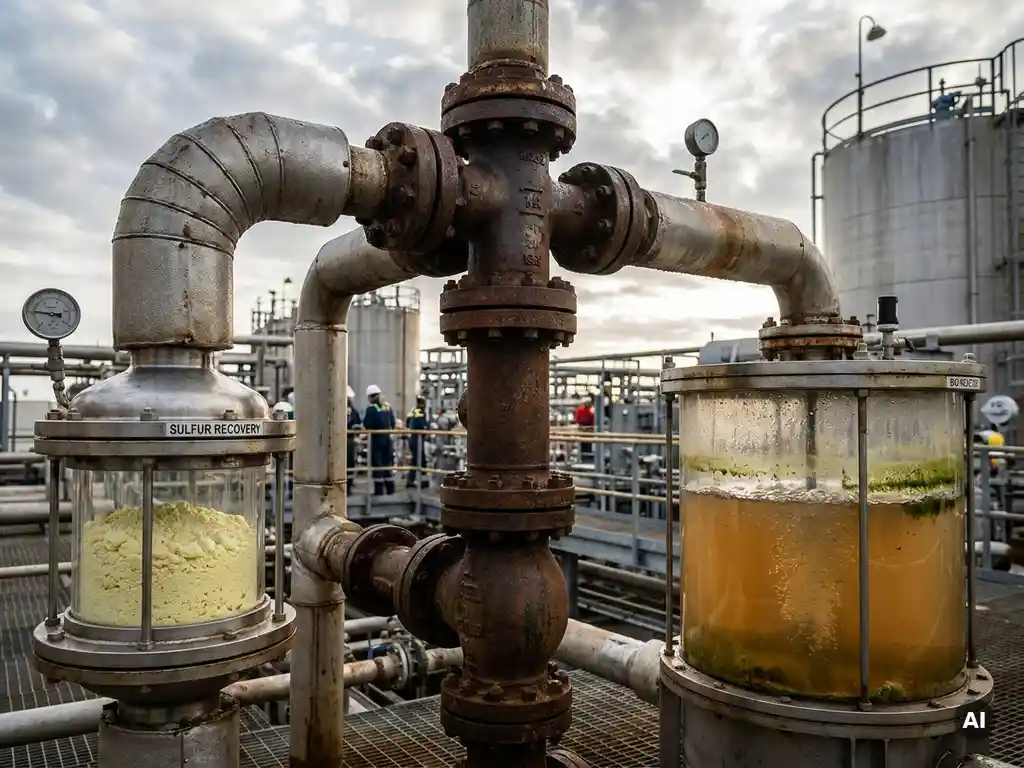
Choosing the right desulfurization process is one of the more consequential decisions in gas treatment engineering. SulfaTreat, an iron-based non-regenerative scavenger, works well under specific conditions, but it is not always the most practical or cost-effective solution. When H₂S loads increase, operational continuity becomes a priority, or sulfur recovery adds economic value, a regenerative process often becomes the stronger choice. This guide walks you through a structured evaluation so you can make that determination with confidence. If you are unsure where your application falls, feel free to get in touch, and we will be happy to help you work through the analysis.
The steps below follow a logical sequence: first establish the technical baseline of your gas stream, then assess your sulfur handling needs, then weigh operational factors, and finally apply those findings to a clear go/no-go decision. Work through each step in order, as later steps depend on what you learn earlier.
Key Factors to Assess Before Comparing Treatment Options
Before you can meaningfully compare SulfaTreat against any regenerative desulfurization process, you need a clear picture of your operating context. Skipping this groundwork leads to comparisons that look clean on paper but fail in practice.
Gather the following information about your gas stream and site before moving forward:
- Current and projected H₂S concentration in the feed gas (ppmv or mol%)
- Volumetric flow rate of the gas stream (Nm³/h or MMscfd)
- Gas composition, including CO₂ content and presence of other contaminants
- Required outlet H₂S specification
- Site footprint and infrastructure constraints
- Operational philosophy: attended, semi-attended, or remote operation
- Frequency and tolerance for planned shutdowns
Once you have these inputs documented, you have a reliable foundation for the comparisons in the steps that follow. Gaps in this data are common, and it is better to identify them now than to discover them mid-evaluation.
Identify the H₂S Load and Flow Rate Thresholds
Calculate the total sulfur load on your system, expressed as kilograms of sulfur per day. This single figure is the most reliable early indicator of whether a non-regenerative scavenger like SulfaTreat remains practical.
- Multiply your H₂S concentration (converted to mole fraction) by the molar flow rate of the gas stream to get the molar H₂S flow.
- Convert that to a mass flow of elemental sulfur (multiply moles of H₂S per hour by 32 g/mol, then scale to kg/day).
- Compare the result against a practical threshold: sulfur loads above roughly 50 to 100 kg/day typically make non-regenerative scavengers expensive to operate due to high media consumption and disposal costs.
At low sulfur loads, SulfaTreat is straightforward and cost-competitive. As the load climbs, media replacement frequency increases rapidly, and the cumulative cost of purchasing, handling, and disposing of spent iron oxide media begins to outweigh the lower capital cost of the scavenger vessel. If your calculation puts you above the threshold, the case for a regenerative process strengthens considerably. If you are near the boundary, continue through the remaining steps before concluding.
Also factor in flow rate variability. SulfaTreat performance degrades when flow rates fluctuate significantly, because channeling through the media bed reduces contact efficiency. Regenerative biological processes, by contrast, are generally more tolerant of variable inlet conditions due to the self-regulating nature of the microbial community involved.
Evaluate Sulfur Recovery Requirements and Byproduct Value
Determine whether the sulfur removed from your gas stream has recoverable value or must be disposed of as waste. This distinction directly affects the economic comparison between treatment options.
- Identify the end state of sulfur in each process: SulfaTreat produces spent iron oxide media classified as a hazardous or non-hazardous waste depending on jurisdiction, while regenerative biological processes can produce elemental sulfur suitable for agricultural use.
- Obtain local disposal costs for spent scavenger media, including transport and tipping fees.
- Assess whether recovered elemental sulfur can be sold or used on-site, and at what value per tonne.
- Model the annual cost difference between disposal and recovery at your projected sulfur load.
This step often changes the economic picture substantially. When sulfur loads are moderate to high and recovered sulfur has market value, a regenerative process that integrates gas desulfurization and sulfur recovery in a single unit can offset a significant portion of its operating cost. SulfaTreat offers no recovery pathway, so every kilogram of sulfur removed becomes a disposal liability. If your sulfur load generates more than a few tonnes per month, document the disposal cost as a recurring operational expense in your comparison model.
Assess Operational Continuity and Maintenance Trade-offs
Evaluate how each process fits your site’s operational model, particularly around planned maintenance, media changeouts, and unplanned downtime risk.
Media Replacement and Downtime
SulfaTreat vessels require periodic shutdown for media replacement. The frequency depends on sulfur load, but at higher loads this can become a significant operational burden. Confirm how often media changeouts would be required at your calculated sulfur load, and whether that aligns with your maintenance schedule and production continuity requirements.
Operator Attention and Stability
Consider the level of operator attention each process demands. SulfaTreat is passive once installed, requiring minimal daily interaction, which suits remote or minimally staffed sites with low H₂S loads. Regenerative biological processes require monitoring of biological activity, pH, and nutrient dosing, but modern systems are designed to be stable and largely self-regulating. The bacterial communities used in biological desulfurization are naturally occurring and self-sustaining under consistent operating conditions, which reduces the risk of sudden performance loss.
Document your site’s staffing level and remote monitoring capability. If your site already supports regular operator presence for other reasons, the additional monitoring requirement of a regenerative process is unlikely to represent a meaningful burden. If the site is genuinely remote and unattended, factor that constraint explicitly into your decision.
Apply the Decision Criteria to Select the Right Process
With your sulfur load, recovery economics, and operational constraints documented, apply the following decision logic to reach a clear conclusion.
- If your sulfur load is consistently below 50 kg/day, the gas stream composition is straightforward, and the site is remote with minimal staffing, SulfaTreat likely remains the more practical choice.
- If your sulfur load exceeds 100 kg/day, or is projected to grow, a regenerative process is almost certainly more cost-effective over a multi-year horizon.
- If sulfur recovery adds meaningful economic or environmental value, weigh this in favor of a regenerative biological process regardless of load.
- If operational continuity is critical and media changeout downtime is unacceptable, a regenerative process with continuous operation capability is the stronger fit.
- If your gas composition includes high CO₂ or other challenging components, verify that the regenerative process under consideration is validated for those conditions before committing.
Use the Paqell SCAN tool to quickly screen your application parameters against proven technology performance ranges. This can help you validate your manual calculation and identify whether your stream falls within the operating envelope of biological desulfurization technology.
The goal of this evaluation is not to favor one technology over another, but to match the process to the actual demands of the application. SulfaTreat is a proven tool within its appropriate range. Outside that range, a regenerative process delivers better economics, greater operational stability, and a more sustainable sulfur handling outcome. If you have completed this assessment and want to discuss your specific results, get in touch and we can help you move from evaluation to implementation.
Related Articles
- How to Reduce Waste When Removing H₂S from Sour Gas
- What is hydrogen sulfide scavenging and how is it used in oil and gas?
- What maintenance is required for a biological desulfurization system?
- What is the role of IoT in H2S monitoring and safety?
- What questions should you ask before investing in a gas desulfurization system?
This content was generated with the help of AI and it may contain mistakes
