

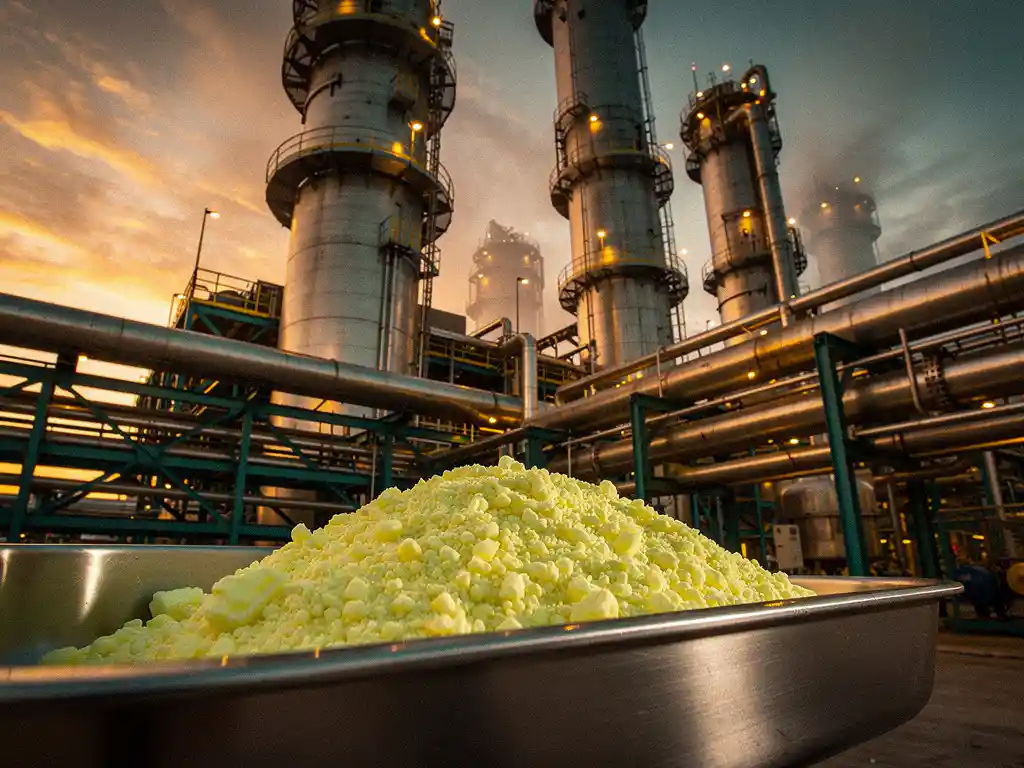
Successful industrial desulfurization projects are well documented across the oil and gas, biogas, and refining sectors, with biological and chemical technologies each demonstrating proven track records. The most reliable case evidence comes from projects handling sour gas treatment, hydrogen sulfide removal, and sulfur recovery at small to mid-scale facilities where process conditions vary significantly. If you are evaluating options for your own project and want guidance specific to your situation, feel free to get in touch with a specialist. The sections below address the most common questions operators ask when researching real-world desulfurization outcomes.
What industries have the most documented desulfurization project successes?
The oil and gas industry, biogas production, and petroleum refining have the most extensively documented desulfurization project successes. These sectors handle large volumes of hydrogen sulfide-bearing gas streams on a continuous basis, which means operators have accumulated decades of operational data, performance records, and lessons learned across a wide range of process conditions.
Within oil and gas, upstream processing of sour natural gas and associated gas represents the largest body of project evidence. Refineries contribute a significant share of documented cases through their amine units and Claus sulfur recovery trains. Biogas desulfurization has grown rapidly as a documented category, driven by the expansion of anaerobic digestion plants processing agricultural waste, municipal sewage sludge, and food industry byproducts. Landfill gas treatment also features prominently, as landfill operators face strict limits on hydrogen sulfide concentrations before gas can be used for energy generation.
Industrial applications such as coke oven gas treatment, geothermal energy production, and chemical manufacturing round out the documented landscape. Each of these industries faces distinct gas compositions and flow rate challenges, which is why the breadth of industrial applications for desulfurization technology has expanded considerably over the past two decades.
How does biological desulfurization perform compared to chemical alternatives in real projects?
Biological desulfurization consistently outperforms chemical alternatives in real projects where gas streams are small to mid-scale, H2S concentrations are moderate, and operators prioritize low operating costs and minimal chemical consumption. Chemical methods such as iron chelate scrubbing or caustic absorption can achieve comparable H2S removal efficiency, but they require an ongoing reagent supply, generate liquid waste streams, and carry higher long-term operating expenditure.
In documented project comparisons, biological systems using naturally occurring bacteria to convert hydrogen sulfide into elemental sulfur have demonstrated stable, self-regulating performance without the need for hazardous chemical inputs. The sulfur produced is a solid, manageable byproduct that can be used in agricultural applications rather than disposed of as hazardous waste. This distinction matters in regions where chemical waste disposal is costly or regulated.
Chemical alternatives, including Claus process variants and liquid redox systems, remain the preferred choice at very high H2S concentrations or very large gas volumes where biological systems reach their practical limits. The documented evidence suggests that for sour gas treatment and biogas cleaning at small and medium scales, biological desulfurization delivers competitive sulfur recovery rates with a simpler operational profile. Operators evaluating gas sweetening options should weigh not just capital cost but the total cost of ownership over the project lifetime.
What H2S concentrations and gas flow rates have been handled in successful projects?
Successful industrial desulfurization projects have handled hydrogen sulfide concentrations ranging from a few hundred parts per million up to several percent by volume, and gas flow rates from a few hundred normal cubic meters per hour to tens of thousands. The specific combination of H2S concentration and flow rate determines which technology is appropriate and how the process must be configured.
Biogas desulfurization projects commonly treat streams with H2S levels between 500 and 5,000 ppm, though some agricultural biogas plants have documented concentrations exceeding 10,000 ppm. At these levels, biological systems have demonstrated reliable removal down to pipeline or engine specification limits. Sour gas treatment projects in oil and gas production have successfully managed streams where H2S constitutes a significant fraction of the total gas volume, conditions that would make the gas hazardous and commercially unusable without treatment.
Gas flow rates in documented projects span a wide range. Small-scale biogas upgrading installations may process a few hundred Nm³/h, while mid-scale oil and gas applications regularly document flows in the thousands of Nm³/h. The critical insight from real project data is that unfavorable gas compositions, such as high CO2 content alongside high H2S, do not necessarily prevent successful desulfurization when the right technology is selected for those specific conditions.
What operational challenges have real desulfurization projects overcome?
Real desulfurization projects have overcome challenges including variable gas composition, fluctuating H2S loads, sulfur plugging in process equipment, and the operational complexity of managing chemical reagents. These are the most frequently cited difficulties in project documentation, and they have driven operators toward technologies that are more self-regulating and less sensitive to feed variability.
Variable H2S load is a particularly common challenge in biogas projects, where feedstock changes at the digester directly affect the concentration of hydrogen sulfide in the output gas. Projects that selected rigid chemical dosing systems have documented upsets when loads shifted unexpectedly. Biological systems, by contrast, have shown the ability to adapt to load changes because the bacterial population self-regulates in response to available substrate.
Sulfur deposition and plugging in downstream equipment is another well-documented operational issue, especially in projects where elemental sulfur is produced but not efficiently separated. Projects that addressed this through proper separator design and regular maintenance cycles reported significantly fewer unplanned shutdowns. Operator training and remote monitoring have also been cited as factors that separate projects with strong long-term performance records from those that struggled after commissioning.
What sulfur recovery outcomes have industrial projects actually achieved?
Industrial desulfurization projects using biological processes have achieved sulfur recovery rates that are competitive with chemical alternatives, with the added advantage that the recovered sulfur is elemental and directly usable. Projects in the oil and gas and biogas sectors have documented recovery of solid elemental sulfur suitable for agricultural use as a soil amendment or fertilizer input, which gives the recovered material a practical downstream value.
The recovery efficiency in well-operated biological desulfurization projects is high enough that operators can meet stringent H2S outlet specifications, including those required for pipeline gas quality or engine fuel standards. In sour gas treatment projects, the combination of high H2S removal and meaningful sulfur recovery in a single process unit has been a documented advantage, particularly for operators who want to avoid the complexity and cost of separate treatment and recovery trains.
Chemical Claus process installations at large refineries have historically achieved very high sulfur recovery percentages, but these systems require significant capital investment and are not economically justified at smaller scales. The documented evidence from mid-scale projects suggests that biological sulfur recovery closes much of the performance gap while offering lower installation and operating costs, making it a practical choice for a broader range of project sizes.
What should operators evaluate before selecting a desulfurization technology for their project?
Before selecting a desulfurization technology, operators should evaluate their gas composition, H2S concentration range, flow rate, required outlet specification, available footprint, and total cost of ownership over the project lifetime. No single technology is optimal for all conditions, and documented project failures often trace back to a mismatch between process requirements and technology selection.
- Gas composition: High CO2 content, the presence of other contaminants, and fluctuating H2S levels all affect which technology will perform reliably over time.
- H2S concentration and flow rate: These two parameters together define the sulfur load, which determines equipment sizing and process design.
- Outlet specification: Pipeline quality, engine fuel quality, and flare gas requirements each set different H2S thresholds that the chosen technology must consistently meet.
- Sulfur byproduct handling: Operators should consider whether recovered sulfur can be reused or must be disposed of, as this affects both cost and environmental compliance.
- Operational complexity: Technologies that require continuous chemical dosing, regular reagent procurement, or highly skilled operators carry hidden costs that simple capital cost comparisons miss.
- Footprint and installation constraints: Offshore platforms, remote locations, and retrofit projects impose space and logistics constraints that favor compact, integrated process units.
Operators who conduct a structured technology screening using these criteria consistently report better project outcomes than those who select based on capital cost alone. Using a structured evaluation tool, such as a technology fit scan, can help identify which approach is most appropriate for a specific set of process conditions before committing to detailed engineering. Get in touch to discuss your project requirements and find out which desulfurization approach has the strongest track record for your application.
Frequently Asked Questions
How long does it typically take for a biological desulfurization system to reach stable operation after commissioning?
Biological desulfurization systems generally require a startup period of two to six weeks for the bacterial population to establish and stabilize, depending on inoculation method, temperature conditions, and incoming H2S load. During this period, H2S removal efficiency gradually increases as the microbial community adapts to the specific gas composition. Operators can accelerate startup by using pre-cultivated bacterial cultures and maintaining consistent feed conditions in the early commissioning phase.
What are the most common mistakes operators make when implementing a desulfurization project for the first time?
The most frequent mistake is selecting a technology based on capital cost alone without accounting for operating costs, chemical consumption, and waste disposal over the full project lifetime. Underestimating variability in H2S concentration is another common pitfall, as systems sized for average load can be overwhelmed during peak production periods. A third recurring issue is insufficient attention to sulfur handling and separator design, which leads to plugging and unplanned downtime that erodes the project’s economic case.
Can desulfurization technology be retrofitted onto an existing gas treatment facility, or does it require a greenfield installation?
Desulfurization technology can be successfully retrofitted onto existing facilities, and many documented projects have been implemented as upgrades to operating plants rather than greenfield builds. Compact, modular biological desulfurization units are particularly well suited to retrofit scenarios because they have a smaller footprint and simpler utility requirements than chemical alternatives. The key engineering considerations for a retrofit are available space, tie-in points for gas inlet and outlet, and whether existing infrastructure such as blowers or separators can be integrated into the new process.
What happens to system performance if the H2S load suddenly spikes due to a change in feedstock?
Biological desulfurization systems are generally more resilient to sudden H2S load spikes than fixed-dose chemical systems, because the bacterial population can increase its activity in response to higher substrate availability. However, very large or rapid spikes can temporarily exceed the system’s treatment capacity, causing short-term breakthrough at the outlet. Operators can mitigate this risk by installing online H2S monitoring with automated alerts, designing for a conservative safety margin above the expected peak load, and having a documented response procedure for feedstock changes.
Is the elemental sulfur recovered from biological desulfurization actually usable in agriculture, or are there quality requirements it needs to meet first?
The elemental sulfur produced by biological desulfurization is generally suitable for agricultural use as a soil amendment or fertilizer input, but it must meet purity and contaminant thresholds set by local regulations or end-user specifications. In most documented cases, the sulfur byproduct from well-operated biological systems is sufficiently pure for direct agricultural application without further processing. Operators should confirm the applicable standards in their region and, if needed, have the recovered sulfur analyzed before establishing a supply relationship with an agricultural buyer.
How should operators approach technology selection when their gas stream contains both high H2S and high CO2 concentrations?
High CO2 content alongside high H2S is a well-documented challenge because CO2 can compete with or interfere with certain chemical absorption processes, and it affects the overall gas composition that the treatment system must handle. Biological desulfurization is generally tolerant of high CO2 concentrations, as the bacteria are selective for H2S and are not significantly inhibited by CO2 at typical biogas or sour gas ratios. For gas streams with this dual challenge, a structured technology screening that explicitly tests candidate processes against the actual gas composition is strongly recommended before committing to a design.
What monitoring and maintenance practices distinguish high-performing desulfurization projects from those that struggle over time?
High-performing projects consistently invest in online H2S monitoring at both the inlet and outlet, enabling operators to detect performance changes early and respond before they become compliance or safety issues. Regular inspection and cleaning of sulfur separators, as well as scheduled checks on nutrient dosing systems in biological units, are maintenance practices cited repeatedly in strong long-term performance records. Operator training and clear escalation procedures for process upsets are equally important, as projects with well-documented operating protocols report significantly fewer unplanned shutdowns compared to those that rely on ad hoc troubleshooting.
Related Articles
- How is hydrogen sulfide monitored in ambient air?
- What is the role of H2S removal in biogas cleaning for CHP applications?
- How does microaeration work in biogas desulfurization?
- How does iron sponge desulfurization work and what are its limits?
- How do hydrogen sulfide hazards differ between indoor and outdoor environments?
Related Articles
- What is hydrogen sulfide smell and why can it not be relied on for safety?
- How is desulfurization applied in biogas upgrading to biomethane?
- What are the symptoms of hydrogen sulfide poisoning at low concentrations?
- How does the Thiopaq desulfurization process work?
- What are the physical and chemical properties of hydrogen sulfide?
