

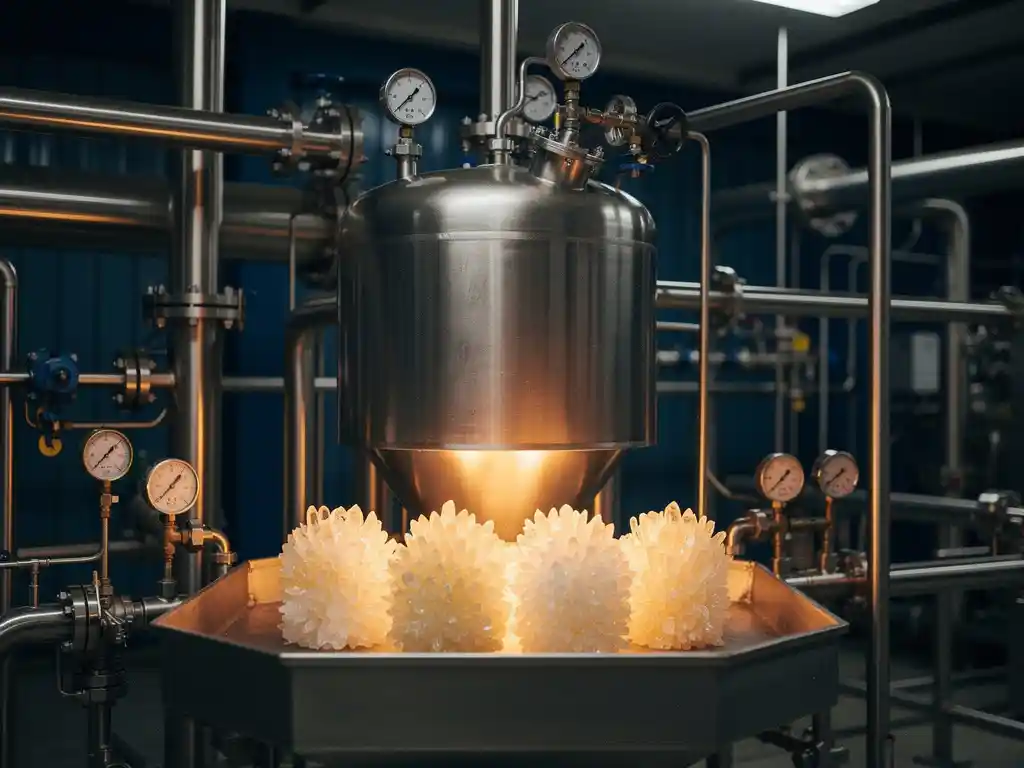
A Thiopaq O&G unit typically achieves H2S removal efficiency of 99% or higher, converting hydrogen sulfide in the feed gas to elemental sulfur with consistent, reliable results. This level of performance is achievable across a wide range of inlet H2S concentrations, making it a practical solution for sour gas treatment in both upstream and downstream applications. The sections below address the most common questions about how this efficiency is achieved, what influences it, and how it compares to alternative gas sweetening technologies. If you have specific questions about your situation, feel free to get in touch with the Paqell team.
What H2S removal efficiency levels does Thiopaq O&G typically achieve?
Thiopaq O&G consistently achieves H2S removal efficiencies of 99% and above under normal operating conditions. This means that for most sour gas treatment applications, the outlet gas contains only trace levels of hydrogen sulfide, well within the specifications required for pipeline-quality gas, fuel gas, or further downstream processing.
This high removal performance is not limited to ideal feed conditions. The biological desulfurization process maintains strong efficiency across a broad range of gas compositions, flow rates, and inlet H2S concentrations. For operators dealing with small to mid-scale sour gas streams, this translates to a reliable, low-maintenance route to sulfur recovery and clean gas output without the complexity of multi-stage treatment trains.
How does the biological desulfurization process achieve high H2S removal?
The biological desulfurization process in Thiopaq O&G achieves high H2S removal by using naturally occurring bacteria to oxidize hydrogen sulfide directly into solid elemental sulfur. These microorganisms act as a self-regulating biological catalyst, continuously converting H2S as it passes through the system in a single integrated unit.
The process works in two stages that occur within one compact unit. First, the sour gas contacts an alkaline scrubbing liquid, where H2S is absorbed and forms bisulfide ions in solution. Second, naturally occurring sulfur-oxidizing bacteria in the bioreactor convert these bisulfide ions into elemental sulfur under controlled, mildly aerobic conditions. The sulfur precipitates as a solid and can be separated and recovered for use in agricultural applications.
Because the bacteria are self-regulating, the system automatically adapts to changes in H2S load without operator intervention. This biological mechanism is inherently stable, which is a key reason why the technology sustains high removal efficiency over long operating periods with minimal chemical inputs. Unlike purely chemical processes, there is no catalyst degradation or reagent depletion to manage.
What factors affect the H2S removal efficiency of a Thiopaq O&G unit?
The main factors affecting H2S removal efficiency in a Thiopaq O&G unit are gas flow rate, inlet H2S concentration, temperature, pH control in the scrubbing liquid, and the health and activity level of the bacterial population. When these parameters stay within design ranges, the unit sustains its target removal performance reliably.
Gas flow rate and H2S loading directly influence how much contact time the gas has with the scrubbing liquid. If the gas velocity through the absorber is too high or the H2S load spikes beyond the biological capacity of the reactor, removal efficiency can temporarily decline. However, the self-regulating nature of the bacteria means the system recovers quickly once conditions normalize.
Temperature and pH are critical for maintaining bacterial activity. The sulfur-oxidizing bacteria used in the process thrive within a defined temperature window and require a stable alkaline environment in the scrubbing liquid. Proper monitoring and control of these parameters are standard practice in Thiopaq O&G operations and are built into the process design. The bacteria themselves are robust and do not require sterile conditions or exotic nutrients, which simplifies long-term operation.
How does Thiopaq O&G removal efficiency compare to amine treating and Claus units?
Thiopaq O&G achieves comparable H2S removal efficiency to amine treating for the outlet gas quality it targets, and it integrates sulfur recovery into the same unit, which a standalone amine unit does not. Compared to a conventional Claus plant, Thiopaq O&G is simpler to operate and more cost-effective for small to mid-scale gas streams, though large-scale Claus units can process higher sulfur throughput.
Amine treating is highly effective at removing H2S and CO2 from gas streams, but it produces a concentrated acid gas that still requires downstream sulfur recovery, typically via a Claus plant. This means operators need two separate process units and the associated capital and operating costs. Thiopaq O&G combines gas sweetening and sulfur recovery in a single step, which reduces both the equipment footprint and the total cost of ownership.
For gas streams with unfavorable compositions, such as high CO2 to H2S ratios or low H2S concentrations, Claus-based systems can struggle with stable operation. Thiopaq O&G handles these challenging compositions more effectively because the biological process is not dependent on a minimum H2S partial pressure in the same way that thermal Claus combustion is. This makes it a strong fit for the types of sour gas streams where conventional technologies underperform. You can explore the full range of Thiopaq O&G applications to see which gas stream types are supported.
Can Thiopaq O&G maintain efficiency with fluctuating H2S inlet concentrations?
Yes, Thiopaq O&G is specifically designed to handle fluctuating H2S inlet concentrations while maintaining high removal efficiency. The self-regulating bacterial population adjusts its activity level in response to changes in H2S load, allowing the system to absorb variation in feed gas composition without significant loss of performance.
This adaptability is one of the core advantages of the biological approach over purely chemical or thermal processes. Chemical scrubbing systems may require reagent dosing adjustments when inlet concentrations change significantly, while Claus-based systems can be sensitive to fluctuations in acid gas quality. The bacteria in Thiopaq O&G respond naturally to higher or lower H2S availability, scaling their metabolic activity up or down accordingly.
In practice, this means the technology is well-suited to applications where gas composition is not constant, such as associated gas from oil production, tail gas from refinery operations, or biogas desulfurization scenarios where H2S levels vary with feedstock. Operators benefit from a system that does not require frequent manual retuning to maintain its outlet gas specification.
What outlet H2S specifications can Thiopaq O&G meet?
Thiopaq O&G can meet outlet H2S specifications in the low parts per million (ppm) range, which satisfies the requirements for pipeline-quality gas, fuel gas, and many industrial gas applications. The exact achievable outlet concentration depends on the design of the specific unit and the operating conditions, but single-digit ppm H2S levels are achievable in well-designed installations.
For applications where the treated gas is used as fuel gas within a facility, the threshold is often in the range of a few hundred ppm or lower, and Thiopaq O&G comfortably meets these targets. Where pipeline gas specifications apply, which typically require H2S below 4 to 10 ppm depending on the jurisdiction, the technology can be configured to deliver compliant output.
It is worth noting that Thiopaq O&G can process feed gas directly from the source or as the off-gas from an amine unit, giving operators flexibility in how they integrate it into an existing gas treatment train. If you want to assess whether Thiopaq O&G can meet the H2S outlet specification for your specific gas stream, you can use the Paqell SCAN tool to get a quick technical fit assessment, or get in touch with the team directly.
Frequently Asked Questions
How long does it take to commission and start up a Thiopaq Ou0026G unit?
Commissioning and startup timelines vary depending on unit size and site conditions, but the biological inoculation phase — where the bacterial population is established and activated — typically takes a few weeks to reach full operational capacity. During this period, H2S removal efficiency gradually ramps up as the bacteria acclimate to the specific feed gas composition. Paqell’s engineering team supports this startup phase to ensure the system reaches its target performance as quickly and smoothly as possible.
What happens to the elemental sulfur produced by the process, and is it considered a waste product?
The elemental sulfur produced by Thiopaq Ou0026G is not a waste product — it is a recoverable, sellable byproduct. The sulfur precipitates as a high-purity solid and is suitable for use in agricultural applications, primarily as a soil amendment or fertilizer ingredient. This means operators can offset some of their operating costs by marketing the sulfur rather than managing it as a disposal liability, which is a meaningful advantage over processes that produce sulfur in less usable forms.
What are the most common operational mistakes that can reduce Thiopaq Ou0026G efficiency, and how can they be avoided?
The most common operational issues that reduce efficiency include allowing the scrubbing liquid pH to drift outside its optimal range, introducing contaminants that inhibit bacterial activity (such as biocides or certain trace chemicals in the feed gas), and operating at gas flow rates significantly above the design capacity for extended periods. These issues are avoidable through consistent process monitoring, proper feed gas characterization before startup, and adhering to the operating envelope defined during unit design. Building good monitoring routines into daily operations goes a long way toward sustaining peak performance.
Is Thiopaq Ou0026G suitable for very low H2S concentration feed gases, or does it require a minimum inlet concentration to function?
Thiopaq Ou0026G is well-suited to low H2S concentration feed gases and does not require a high minimum inlet concentration the way thermal Claus combustion does, which typically needs at least 15–20% H2S in the acid gas to sustain a stable flame. The biological process can handle dilute H2S streams effectively, making it a practical choice for applications like biogas upgrading, low-concentration associated gas, or tail gas treatment where H2S levels may be in the low hundreds to low thousands of ppm range.
How does Thiopaq Ou0026G perform in terms of CO2 co-absorption, and does it affect the treated gas quality?
CO2 co-absorption is a relevant consideration in any alkaline scrubbing system, and Thiopaq Ou0026G is designed with this in mind. The scrubbing liquid chemistry and operating conditions are optimized to favor H2S absorption over CO2, minimizing unwanted CO2 removal from the gas stream. This is particularly important for applications where the treated gas has a high CO2 content that needs to be preserved, and it is one area where proper unit design and operating parameter selection make a significant difference to overall gas quality.
Can Thiopaq Ou0026G be retrofitted into an existing gas treatment facility, or does it require a greenfield installation?
Thiopaq Ou0026G can be integrated into existing gas treatment facilities and does not require a greenfield setup. It can be installed as a standalone unit processing raw sour gas, or positioned downstream of an existing amine unit to handle the acid gas or off-gas stream — effectively adding sulfur recovery capability to an already-operating sweetening train. Its relatively compact footprint compared to conventional Claus-based systems makes it a practical retrofit option, and Paqell’s team can assess integration requirements for a specific site configuration.
What level of operator expertise and day-to-day involvement is needed to run a Thiopaq Ou0026G unit?
Thiopaq Ou0026G is designed for low-maintenance operation and does not require specialist microbiological expertise from the operating team on a day-to-day basis. The self-regulating bacterial population handles most of the process adaptation automatically, and routine operation primarily involves standard process monitoring tasks such as checking pH, temperature, flow rates, and nutrient dosing levels. Paqell provides operator training as part of the commissioning process, ensuring that facility staff are fully equipped to manage the unit confidently within their existing operational workflows.
Related Articles
- How to Evaluate SulfaTreat Against Regenerative H₂S Removal
- What are the hydrogen sulfide symptoms that workers often mistake for other conditions?
- What is desulfurization and why does it matter in industrial gas processing?
- What is the Claus process and how does it handle H2S?
- What is the market outlook for gas desulfurization technology in 2026?
This content was generated with the help of AI and it may contain mistakes
