

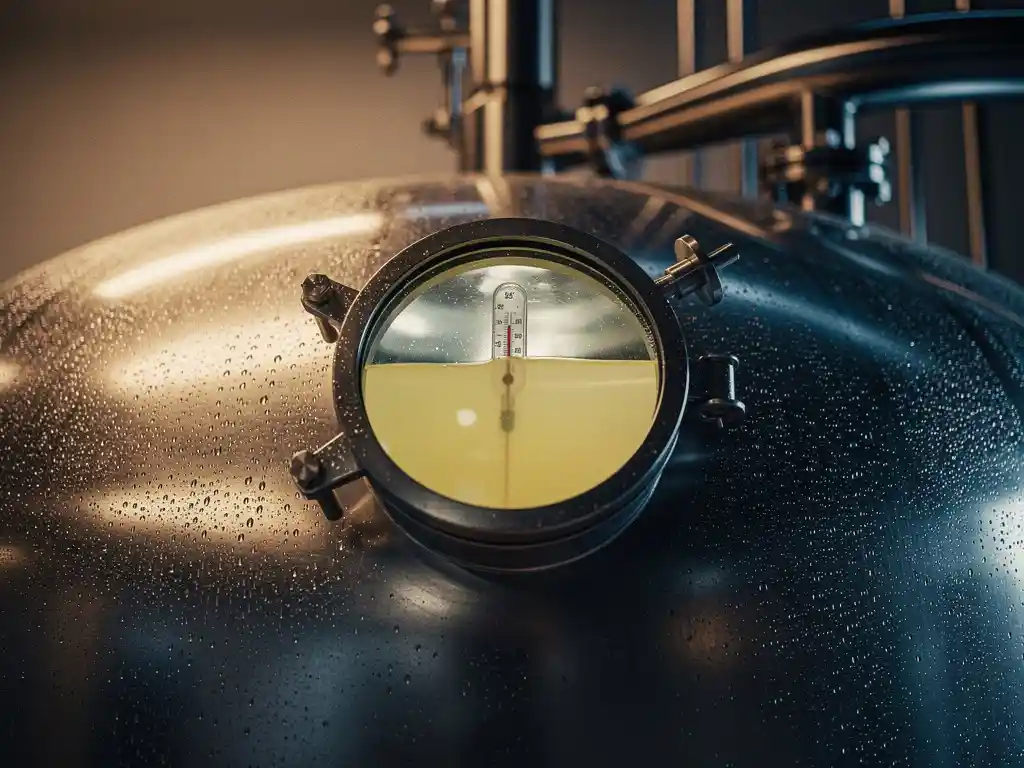
Temperature directly affects desulfurization performance by controlling the activity of the sulfur-oxidizing bacteria at the core of biological gas treatment processes. These microorganisms operate most efficiently within a specific thermal window, and deviations in either direction reduce conversion rates, compromise sulfur quality, and ultimately lower H2S removal efficiency. The sections below unpack each dimension of this relationship, from bacterial behavior and sulfur output to inlet gas conditions and system control strategies.
If you have specific questions about your gas stream or treatment setup, feel free to get in touch, and we are happy to help.
What is the optimal temperature range for biological desulfurization?
The optimal temperature range for biological desulfurization is broadly between 30°C and 40°C, with peak bacterial performance typically observed around 35°C. Within this window, sulfur-oxidizing bacteria convert hydrogen sulfide into elemental sulfur at maximum efficiency, supporting consistent H2S removal and reliable sulfur recovery output.
This range reflects the natural thermal preferences of the mesophilic bacteria used in systems such as THIOPAQ O&G. These microorganisms evolved in environments where temperatures rarely swing dramatically, so they are optimized for stable, moderate warmth rather than extremes. Operating within the optimal band keeps metabolic rates high, maintains a healthy bacterial population, and produces sulfur particles with favorable physical properties for downstream handling.
Temperatures below 25°C begin to slow bacterial metabolism noticeably, while temperatures consistently above 45°C can cause irreversible damage to the microbial community. Neither extreme is quickly recoverable, which is why maintaining the target range is a core operational priority in biological gas sweetening systems.
How does temperature affect bacterial activity in desulfurization systems?
Temperature governs the metabolic rate of the sulfur-oxidizing bacteria responsible for converting H2S into elemental sulfur. As temperature rises toward the optimal range, enzymatic reactions accelerate and bacteria oxidize hydrogen sulfide more rapidly. As temperature falls below the optimum, these same reactions slow, reducing the system’s capacity to treat incoming sour gas effectively.
In practical terms, a drop of even five to ten degrees below the optimal range can measurably reduce the rate of H2S conversion. This matters most during cold-weather startup conditions or when processing gas streams that arrive significantly cooler than the reactor environment. The bacteria do not die at moderately low temperatures, but their activity decreases to the point where desulfurization efficiency drops and untreated H2S can break through into the outlet gas.
Sustained high temperatures present a different risk. Above roughly 45°C, bacterial proteins begin to denature, and the population may crash entirely if heat stress is prolonged. Recovery from a thermal shock event requires time to rebuild the microbial community, during which the system cannot process gas at full capacity. This makes temperature stability, not just temperature level, a critical operational parameter for biological biogas desulfurization and sour gas treatment applications alike.
What happens to sulfur quality when desulfurization temperatures fluctuate?
Temperature fluctuations in a biological desulfurization system directly affect the physical properties of the recovered elemental sulfur. When temperatures remain stable within the optimal range, bacteria produce sulfur particles that are consistent in size and purity, making the recovered sulfur well-suited for agricultural use. When temperatures fluctuate, particle size distribution becomes irregular and sulfur purity can decline.
The connection between temperature and sulfur quality runs through bacterial metabolism. At stable, optimal temperatures, the oxidation of hydrogen sulfide proceeds in a controlled manner, producing sulfur in a form that separates cleanly from the liquid phase in the bioreactor. Temperature swings disrupt this process, leading to finer or more colloidal sulfur particles that are harder to separate and may carry more impurities.
For operators focused on sulfur recovery as a value stream rather than simply a waste product, maintaining temperature stability is therefore a quality issue as much as a performance issue. Sulfur recovered from a well-controlled biological system can be applied directly in agriculture without further processing, but sulfur from a thermally unstable system may require additional treatment or may be unsuitable for higher-value applications.
Why does inlet gas temperature matter for desulfurization efficiency?
Inlet gas temperature matters because gas entering the bioreactor at temperatures far outside the optimal range can shift the reactor temperature away from the bacterial optimum, reducing conversion efficiency. Cold inlet gas chills the liquid phase of the reactor, slowing microbial activity, while very hot inlet gas can stress the bacterial population and alter the chemical equilibrium of H2S absorption.
In gas treatment systems processing aardgas, refinery gas, or other sour gas streams, the inlet temperature is rarely constant. Seasonal variation, upstream process changes, and pipeline conditions all influence the temperature at which gas arrives at the treatment unit. Operators who do not account for these variations may find that their system performs well in summer but struggles in winter, or that upstream process upsets translate directly into efficiency losses in the desulfurization unit.
Managing inlet gas temperature often involves preheating cold gas streams before they enter the bioreactor, or incorporating heat exchangers that stabilize the thermal load on the system. The goal is to ensure that the reactor liquid temperature remains within the bacterial optimum regardless of what is happening upstream. This is particularly relevant for diverse gas stream applications, where inlet conditions can vary significantly between sources.
How can desulfurization systems be controlled to maintain stable temperatures?
Biological desulfurization systems maintain stable temperatures through a combination of reactor insulation, heat exchangers, temperature-controlled water circuits, and process monitoring. The most effective approach integrates automatic temperature control that responds to deviations in real time, adjusting heating or cooling inputs before the reactor temperature drifts outside the bacterial optimum.
Reactor insulation and heat retention
Insulating the bioreactor vessel reduces heat loss to the environment, which is particularly important in outdoor installations in cold climates. Proper insulation minimizes the energy required to maintain the target temperature and buffers the system against rapid ambient temperature changes. In many installations, insulation alone is sufficient to maintain the reactor within an acceptable range during mild seasonal variation.
Active temperature control systems
For more demanding applications, active control systems use heat exchangers or jacketed reactor designs to add or remove heat as needed. Temperature sensors placed at multiple points in the reactor feed data to a control system that adjusts heating or cooling in response to measured deviations. This approach is standard practice in larger biological gas sweetening installations and in applications where inlet gas temperatures fluctuate significantly. Operators can also use the THIOPAQ O&G scan tool to assess system performance parameters and identify thermal management opportunities specific to their configuration.
Does temperature affect desulfurization differently for various gas stream types?
Yes, temperature sensitivity in desulfurization systems varies depending on the composition and origin of the gas stream being treated. High-H2S-concentration streams, such as those found in sour gas treatment or refinery applications, place greater metabolic demand on the bacterial population, which can amplify the impact of temperature deviations. Lower-concentration streams, such as those encountered in biogas desulfurization or biogas upgrading, are generally more forgiving but still benefit from stable thermal conditions.
Gas streams with variable composition present an additional challenge. When H2S concentration fluctuates alongside temperature, the combined effect on bacterial activity is greater than either variable alone. Operators treating fuel gas, flare gas, or tail gas from amine units should therefore monitor both parameters together rather than treating them as independent concerns.
Moisture content and the presence of other compounds such as carbon dioxide also interact with temperature to influence system behavior. CO2, for example, affects the pH of the bioreactor liquid, and pH sensitivity can be more pronounced at non-optimal temperatures. Understanding these interactions is part of designing a robust gas treatment strategy that performs reliably across the range of conditions a given gas stream is likely to present throughout its operational life.
Temperature management is one of the most controllable variables in biological desulfurization, and getting it right has a measurable impact on H2S removal efficiency, sulfur quality, and overall system reliability. Whether you are evaluating a new installation or optimizing an existing one, understanding the thermal requirements of your biological treatment system is a practical first step toward consistent performance. Get in touch to discuss your specific gas stream conditions and how temperature control fits into your broader desulfurization strategy.
Frequently Asked Questions
How quickly does a biological desulfurization system recover after a temperature excursion?
Recovery time depends on the severity and duration of the thermal event. After a mild excursion — say, a temporary drop to 20°C or a brief spike to 48°C — the bacterial population may recover within a few days once temperatures are restored to the optimal range. A prolonged thermal shock, particularly sustained heat above 45°C, can crash the microbial community significantly, requiring one to several weeks to rebuild population density and restore full H2S removal capacity. During this period, operators should expect reduced throughput or increased H2S breakthrough and plan accordingly.
What are the most common mistakes operators make when managing temperature in biological desulfurization systems?
The most frequent mistake is treating temperature as a set-and-forget parameter rather than an actively monitored variable. Operators often install a single temperature sensor at one point in the reactor, missing localized cold or hot zones that gradually degrade performance. Another common error is failing to account for seasonal inlet gas temperature shifts — a system calibrated for summer conditions may underperform significantly in winter without any alarms triggering. Finally, some operators respond to efficiency drops by adjusting chemical dosing or other parameters before checking whether a subtle temperature drift is the root cause.
Can biological desulfurization systems operate effectively in very cold climates, such as in Arctic or sub-Arctic regions?
Yes, but they require more robust thermal management infrastructure than systems installed in temperate environments. In cold climates, bioreactors typically need comprehensive insulation, jacketed vessel designs with active heating circuits, and preheating of inlet gas streams to prevent the reactor liquid from being chilled below the bacterial optimum. Heat integration with other process streams on-site — such as waste heat from engines or compressors — can make this economically efficient. The key is designing the thermal control system for the worst-case ambient and inlet conditions the site will realistically experience, not just average conditions.
Is there any benefit to operating at the higher end of the optimal temperature range, closer to 40°C rather than 35°C?
Operating closer to 40°C can marginally increase bacterial metabolic rates and may slightly improve H2S conversion speed under high-load conditions, but it also narrows the safety margin before heat stress begins to affect the microbial population. A system running at 40°C has less buffer against an unexpected temperature spike than one running at 35°C. For most applications, targeting the middle of the optimal range — around 33°C to 37°C — provides the best balance between bacterial activity and operational resilience. Higher-end operation may be worth exploring in consultation with your system supplier if throughput demands are consistently at the upper limit of design capacity.
How does temperature management interact with pH control in a biological desulfurization system?
Temperature and pH are closely linked in biological desulfurization because the solubility of CO2 and the dissociation behavior of carbonate species in the reactor liquid both change with temperature. A shift in reactor temperature can therefore alter the liquid pH even without any change in gas composition, which in turn affects bacterial activity and sulfur particle formation. Operators who monitor pH independently of temperature may find themselves chasing a pH problem that is actually a symptom of a thermal deviation. Best practice is to monitor both parameters simultaneously and understand how your specific gas stream’s CO2 content influences the temperature-pH relationship in your system.
How do I know if temperature instability is the cause of declining H2S removal efficiency in my existing system?
Start by reviewing your temperature trend data alongside your H2S removal efficiency data over the same period — a correlation between temperature dips or spikes and efficiency losses is a strong indicator. Check whether the decline is gradual and coincides with seasonal ambient temperature changes, or sudden and linked to a specific process event upstream. If your system has only one temperature measurement point, consider temporarily adding portable sensors at the reactor inlet, outlet, and mid-section to identify whether temperature gradients exist within the vessel. If temperature trends appear stable but efficiency is still declining, then other variables such as bacterial nutrient supply, pH, or inlet H2S load should be investigated.
What role does temperature play when scaling up a biological desulfurization system to handle larger gas volumes?
At larger scale, maintaining uniform temperature distribution throughout the bioreactor becomes more challenging because the surface-area-to-volume ratio decreases, making passive heat retention easier but also making localized cold or hot zones more likely. Larger reactors require more sophisticated temperature monitoring with multiple sensor points and, in many cases, internal or external heat exchange systems sized specifically for the increased liquid volume. Scale-up is also an opportunity to integrate heat recovery from other site processes, which can offset the energy cost of maintaining the bacterial optimum. Engaging with your system supplier early in the scale-up design process ensures that thermal management is engineered into the expanded system rather than retrofitted after performance issues emerge.
Related Articles
- How do you choose the right H2S detector for oil and gas facilities?
- What are the symptoms of hydrogen sulfide poisoning at low concentrations?
- How do you design an H2S removal system for high-flow gas streams?
- What is the difference between in-situ and ex-situ biogas desulfurization?
- What maintenance is required for a biological desulfurization system?
Related Articles
- How does hydrogen sulfide scrubbing work in natural gas processing?
- What are the operating costs of different desulfurization technologies?
- How does a wireless hydrogen sulfide detector network improve plant safety?
- What are the environmental effects of hydrogen sulfide emissions?
- How fast does H2S poisoning happen?
