

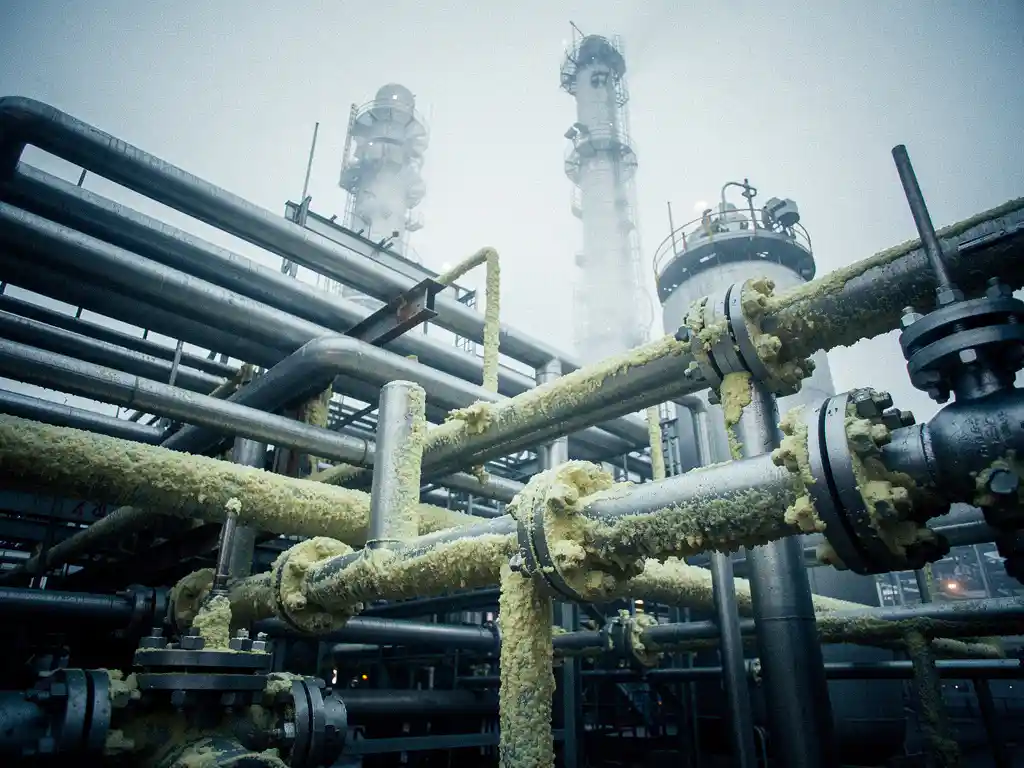
Selecting a sour gas treatment process for high H2S content requires matching the gas composition, flow rate, and sulfur recovery requirements to a technology that can handle concentrated hydrogen sulfide safely and economically. For streams with elevated H2S levels, conventional absorption alone is rarely sufficient — sulfur recovery becomes a critical part of the equation. The sections below work through each decision factor in turn, from defining what “high H2S content” actually means to choosing between chemical and biological removal approaches.
If you are evaluating options for a specific application and would like expert input, feel free to get in touch with the team at Paqell.
What counts as ‘high H2S content’ in sour gas treatment?
In sour gas treatment, a stream is generally considered high in H2S when concentrations exceed several thousand parts per million by volume, or when the H2S partial pressure is significant enough to pose corrosion, safety, and emissions challenges that standard sweetening cannot address on its own. In practice, streams above roughly 1% H2S by volume are routinely classified as high-concentration sour gas requiring dedicated treatment.
The threshold is not purely a number — it is a function of what the downstream process can tolerate. Pipeline specifications for natural gas typically require H2S below 4 ppm, meaning a stream at 5% H2S must achieve a removal efficiency above 99.9%. Refinery fuel gas, flare gas, and acid gas streams can carry H2S concentrations ranging from a few percent to near-pure hydrogen sulfide, each presenting distinct treatment challenges.
High H2S content also intensifies the hazards associated with hydrogen sulfide. Even brief exposure to concentrations above 100 ppm can cause rapid incapacitation, making safe handling and process containment non-negotiable design requirements at these concentration levels.
What are the main sour gas treatment technologies available?
The main sour gas treatment technologies are amine absorption (gas sweetening), physical solvent absorption, direct oxidation processes, the Claus sulfur recovery process, and biological desulfurization. Each technology targets hydrogen sulfide removal but differs in the concentration range it handles best, the form in which sulfur is recovered, and the complexity of operation required.
- Amine gas sweetening: The most widely deployed gas treatment method, using chemical solvents such as MDEA or DEA to absorb H2S and CO2. Well-suited to high-volume streams but generates a concentrated acid gas that requires further processing.
- Physical solvent absorption: Uses solvents like Selexol or Rectisol, preferred when CO2 co-absorption is acceptable or desirable, typically at high pressures.
- Claus process: The industry standard for large-scale sulfur recovery from concentrated acid gas, converting H2S into elemental sulfur through thermal and catalytic stages.
- Direct oxidation / scavenger systems: Suitable for low to moderate H2S concentrations where sulfur recovery is not the primary objective.
- Biological desulfurization: Uses naturally occurring bacteria to convert H2S into solid elemental sulfur, integrating removal and recovery in a single unit. Particularly effective for small to mid-sized sour gas streams with challenging compositions.
The right technology is rarely a single process in isolation. High H2S streams frequently require a combination, such as an amine unit producing acid gas that feeds a Claus unit, or a biological process treating the tail gas or direct feed from the source.
How does gas composition affect the choice of treatment process?
Gas composition is the primary driver of technology selection in sour gas treatment. The H2S concentration, CO2-to-H2S ratio, presence of heavy hydrocarbons, flow rate variability, and total sulfur load each constrain which processes are technically feasible and economically viable.
A high CO2-to-H2S ratio, for example, makes amine-based sweetening less selective and increases regeneration energy costs. Physical solvents may be more appropriate in this case. Streams containing heavy hydrocarbons can foul or degrade certain solvents, ruling out some chemical absorption options. Variable flow rates — common in associated gas or flare gas applications — favor processes with a wide turndown ratio and low sensitivity to feed fluctuations.
Biological desulfurization handles unfavorable gas compositions particularly well. The bacteria-based process is self-regulating and tolerant of fluctuating H2S concentrations and varying inlet conditions, making it a strong candidate for streams that would challenge the stability of conventional chemical processes. You can review the range of gas stream applications where this approach is used to assess fit for a given composition.
What’s the difference between chemical and biological H2S removal?
Chemical H2S removal uses reactive solvents or oxidizing agents to absorb or convert hydrogen sulfide through chemical reactions, while biological H2S removal uses naturally occurring microorganisms to oxidize H2S into elemental sulfur. The key practical difference is that chemical processes typically require continuous chemical inputs and generate liquid or gaseous byproducts, whereas biological processes are self-sustaining once established and produce solid elemental sulfur directly.
Chemical processes such as amine scrubbing are mature, well-understood, and capable of handling very large gas volumes. However, they involve hazardous chemicals, require careful management of the regeneration cycle, and produce an acid gas stream that must be further processed for sulfur recovery. Operational complexity and total cost of ownership increase with scale and with difficult gas compositions.
Biological processes use non-hazardous, naturally occurring bacteria as the catalyst. In the THIOPAQ O&G process, for example, H2S is converted to elemental sulfur within a single integrated unit, eliminating the need for a separate sulfur recovery train. The resulting sulfur is solid, safe to handle, and suitable for agricultural use. The process is simpler to operate, has a lower chemical footprint, and is well-matched to small and mid-sized streams where a full Claus train would be disproportionately complex and costly.
When should sulfur recovery be integrated into the treatment process?
Sulfur recovery should be integrated into the sour gas treatment process whenever the H2S load is high enough that venting or incineration would create unacceptable SO2 emissions, or when the recovered sulfur has commercial or agricultural value that offsets operating costs. For streams above a certain sulfur throughput, regulatory requirements alone make sulfur recovery mandatory rather than optional.
For large-scale operations, the Claus process remains the standard approach, capable of achieving sulfur recovery efficiencies above 95% in multi-stage configurations. Tail gas treatment units can push recovery further when emissions targets are stringent.
For smaller streams, integrating sulfur recovery into the desulfurization step itself is often more practical. Biological processes such as THIOPAQ O&G combine gas sweetening and sulfur recovery in a single unit, which removes the need to build, operate, and maintain a separate recovery system. This integrated approach reduces capital expenditure and simplifies operations for facilities where a standalone Claus unit would be oversized or uneconomical.
What operational and cost factors determine the best-fit process?
The best-fit sour gas treatment process is determined by a combination of capital cost, operating cost, operational complexity, site footprint, maintenance requirements, and long-term reliability. No single technology dominates across all these dimensions — the optimal choice depends on how each factor is weighted for a specific project.
Key cost and operational considerations include:
- Capital expenditure: Amine units and Claus trains require significant upfront investment in equipment, instrumentation, and civil works. Biological systems are typically more compact and lower in capital cost for equivalent sulfur throughput at small to mid-scale.
- Chemical and utility consumption: Chemical absorption processes consume solvent, energy for regeneration, and water. Biological processes require minimal chemical inputs once the bacterial culture is established.
- Operational complexity and staffing: Multi-stage chemical and thermal processes demand skilled operators and rigorous process control. Biological systems are self-regulating, which reduces the operational burden and lowers the risk of process upsets.
- Turndown and flexibility: Operations with variable feed gas quality or intermittent flow benefit from processes with wide turndown capability and tolerance for composition shifts.
- Regulatory and emissions compliance: Stricter SO2 and H2S emission limits increasingly favor integrated recovery solutions over processes that vent or flare sulfur compounds.
A technology scan can help map these factors against available process options for a specific gas stream, providing a structured basis for technology selection before committing to detailed engineering.
Selecting the right sour gas treatment process for high H2S content is a multi-variable decision that benefits from early technical dialogue. If you are working through this selection for a current or upcoming project, get in touch with Paqell to discuss the options in detail.
Frequently Asked Questions
How do I know if my gas stream is a good fit for biological desulfurization versus a Claus-based system?
Biological desulfurization is generally the better fit for small to mid-sized gas streams — typically those with sulfur throughputs where a full Claus train would be oversized or uneconomical — and for streams with variable flow rates or challenging compositions that would destabilize conventional chemical processes. Claus-based systems become the preferred choice at large scale, where their high throughput capacity and proven recovery efficiencies above 95% justify the capital and operational investment. A useful starting point is to assess your sulfur load in tonnes per day alongside your site’s operational complexity tolerance; if both are relatively low, biological processes offer a compelling integrated alternative.
What are the most common mistakes made when selecting a sour gas treatment technology?
One of the most frequent mistakes is selecting a technology based on H2S concentration alone, without accounting for the full gas composition — particularly the CO2-to-H2S ratio, presence of heavy hydrocarbons, and flow rate variability, all of which can significantly affect process performance and cost. Another common error is underestimating the total cost of ownership: a process with lower capital expenditure may carry higher operating costs in chemical consumption, energy, or staffing that erode its economic advantage over time. Failing to account for future regulatory tightening on SO2 emissions is also a pitfall that can make a seemingly cost-effective solution non-compliant within a few years of commissioning.
Can multiple treatment technologies be combined, and how does that work in practice?
Yes, combining technologies is not only possible but often necessary for high H2S streams — and it is the standard approach in many industrial configurations. A common example is pairing an amine sweetening unit with a downstream Claus sulfur recovery unit: the amine unit strips H2S from the gas stream and produces a concentrated acid gas, which then feeds the Claus unit for sulfur recovery. Biological desulfurization can also be integrated into hybrid configurations, for instance as a tail gas treatment step following a Claus unit, or as a standalone unit treating a sidestream directly at the source. The key is ensuring that the outlet conditions of one process are compatible with the inlet requirements of the next.
How do fluctuating or intermittent gas flows affect process performance, and which technologies handle this best?
Fluctuating or intermittent flows are a significant operational challenge for many sour gas treatment technologies, particularly thermal and catalytic processes like the Claus system, which perform best within a relatively narrow operating window. Amine units can handle some variability but may experience solvent foaming, carryover, or efficiency losses if flow rates or compositions shift significantly. Biological desulfurization systems are inherently self-regulating — the bacterial culture adjusts to changing H2S loads without operator intervention — making them particularly well-suited to associated gas, flare gas, or other applications where feed conditions are unpredictable.
What safety considerations are specific to treating high-concentration H2S gas streams?
High H2S concentrations introduce severe safety risks that must be engineered into the process design from the outset, not treated as an afterthought. At concentrations above 100 ppm, H2S can cause rapid incapacitation, meaning that even a brief exposure during a process upset or leak event can be fatal — robust gas detection, emergency shutdown systems, and confined space protocols are non-negotiable. Process containment integrity, material selection for H2S-induced stress corrosion cracking, and safe venting or flaring provisions must all be specified for the actual H2S partial pressures encountered, not just nominal operating conditions.
What does the elemental sulfur produced by biological desulfurization look like, and what can it be used for?
The elemental sulfur produced by biological desulfurization processes such as THIOPAQ Ou0026G is a solid, fine-grained material that is safe to handle under normal conditions — a significant practical advantage over the liquid sulfur produced by Claus units, which requires heated storage and careful handling. The biologically produced sulfur has a hydrophilic surface structure that makes it particularly well-suited for use as a soil amendment and fertilizer in agriculture, where it improves sulfur availability to crops. This end-use can offset a portion of operating costs and supports a circular economy approach to sulfur management.
At what point in a project should technology selection for sour gas treatment take place?
Technology selection should begin as early as the pre-FEED (Front-End Engineering and Design) phase, ideally as soon as representative gas composition and flow rate data are available. Early selection allows the chosen technology to inform site layout, utility requirements, and downstream process integration before costly design decisions are locked in. Engaging with technology providers at this stage — for example, through a structured technology scan — helps identify the shortlist of viable options, surface any site-specific constraints, and establish a basis for comparative cost estimation before committing to detailed engineering.
