

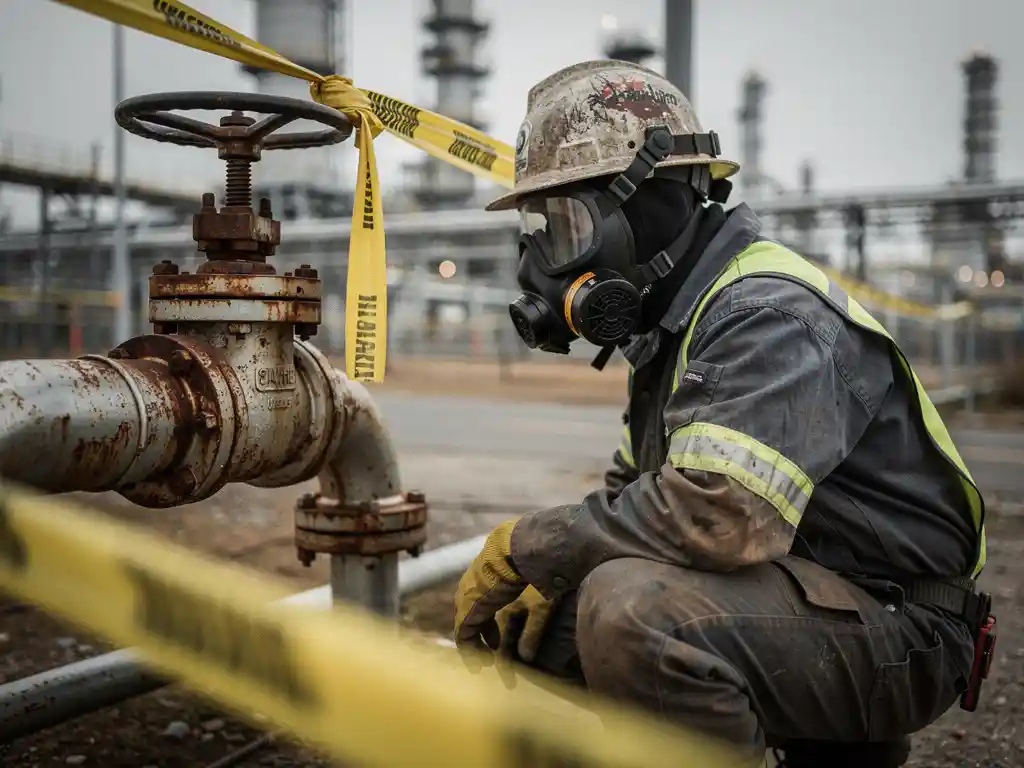
Occupational exposure limits (OELs) for hydrogen sulfide in Europe typically fall between 1 ppm and 10 ppm for short-term exposure, with many EU member states setting 8-hour time-weighted average (TWA) limits at 1 ppm. However, exact thresholds vary by country, as EU legislation establishes indicative values while national authorities retain the right to set stricter or more specific limits. If you work with sour gas, biogas, or any hydrogen sulfide-bearing stream and need guidance on exposure controls, feel free to get in touch with Paqell. This article unpacks how OELs differ across European countries, which legislation applies, and what practical measures industrial operators use to keep H₂S exposure within safe limits.
How do occupational exposure limits for H₂S vary across European countries?
Occupational exposure limits for H₂S across European countries range from as low as 1 ppm (8-hour TWA) in countries such as Germany and the Netherlands, up to 5 ppm TWA in others. Short-term exposure limits (STELs), typically measured over 15 minutes, commonly sit between 5 ppm and 10 ppm. While the EU has issued indicative reference values, each member state sets and enforces its own legally binding thresholds.
In practice, this means a worker on a gas processing site in Germany operates under stricter limits than a counterpart in certain other EU countries. Germany’s TRGS 900 technical rules, for instance, set the MAK (maximum workplace concentration) for hydrogen sulfide at 1 ppm TWA. The Netherlands follows a similarly conservative approach. France and the UK (prior to Brexit, but still broadly aligned with EU frameworks) have historically applied a 5 ppm TWA with a 10 ppm STEL. Nordic countries such as Sweden and Denmark have also maintained limits in the 1 to 5 ppm range.
For operators running facilities across multiple European jurisdictions, this patchwork of national limits creates a compliance challenge. The safest practical approach is to design engineering controls and monitoring protocols to meet the strictest applicable national standard, which in most cases means targeting a TWA of 1 ppm and a STEL no higher than 5 ppm.
What EU legislation governs workplace exposure to hydrogen sulfide?
The primary EU legislation governing workplace chemical exposure, including hydrogen sulfide, is the Chemical Agents Directive (CAD, Directive 98/24/EC), which requires employers to assess and control risks from hazardous chemical agents at work. Hydrogen sulfide is classified as a chemical agent under this directive, and the associated indicative occupational exposure limit values (IOELVs) established by the European Commission provide a reference baseline for member states.
The IOELVs are published through separate Commission Directives amending the CAD. These are indicative rather than binding at the EU level, meaning member states must take them into account but may set stricter national binding OELs. Alongside the CAD, the Framework Directive 89/391/EEC establishes the general obligation for employers to ensure workers’ health and safety, which includes conducting risk assessments for H₂S exposure in environments such as oil and gas processing, biogas plants, and wastewater treatment facilities.
Employers in the EU are also required to comply with REACH regulations where chemical substances are handled, and with CLP (Classification, Labelling and Packaging) requirements, which classify hydrogen sulfide as acutely toxic and a flammable gas. Together, these frameworks create a layered legal obligation: assess the risk, implement controls, monitor exposure, and document compliance.
What health effects does H₂S cause at different concentration levels?
Hydrogen sulfide causes health effects that escalate rapidly with concentration. At low levels (below 1 ppm), the characteristic rotten egg smell is detectable. Between 2 and 5 ppm, prolonged exposure causes eye and respiratory irritation. Above 50 ppm, serious effects including pulmonary edema and loss of consciousness can occur. At concentrations above 700 ppm, a single breath can be fatal.
One of the most dangerous properties of H₂S is olfactory fatigue. At concentrations above roughly 100 ppm, the gas paralyzes the olfactory nerve, meaning workers can no longer smell it even as concentrations continue to rise. This makes reliance on smell alone a serious and potentially fatal mistake in industrial settings. Hydrogen sulfide symptoms at moderate concentrations include headaches, dizziness, nausea, and shortness of breath, often described as hydrogen sulfide inhalation effects that workers may initially mistake for general fatigue.
Hydrogen sulfide poisoning at high concentrations causes rapid unconsciousness, respiratory failure, and cardiac arrest. The mechanism is similar to cyanide: H₂S inhibits cytochrome c oxidase, blocking cellular respiration. This is why emergency response protocols in oil and gas facilities, biogas plants, and sour gas treatment operations require immediate evacuation and the use of self-contained breathing apparatus (SCBA) rather than standard respirators.
How is hydrogen sulfide exposure monitored and measured on industrial sites?
Hydrogen sulfide exposure on industrial sites is monitored using a combination of fixed-point gas detectors, portable H₂S meters worn by personnel, and periodic air sampling. Fixed H₂S detectors are installed at known emission points and in confined spaces, while personal hydrogen sulfide detectors provide continuous real-time readings for workers in the exposure zone. Alarm thresholds are typically set at or below the applicable national OEL.
Fixed detection systems
Fixed H₂S detection systems use electrochemical sensors or photoionization detectors positioned at strategic locations, including wellheads, separator vessels, amine units, and storage areas. These systems feed into a central control room, triggering audible and visual alarms when concentrations approach or exceed preset thresholds. Calibration and maintenance schedules are critical, as sensor drift can lead to false readings in either direction.
Personal H₂S meters and portable detectors
Personal hydrogen sulfide detectors are worn on the lapel or collar, as close to the breathing zone as practical. A portable H₂S meter typically provides continuous electrochemical sensing with alarm outputs at two or more thresholds, for example a low alarm at 1 ppm and a high alarm at 5 ppm. For confined space entry, bump testing before each use and full calibration at regular intervals are standard requirements under most European safety management systems. H₂S measurement in confined spaces or during maintenance shutdowns often also involves direct-reading instruments with data logging capability to provide a documented exposure record.
What engineering and operational controls reduce H₂S exposure below OEL thresholds?
Engineering and operational controls that reduce H₂S exposure below OEL thresholds include process enclosure, ventilation, gas detection interlocks, and most effectively, removing H₂S from the gas stream at the source through desulfurization. Source removal is the most reliable long-term control because it eliminates the hazard rather than managing it after the fact.
In the hierarchy of controls, engineering solutions take priority over personal protective equipment. For facilities processing sour gas, acid gas, or biogas containing H₂S, gas treatment applications that remove hydrogen sulfide upstream of processing equipment reduce worker exposure across the entire facility footprint. Biological desulfurization technologies, such as the THIOPAQ O&G process developed by Paqell, convert H₂S into solid elemental sulfur using naturally occurring bacteria, eliminating the hazardous gas from the stream without generating secondary chemical waste streams.
Operational controls complement engineering measures and include permit-to-work systems for confined space entry, mandatory use of personal H₂S detectors, buddy systems, rescue equipment staged at entry points, and regular training in hydrogen sulfide hazards and emergency response. Ventilation design plays a critical role in enclosed processing areas: forced ventilation systems should be sized to prevent H₂S accumulation even during minor process upsets, with airflow directed away from occupied areas.
For facilities where complete H₂S removal is not feasible, administrative controls such as job rotation to limit individual exposure time and strict enforcement of OEL-based work duration limits help keep cumulative exposure within legal limits. However, engineering controls and source treatment remain the gold standard for sustainable OEL compliance. If you are assessing H₂S exposure risks at your facility or evaluating desulfurization options, get in touch with Paqell to discuss the right approach for your specific gas stream and site conditions.
Frequently Asked Questions
How do I know which national OEL applies to my facility if we operate across multiple EU countries?
Each facility must comply with the national OEL of the country in which it is physically located, regardless of where the parent company is headquartered. For multi-site operators, the most practical compliance strategy is to design your engineering controls and monitoring protocols to meet the strictest national standard across all sites — typically a TWA of 1 ppm and a STEL of 5 ppm — so that a single unified safety standard covers all jurisdictions. Consulting the national occupational health and safety authority in each country (e.g., BAuA in Germany, RIVM in the Netherlands) will give you the current legally binding values, as these are periodically revised.
Can I rely on smell to detect dangerous H₂S concentrations in my facility?
No — relying on smell is one of the most dangerous mistakes in H₂S risk management. While hydrogen sulfide produces a detectable rotten egg odor at very low concentrations (below 1 ppm), olfactory fatigue sets in above approximately 100 ppm, meaning the gas effectively becomes odorless at the concentrations most likely to cause rapid incapacitation or death. All workers in H₂S-risk areas must be equipped with calibrated personal gas detectors as the primary warning mechanism, and smell should never be used as a substitute for instrumented detection.
What is the difference between a TWA and a STEL, and do I need to comply with both?
A Time-Weighted Average (TWA) is the average airborne concentration of a substance over a full working shift, typically 8 hours, and represents the baseline chronic exposure limit. A Short-Term Exposure Limit (STEL) is the maximum concentration permitted over a short period, usually 15 minutes, and is designed to protect against acute peak exposures even when the overall shift average remains within the TWA. Yes, you must comply with both: a worker could theoretically stay within the 8-hour TWA while experiencing brief but harmful concentration spikes that exceed the STEL, so both metrics must be monitored and controlled independently.
What should I do if a worker shows symptoms of H₂S exposure during a shift?
If a worker shows symptoms consistent with H₂S exposure — such as headache, dizziness, nausea, eye irritation, or shortness of breath — the immediate response is to move them to fresh air, activate the site emergency response plan, and seek medical attention without delay, even if symptoms appear mild. Do not re-enter the area without SCBA equipment, and never attempt a solo rescue, as H₂S incidents frequently result in multiple casualties when bystanders enter a contaminated space unprotected. Workers who lose consciousness must be treated as a medical emergency; inform attending medical personnel of H₂S exposure, as specific supportive treatments apply.
How often should personal H₂S detectors and fixed gas detection systems be calibrated?
Personal H₂S detectors should be bump-tested before every use to confirm sensor response and alarm functionality, with full calibration performed at intervals specified by the manufacturer — typically every 3 to 6 months, or more frequently in harsh environments. Fixed detection systems should follow a documented maintenance and calibration schedule aligned with manufacturer recommendations and any applicable national safety management requirements, with records kept as part of your compliance documentation. Sensor drift is a real and documented risk with electrochemical H₂S sensors, particularly in high-humidity or high-temperature environments common in gas processing, so erring on the side of more frequent calibration is always the safer choice.
Is removing H₂S from the gas stream at the source always the best approach, or are there situations where PPE and administrative controls are sufficient?
Source removal through desulfurization is the preferred approach under the EU hierarchy of controls and provides the most reliable, sustainable OEL compliance across the entire facility — it eliminates the hazard rather than managing worker exposure to it. However, for temporary operations, low-flow maintenance tasks, or situations where full desulfurization is not yet in place, a combination of engineering controls (ventilation, gas detection interlocks), administrative controls (work duration limits, permit-to-work systems), and appropriate PPE including SCBA can be used as interim measures. These should always be considered temporary solutions while a permanent engineering fix is evaluated, not a long-term substitute for source treatment.
Are OELs for H₂S the same in offshore oil and gas operations as in onshore facilities?
The same national OEL values generally apply to offshore installations as to onshore facilities within a given country’s jurisdiction, but offshore operations are also subject to additional sector-specific regulations — such as the EU Offshore Safety Directive (2013/30/EU) and national offshore safety regimes — that impose further requirements around risk assessment, emergency response, and safety management systems. In practice, the confined and enclosed nature of offshore platforms, combined with the challenges of emergency evacuation, means that H₂S exposure controls on offshore sites are typically designed to significantly more conservative targets than the legal OEL minimum. Operators should consult both the applicable national OEL framework and the relevant offshore regulatory authority for their specific jurisdiction.
Related Articles
Related Articles
- What engineering controls reduce H2S exposure at the source?
- How do you respond to an H2S alarm in an industrial facility?
- What is the difference between an SCBA and a supplied-air respirator for H2S?
- How do online H2S analysers work in continuous process monitoring?
- What are three symptoms of H2S exposure?
