

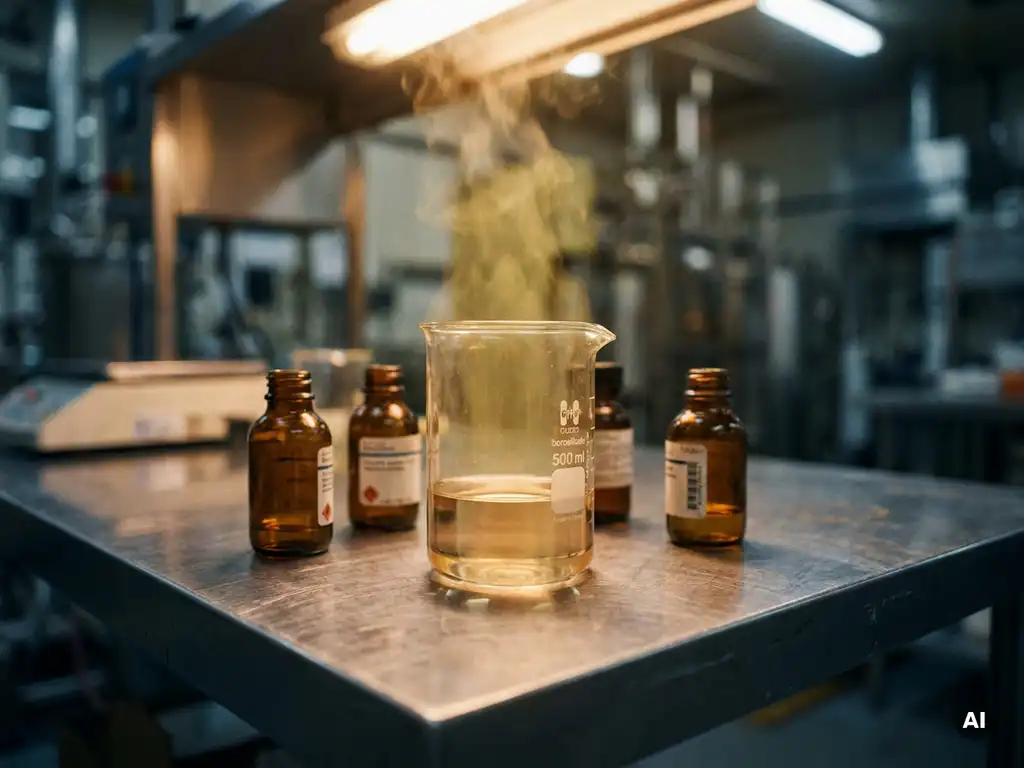
Chemical consumption in gas sweetening is one of the most controllable cost drivers in upstream and midstream operations, yet many facilities run on outdated baselines and reactive maintenance habits. Whether you are treating sour natural gas, refinery fuel gas, or acid gas streams, the chemicals involved, primarily amines, antifoams, and corrosion inhibitors, represent significant recurring expenditure. Reducing that expenditure without compromising treated gas quality requires a structured, step-by-step approach rather than isolated tweaks. If you are unsure where to start, feel free to get in touch and we are happy to help you map out a reduction strategy suited to your specific process conditions.
This guide walks through six practical steps to lower chemical consumption in your gas sweetening operation, from establishing a reliable usage baseline to validating the gains you achieve. Follow the steps in order, since each one builds on the data and adjustments made in the previous stage.
Audit Your Current Chemical Usage Baseline
Before you can reduce chemical consumption, you need an accurate picture of what you are currently using and why. Many facilities track amine inventory at a bulk level but lack the granular data needed to identify waste, losses, or inefficiencies. A thorough audit closes that gap.
- Compile monthly consumption records for all chemicals used in the sweetening unit, including amine solution makeup, antifoam additions, corrosion inhibitor dosing, and any neutralizing agents.
- Calculate consumption per unit of gas treated, expressed as liters of chemical per thousand standard cubic meters of feed gas, to normalize for throughput variability.
- Identify the top three consumption drivers by volume and cost, then trace each back to a specific operational cause such as foaming events, amine degradation, or high H₂S loading.
- Document any unplanned chemical additions made in the past twelve months and the trigger events that prompted them.
After completing this audit, you should have a clear consumption profile showing where chemicals go, at what rate, and under what conditions. This baseline becomes your reference point for measuring every subsequent improvement. If your records are incomplete, even two to three months of disciplined metering will give you enough data to proceed.
Optimize Amine Unit Operating Conditions
The largest lever for reducing chemical consumption in conventional gas sweetening is operating the amine unit within its optimal window. Units running outside their design envelope consume more amine through degradation, foaming, and excessive regeneration energy, all of which drive up makeup chemical requirements.
Adjust Lean Amine Loading
Review your lean amine loading, typically expressed as moles of acid gas per mole of amine. Operating with a leaner solution than necessary increases circulation rates and energy demand without improving outlet quality. Target the minimum lean loading that consistently meets your H₂S specification, and verify this against your current absorber performance data.
Control Reboiler Temperature
Excessive reboiler temperatures accelerate thermal degradation of the amine, producing heat-stable salts that reduce solution capacity and require reclaiming or replacement. Set the reboiler temperature to the lowest value that achieves the required regeneration, and monitor heat-stable salt concentrations monthly. If concentrations are rising, the reboiler is the first place to investigate.
Once you have tightened operating conditions, expect to see a measurable reduction in amine makeup volume within four to six weeks. Track this against your audit baseline to confirm the improvement is real and sustained.
Control Feed Gas Composition Variability
Fluctuating feed gas composition, particularly swings in H₂S concentration, CO₂ content, and hydrocarbon liquid carryover, forces operators to add buffer chemicals reactively and often in excess. Stabilizing the feed reduces the need for emergency dosing and protects the amine solution from sudden degradation events.
- Install or calibrate online analyzers upstream of the absorber to give real-time visibility into H₂S and CO₂ concentrations.
- Audit the inlet gas knockout drum and coalescing filters for liquid carryover, which is a leading cause of foaming and antifoam overconsumption.
- If feed gas comes from multiple sources or wells with different compositions, evaluate whether blending or sequencing those streams can reduce peak H₂S spikes.
- Set control logic to adjust amine circulation rate automatically in response to feed composition changes rather than relying on manual operator response.
With better feed gas visibility and control, your amine unit can respond proportionally rather than defensively. Antifoam additions in particular tend to drop significantly once liquid carryover is addressed at the inlet.
Switch to Biological Desulfurization for Low- to Mid-Range Sour Gas
For facilities treating gas streams with low to moderate H₂S concentrations, biological desulfurization offers a fundamentally different approach that eliminates the need for conventional sweetening chemicals entirely. Rather than using amine solutions and associated additives, biological processes use naturally occurring bacteria to convert H₂S directly into elemental sulfur.
Paqell’s THIOPAQ O&G technology integrates gas desulfurization and sulfur recovery in a single unit, using self-regulating bacteria that require no hazardous reagents and produce a stable, manageable solid byproduct. The process is well suited to a range of gas applications including natural gas, refinery fuel gas, flare gas, and acid gas streams where conventional amine treating is either oversized or chemically intensive. Operating costs are lower because there is no amine inventory to maintain, no reclaimer waste to dispose of, and no heat-stable salt management program to run.
If your H₂S loading falls within the range where biological treatment is viable, this step alone can reduce your chemical consumption to near zero for the desulfurization function, making it the highest-impact option in this guide for the right application.
Recover and Reuse Sulfur Byproducts
Whether you operate a conventional Claus unit, a biological system, or a hybrid configuration, the sulfur produced during gas sweetening has commercial value that offsets operational costs. Treating sulfur as a waste stream rather than a recoverable product leads to disposal costs and missed revenue that effectively inflate your overall chemical spend.
- Assess the purity and physical form of the sulfur your unit produces to determine its suitability for agricultural or industrial markets.
- Contact regional sulfur buyers or fertilizer manufacturers to establish offtake arrangements, since elemental sulfur from biological processes is particularly valued for its purity and granular form.
- Review your sulfur handling and storage setup to ensure product quality is maintained between production and sale.
Sulfur recovery does not reduce chemical consumption directly, but it converts a byproduct into revenue that can fund the monitoring equipment and process improvements described in the next step. Facilities that close this loop consistently report a lower total cost of ownership for their sweetening operations.
Monitor and Validate Chemical Reduction Gains
The final step is to close the measurement loop and confirm that the changes you have made are delivering the reductions your audit baseline predicted. Without structured validation, improvements can erode quietly as operating conditions shift or personnel change.
- Set up a monthly reporting template that tracks chemical consumption per unit of gas treated against the baseline figures established in Step 1.
- Define threshold values for key indicators such as amine makeup rate, antifoam dosing frequency, and heat-stable salt concentration, and trigger a review when any threshold is exceeded.
- Conduct a quarterly process walkthrough to verify that the operating conditions optimized in Step 2 have not drifted, paying particular attention to reboiler temperature and lean amine loading.
- Document each confirmed reduction with the specific action that caused it, building an internal record that supports future optimization decisions.
Validation is also where you identify the next round of improvements. Once the gains from auditing and operating condition optimization are stable, you can use the same measurement framework to evaluate additional interventions such as amine reclaiming frequency, inhibitor formulation changes, or expanded use of biological treatment across additional streams. You can also use Paqell’s THIOPAQ O&G scan to assess whether biological desulfurization could further reduce your chemical footprint on specific streams.
Reducing chemical consumption in gas sweetening is a process of progressive refinement, not a single fix. By working through these six steps, you build both the operational discipline and the data infrastructure needed to sustain lower costs over time. To discuss your specific sweetening process and identify the highest-impact opportunities for your facility, get in touch with the Paqell team.
Related Articles
- How to Compare Iron Redox and Biological H₂S Removal
- How is elemental sulfur recovered during desulfurization?
- What industries are most at risk for H2S exposure?
- How do EU and US exposure limits for hydrogen sulfide compare?
- How does a wireless hydrogen sulfide detector network improve plant safety?
This content was generated with the help of AI and it may contain mistakes
