

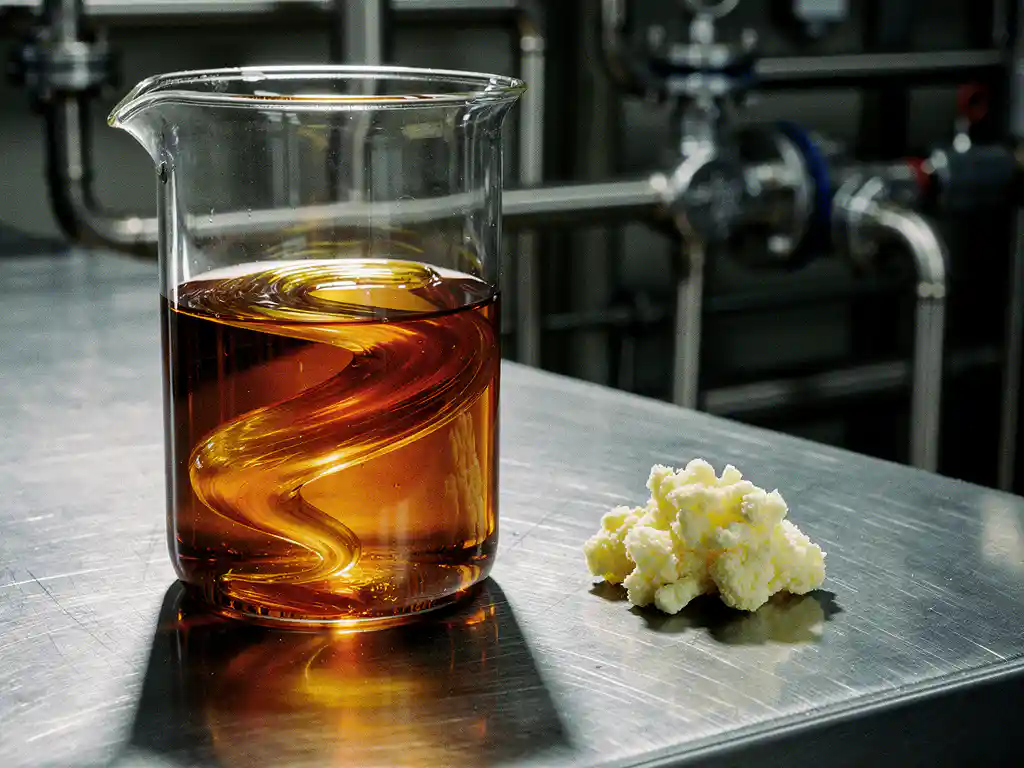
Oxidative desulfurization (ODS) is a chemical process that removes sulfur compounds from liquid fuels and gas streams by oxidizing them into forms that can be easily separated. The process typically converts sulfur-containing molecules into sulfoxides or sulfones using an oxidizing agent, after which the oxidized compounds are extracted through adsorption or solvent separation. This article unpacks how ODS works, where it is applied, and how it compares to other desulfurization technologies. If you have questions about sulfur removal for your specific application, feel free to get in touch, and we are happy to help.
How does oxidative desulfurization work?
Oxidative desulfurization works by exposing a sulfur-containing stream to an oxidizing agent, such as hydrogen peroxide or ozone, which converts sulfur compounds into their oxidized forms. These oxidized molecules are chemically distinct enough from the surrounding hydrocarbons that they can be separated through solvent extraction or adsorption onto a solid material, effectively removing sulfur from the stream.
The process typically runs in two stages. In the first stage, an oxidant reacts selectively with sulfur compounds at relatively mild temperatures and pressures, avoiding the harsh conditions required by conventional thermal or catalytic methods. In the second stage, the oxidized sulfur species are removed from the fuel or gas matrix using a polar solvent or adsorbent. The result is a stream with significantly reduced sulfur content.
One of the defining characteristics of ODS is that it does not require hydrogen gas, which makes it attractive for refineries or facilities where hydrogen supply is limited or costly. The reaction conditions are comparatively gentle, and the process can be integrated into existing plant infrastructure without major capital investment in high-pressure equipment.
What types of sulfur compounds does oxidative desulfurization remove?
Oxidative desulfurization is particularly effective at removing refractory sulfur compounds, especially dibenzothiophene (DBT) and its alkylated derivatives, which are notoriously difficult to treat with conventional hydrodesulfurization. These compounds have electron-rich sulfur atoms that react readily with oxidizing agents, making them well-suited targets for ODS.
The range of sulfur compounds addressed by ODS includes:
- Dibenzothiophenes and alkyl-dibenzothiophenes
- Benzothiophenes
- Thiophenes
- Sulfides and disulfides (in liquid-phase applications)
It is worth noting that ODS is less effective on simpler sulfur species such as hydrogen sulfide (H₂S) directly in gas streams, where alternative technologies, including biological desulfurization, are better suited. For gas-phase applications involving hydrogen sulfide removal and sulfur recovery, different process routes are more appropriate.
Where is oxidative desulfurization used in industry?
Oxidative desulfurization is used primarily in the petroleum refining industry as a complementary or standalone process for producing ultra-low-sulfur diesel and other transportation fuels. It is also applied in jet fuel treatment and in the desulfurization of heavy fuel oils where deep sulfur removal is required to meet environmental regulations.
Key industrial applications include:
- Ultra-low-sulfur diesel production: ODS is used as a polishing step after hydrodesulfurization to meet strict fuel sulfur limits
- Jet fuel treatment: Removing sulfur compounds that could damage turbine components or violate specifications
- Marine fuel desulfurization: Treating heavy fuel oils to comply with international sulfur emission regulations
- Lube oil refining: Improving the quality and stability of lubricating oil fractions
ODS is less commonly applied to gas streams such as natural gas or biogas, where gas treatment applications typically rely on processes specifically designed for gaseous hydrogen sulfide removal and sour gas treatment.
What are the differences between oxidative desulfurization and hydrodesulfurization?
The key difference between oxidative desulfurization and hydrodesulfurization (HDS) is the reaction mechanism and operating conditions. Hydrodesulfurization uses hydrogen gas and a catalyst at high temperatures and pressures to convert sulfur compounds into H₂S, which is then separated. Oxidative desulfurization uses an oxidant under mild conditions to convert sulfur compounds into extractable forms, without requiring hydrogen.
Operating conditions
HDS operates at temperatures between 300 and 400 degrees Celsius and pressures of 30 to 130 bar, requiring significant energy input and specialized high-pressure equipment. ODS, by contrast, typically operates near ambient temperature and pressure, which substantially reduces energy consumption and infrastructure requirements.
Selectivity and effectiveness
HDS is highly effective at removing simple sulfur compounds such as mercaptans and sulfides but struggles with sterically hindered molecules like alkylated dibenzothiophenes. ODS shows the opposite profile: it excels at removing these refractory compounds, which is why the two processes are often used together in refineries seeking ultra-deep desulfurization. HDS handles the bulk of sulfur removal, while ODS acts as a polishing step for the most stubborn compounds.
What are the limitations of oxidative desulfurization?
The main limitations of oxidative desulfurization are the cost and handling of oxidizing agents, the generation of oxidized byproducts that require further processing, and its limited applicability to gas-phase streams. While ODS avoids the need for hydrogen, the oxidants used, such as hydrogen peroxide, carry their own cost and safety considerations.
Additional constraints include:
- Byproduct management: The extracted sulfones and sulfoxides must be disposed of or further processed, adding operational complexity
- Solvent regeneration: The extraction solvents used in the separation stage require regeneration cycles, which add to operating costs
- Limited gas-phase application: ODS is primarily designed for liquid fuels; it is not well suited to treating hydrogen sulfide in natural gas, biogas, or other gaseous streams
- Selectivity challenges: Some oxidants can react with non-sulfur components of the fuel, reducing yield or introducing unwanted side reactions
For operators dealing with H₂S in gas streams, these limitations make ODS an unsuitable choice, and purpose-built gas sweetening or biological desulfurization technologies are more appropriate.
How does biological desulfurization compare to oxidative desulfurization?
Biological desulfurization and oxidative desulfurization are fundamentally different technologies suited to different applications. Biological desulfurization uses naturally occurring bacteria to convert H₂S in gas streams into elemental sulfur, making it a gas-phase process optimized for sour gas treatment and sulfur recovery. Oxidative desulfurization uses chemical oxidants to treat sulfur compounds in liquid fuels.
The two approaches differ across several dimensions:
- Target stream: Biological desulfurization targets H₂S in gas streams such as natural gas, biogas, and refinery off-gas; ODS targets organic sulfur compounds in liquid fuels
- Operating mechanism: Biological processes rely on self-regulating microbial activity; ODS relies on chemical oxidation reactions
- Byproducts: Biological desulfurization produces elemental sulfur suitable for agricultural use; ODS produces sulfones and sulfoxides that require further handling
- Chemical inputs: ODS requires oxidizing chemicals; biological processes require only air and nutrients for the bacteria
- Scalability for gas treatment: Biological desulfurization is well established for small to mid-scale gas streams with challenging compositions where chemical or thermal processes are less economical
For gas streams containing hydrogen sulfide, biological desulfurization offers a compelling combination of low operating costs, minimal chemical inputs, and integrated sulfur recovery in a single unit. The THIOPAQ O&G technology developed by Paqell exemplifies this approach, combining gas sweetening and sulfur recovery using naturally occurring bacteria in one compact system. To explore whether a biological or alternative desulfurization route suits your application, get in touch with our team or use the THIOPAQ O&G scan to assess your specific gas stream.
Frequently Asked Questions
Can oxidative desulfurization and hydrodesulfurization be used together in the same refinery?
Yes, and this is actually one of the most practical configurations in modern refining. HDS handles the bulk of sulfur removal efficiently, while ODS is added as a polishing step to tackle the refractory dibenzothiophene compounds that HDS leaves behind. This combined approach allows refineries to meet ultra-low-sulfur fuel standards without overhauling their entire HDS infrastructure.
What oxidizing agents are most commonly used in ODS, and how do I choose between them?
Hydrogen peroxide is the most widely used oxidant in ODS due to its relatively high selectivity, availability, and the fact that its byproduct is water. Ozone and organic peroxides are also used in certain configurations. The choice depends on factors such as the sulfur compound profile of your feed stream, the desired reaction rate, safety handling capabilities at your facility, and overall operating cost — so a process feasibility assessment is recommended before selecting an oxidant.
What happens to the sulfones and sulfoxides extracted during the ODS process?
After extraction, the sulfones and sulfoxides are typically concentrated in the spent solvent or adsorbent phase. Depending on the facility’s setup, these byproducts can be incinerated, sent to a waste treatment unit, or in some cases further processed to recover value. Byproduct management is one of the operational costs to plan for when implementing ODS, and it should be factored into the overall process economics.
Is oxidative desulfurization suitable for small-scale or modular operations, or is it only viable at large refineries?
ODS can be adapted for smaller-scale operations because it runs at mild temperatures and pressures, which reduces the need for heavy capital equipment compared to HDS. Modular ODS units have been developed for niche applications such as marine fuel treatment or remote refining sites. That said, the economics of solvent regeneration and oxidant supply tend to favor larger throughput volumes, so a careful cost-benefit analysis is advisable for smaller installations.
My application involves hydrogen sulfide in a biogas stream — is ODS worth considering?
ODS is not well suited for gas-phase H₂S removal from biogas streams. It is designed for liquid-phase treatment of organic sulfur compounds, and it lacks the selectivity and process architecture needed for efficient H₂S removal from gaseous streams. For biogas applications, biological desulfurization technologies are a more appropriate and cost-effective choice, as they are specifically engineered for this purpose and can handle variable H₂S concentrations with minimal chemical inputs.
How do I know if my fuel stream is a good candidate for oxidative desulfurization?
A stream is typically a strong candidate for ODS if it contains elevated levels of refractory sulfur compounds — particularly alkylated dibenzothiophenes — that persist after conventional HDS treatment. Diesel fractions, jet fuel, and heavy fuel oils with residual sulfur above regulatory limits are common targets. A detailed sulfur speciation analysis of your feed stream is the recommended first step, as it will reveal whether the remaining sulfur compounds are the types that ODS is best positioned to address.
What are the most common mistakes operators make when implementing an ODS process?
One frequent mistake is underestimating the importance of the extraction or adsorption stage — even if the oxidation step performs well, poor separation design will limit overall sulfur removal efficiency. Another common issue is neglecting oxidant dosing control, which can lead to over-oxidation that affects fuel quality or introduces unwanted side reactions with non-sulfur components. Finally, operators sometimes overlook the full cost of solvent regeneration and byproduct disposal when evaluating ODS feasibility, which can significantly affect the process economics.
Related Articles
- How does the Claus process achieve high sulfur recovery rates?
- What is desulfurization and why does it matter in industrial gas processing?
- How does desulfurization reduce corrosion in downstream equipment?
- What are the early symptoms of H2S poisoning?
- How does desulfurization technology support the energy transition?
