

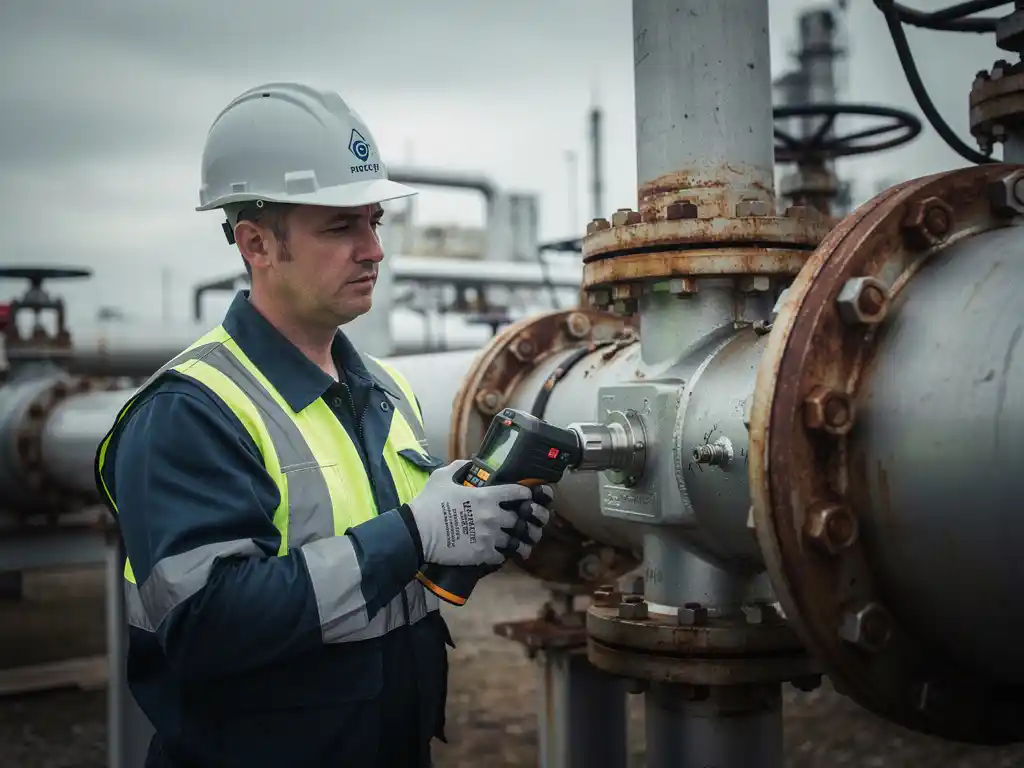
Hydrogen sulfide in ambient air is monitored using a combination of fixed gas detectors, portable instruments, and laboratory analysis of collected air samples. The most common approach relies on electrochemical sensors that react to H₂S molecules and convert that reaction into a measurable electrical signal. Monitoring methods range from continuous real-time detection to periodic grab sampling, depending on the application, location, and regulatory requirements. This article answers the most common questions about H₂S monitoring in ambient air, from health thresholds and detector placement to the difference between continuous and grab-sample approaches. If you have a specific situation you need guidance on, feel free to get in touch, and we are happy to help.
What are the health risks of hydrogen sulfide in ambient air?
Hydrogen sulfide is a toxic gas that poses serious health risks even at relatively low concentrations in ambient air. At low levels, the characteristic rotten egg smell serves as a natural warning, but at higher concentrations, the gas paralyzes the olfactory nerve, removing that warning entirely. Hydrogen sulfide inhalation can cause symptoms ranging from mild irritation to rapid incapacitation and death.
The health effects of H₂S exposure are strongly concentration-dependent. At concentrations around 0.01 to 1.5 parts per million (ppm), most people can detect the odor. Hydrogen sulfide symptoms at low but sustained exposure levels include eye irritation, headache, nausea, and fatigue. As concentrations rise toward 50 ppm, more serious effects emerge, including respiratory distress and loss of coordination. At concentrations above 100 ppm, hydrogen sulfide poisoning can occur rapidly, causing unconsciousness within minutes. Concentrations above 500 ppm are considered immediately dangerous to life and health.
Workers in oil and gas facilities, wastewater treatment plants, and biogas installations face the highest occupational risk. Beyond acute hydrogen sulfide hazards, chronic low-level exposure has been linked to neurological effects and long-term respiratory damage, which is why ambient air monitoring is taken seriously even in areas where concentrations are expected to remain low.
What technologies are used to monitor hydrogen sulfide in ambient air?
The primary technologies used for H₂S detection in ambient air are electrochemical sensors, photoionization detectors, metal oxide semiconductor sensors, and optical methods such as UV fluorescence. Each technology has different strengths in terms of sensitivity, selectivity, and suitability for different environments. Electrochemical sensors are the most widely used because they offer a strong balance of accuracy, cost, and response time.
Electrochemical sensors
Electrochemical H₂S detectors work by exposing the gas to an electrolyte solution, which generates a current proportional to the H₂S concentration. These sensors are compact, relatively inexpensive, and sensitive at the low ppm and sub-ppm levels relevant to ambient air monitoring. They are the dominant technology in both fixed and portable hydrogen sulfide meters and detectors.
Optical and spectroscopic methods
UV fluorescence analyzers and laser-based spectroscopic instruments offer higher sensitivity and better selectivity than electrochemical sensors, making them suitable for ambient monitoring at very low background concentrations. These instruments are typically larger and more expensive, so they are more common in regulatory monitoring stations and research applications than in routine industrial use. For biogas and gas treatment environments, understanding the full range of H₂S applications helps determine which technology is most appropriate.
How accurate are hydrogen sulfide monitors in real-world conditions?
The accuracy of a hydrogen sulfide monitor in real-world conditions depends on the sensor technology, calibration frequency, environmental conditions, and the presence of interfering gases. Under controlled laboratory conditions, modern electrochemical sensors can achieve accuracy within a few percent of the true concentration. In the field, accuracy can degrade due to temperature extremes, high humidity, and cross-sensitivity to other gases such as sulfur dioxide.
Regular calibration using certified reference gas is essential for maintaining measurement accuracy. Most manufacturers recommend calibrating portable H₂S detectors at least every six months, though instruments used in demanding environments may need more frequent calibration. Temperature compensation circuits in modern sensors help reduce drift caused by ambient temperature fluctuations.
Cross-interference is a particular concern in complex gas environments. Some electrochemical sensors respond to sulfur dioxide and other sulfur-containing compounds in addition to H₂S, which can produce false readings. High-quality hydrogen sulfide meters designed for industrial use typically include interference filters or use sensor chemistry that minimizes this effect. In environments with complex gas compositions, optical methods or gas chromatography of collected samples may provide more reliable H₂S measurement results.
Where should H2S monitors be placed for effective ambient air monitoring?
H₂S monitors should be placed at locations where hydrogen sulfide is most likely to accumulate or where personnel are most likely to be exposed. Because H₂S is slightly heavier than air, it tends to settle in low-lying areas, confined spaces, and pits. Effective placement takes into account the source of emissions, prevailing wind direction, and the layout of the facility or monitoring zone.
In industrial facilities such as refineries, gas processing plants, and biogas upgrading installations, fixed detectors are typically installed near potential emission points such as flanges, valves, and vents, as well as at breathing zone height in areas where workers are regularly present. In confined spaces such as manholes, tanks, and trenches, H₂S monitoring is critical before and during entry because the gas can reach dangerous concentrations rapidly in enclosed environments.
For perimeter monitoring around facilities, detectors are positioned to provide early warning of any off-site migration of hydrogen sulfide. In these applications, wind direction data is often integrated with the monitoring system to help identify the likely source of any detected concentration. Ambient air monitoring networks used for regulatory compliance typically follow standardized placement protocols that account for receptor locations such as residential areas and public spaces near the facility boundary.
What are the regulatory limits for hydrogen sulfide in ambient air?
Regulatory limits for hydrogen sulfide in ambient air vary by country and context, but most occupational exposure limits fall in the range of 1 to 5 ppm as a short-term exposure limit, with some jurisdictions setting lower values for continuous exposure. The H₂S threshold value for ambient air quality around communities is generally much lower, often in the range of 0.005 to 0.1 ppm, reflecting the need to protect sensitive populations from chronic exposure.
In occupational settings, regulatory bodies such as OSHA in the United States set permissible exposure limits, while the American Conference of Governmental Industrial Hygienists publishes threshold limit values that many countries adopt as a baseline. The short-term exposure limit for H₂S under many frameworks is 5 ppm over a 15-minute period, with a ceiling value that must not be exceeded even briefly.
For community and ambient air quality, limits are far more stringent because they apply continuously to all members of the public, including children, the elderly, and people with respiratory conditions. Many environmental agencies set odor-based thresholds as well as health-based thresholds, recognizing that even concentrations well below toxic levels can cause significant nuisance and quality-of-life impacts. Operators of sour gas treatment and desulfurization facilities are typically required to demonstrate compliance with both occupational and ambient air standards.
How does continuous H2S monitoring differ from grab sampling?
Continuous H₂S monitoring provides real-time, uninterrupted measurement of hydrogen sulfide concentration, while grab sampling involves collecting a discrete air sample at a specific point in time for later laboratory analysis. Continuous monitoring captures transient peaks and concentration trends that a grab sample would miss entirely, making it the preferred approach for safety-critical applications and regulatory compliance where short-term exceedances matter.
Continuous hydrogen sulfide detectors, whether fixed or portable, generate a live data stream that can trigger alarms when concentrations exceed preset thresholds. This immediate response capability is essential in environments where rapid changes in H₂S concentration can create life-threatening conditions. Fixed continuous monitoring systems in gas processing and biogas desulfurization installations are often integrated with facility control systems, enabling automated responses such as ventilation activation or process shutdown.
Grab sampling, by contrast, provides a snapshot rather than a continuous record. It is well suited to baseline surveys, regulatory reporting where time-averaged concentrations are required, and situations where continuous instrumentation is not practical. Laboratory analysis of grab samples can achieve very low detection limits and high specificity, which makes this method valuable for confirming ambient background concentrations or investigating specific emission events. In practice, many monitoring programs combine both approaches, using continuous detectors for real-time safety assurance and periodic grab samples for detailed analytical data.
Understanding how hydrogen sulfide is monitored in ambient air is the foundation of effective H₂S risk management, whether you operate a gas treatment facility, a biogas plant, or any installation where sour gas is handled. Choosing the right combination of detector technology, placement strategy, and monitoring approach depends on your specific operational context and regulatory obligations. To discuss your monitoring needs or to learn more about how biological desulfurization can reduce H₂S at the source, get in touch with Paqell.
Frequently Asked Questions
How do I know when it's time to replace an electrochemical H₂S sensor rather than just recalibrate it?
Electrochemical sensors have a finite lifespan, typically 1 to 3 years depending on the manufacturer and operating conditions. Key signs that replacement is needed include an inability to hold calibration between scheduled intervals, a slow or sluggish response time during bump testing, and a reading that fails to reach the expected span value when exposed to reference gas. Most manufacturers specify a minimum sensor output threshold below which the sensor should be retired, so checking the instrument’s diagnostic data against those specifications is the most reliable way to make this determination.
What is a bump test, and should I be doing it before every shift?
A bump test is a quick functional check in which a portable H₂S detector is briefly exposed to a known concentration of test gas to confirm that the sensor responds and the alarm triggers correctly — it is not a full calibration. For safety-critical applications such as confined space entry or work in oil and gas facilities, most safety standards and best practices recommend performing a bump test before every shift or before each use. It takes only a few seconds and provides confidence that the instrument is functioning correctly when it matters most.
Can weather conditions like wind, rain, or temperature extremes affect how reliably my H₂S monitors perform outdoors?
Yes, environmental conditions can significantly impact outdoor monitor performance. High humidity and rain can saturate electrochemical sensors or block sensor membranes, while freezing temperatures can impair sensor chemistry and slow response times. Strong wind can dilute localized H₂S plumes and cause a monitor to underread, whereas temperature swings can introduce drift if the instrument lacks adequate compensation circuitry. For long-term outdoor or perimeter monitoring, instruments rated for the expected environmental range and housed in weather-protected enclosures will deliver far more reliable data than standard units deployed without protection.
What are the most common mistakes operators make when setting up an H₂S ambient air monitoring program?
The most frequent mistakes include placing detectors at the wrong height (too high, missing the heavier-than-air gas that settles near the ground), failing to account for prevailing wind direction when positioning perimeter monitors, and neglecting a regular calibration and maintenance schedule that leads to undetected sensor drift. Another common oversight is treating a monitoring program as a one-time setup rather than a living system — emission sources, facility layouts, and regulatory requirements can all change, and the monitoring network should be reviewed and updated accordingly. Consulting the sensor manufacturer’s guidance and any applicable regulatory placement protocols before finalizing detector locations can prevent most of these issues.
Is it possible to reduce H₂S concentrations at the source rather than relying entirely on monitoring and alarms?
Absolutely, and source reduction is generally the most effective long-term strategy for managing H₂S risk. Biological desulfurization, for example, uses naturally occurring microorganisms to convert H₂S into elemental sulfur within the gas stream before it can be released into the ambient air, dramatically reducing the emission load that monitoring systems need to manage. Combining source reduction technologies with a well-designed monitoring program creates a layered defense — lower baseline concentrations reduce the frequency of alarm events, improve worker safety, and make it easier to demonstrate regulatory compliance.
How should I document and report H₂S monitoring data to satisfy regulatory requirements?
Regulatory documentation requirements vary by jurisdiction and facility type, but most programs expect records of continuous monitoring data logs, calibration records with reference gas certificates, corrective actions taken when exceedances occurred, and periodic summary reports submitted to the relevant authority. Continuous monitoring systems that store timestamped data electronically make this process straightforward, while grab sampling programs require chain-of-custody documentation and accredited laboratory reports. It is worth confirming with your local environmental or occupational health regulator exactly which data formats, reporting frequencies, and retention periods apply to your specific permit or compliance obligation.
What should I do if my H₂S monitor triggers an alarm — is there a recommended response protocol?
When an H₂S alarm activates, the immediate priority is personnel safety: evacuate the affected area upwind and to a higher elevation where possible, since H₂S accumulates in low-lying zones. Do not re-enter the area without appropriate respiratory protection and a confirmed safe reading from a calibrated instrument. Once personnel are safe, the response protocol should include identifying and isolating the emission source if it can be done safely, notifying the relevant emergency contacts or facility management, and documenting the event with time, concentration readings, duration, and actions taken. Having a written emergency response plan that is rehearsed regularly ensures that everyone on site knows their role before an alarm ever sounds.
Related Articles
- What desulfurization method is best for small-scale biogas plants?
- How do you measure H2S concentration in a gas stream accurately?
- How do online H2S analysers work in continuous process monitoring?
- What is amine gas treating and how does it remove sulfur compounds?
- What are the operating costs of different desulfurization technologies?
Related Articles
- How does desulfurization efficiency compare across technologies?
- How does microaeration work in biogas desulfurization?
- How do refineries use desulfurization to meet fuel quality standards?
- What first aid steps should you take after hydrogen sulfide inhalation?
- How is H2S removed from natural gas streams?
