

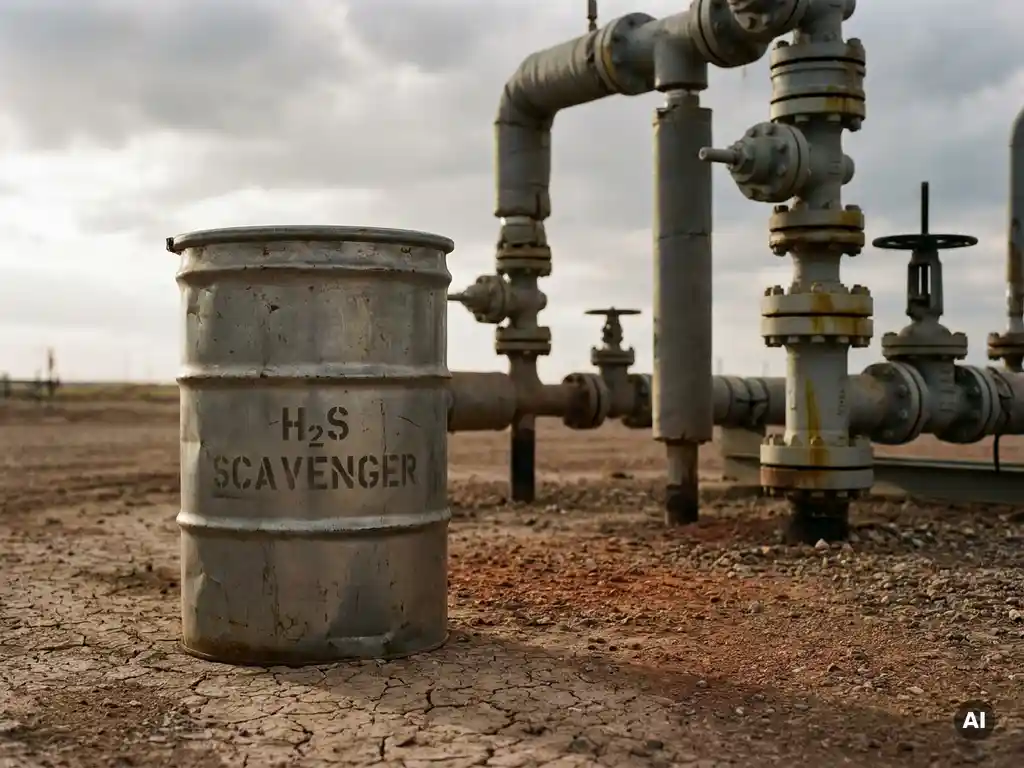
H₂S scavengers are a practical short-term fix for hydrogen sulfide removal, but there comes a point where the chemistry stops making financial sense. If your scavenger consumption is climbing, your gas composition is shifting, or your operational team is spending more time managing chemical logistics than running the plant, it may be time to evaluate a continuous biological treatment process. This guide walks you through exactly how to make that assessment and act on it. If you are unsure where to start, feel free to get in touch and we will be happy to help you think through your specific situation.
Signs Your H₂S Scavenger Is No Longer Cost-Effective
Before running any calculations, recognize the operational signals that indicate your H₂S scavenger program has outgrown its usefulness. These warning signs often appear gradually, which is why they are easy to overlook until the costs become undeniable.
- Rising chemical spend: Monthly scavenger volumes are increasing without a proportional rise in gas throughput
- Frequent top-ups: Your team is refilling scavenger vessels more often than originally planned
- H₂S breakthrough events: Treated gas is occasionally failing to meet pipeline or process specifications
- Spent chemical disposal costs: Handling and disposing of reaction byproducts is adding a significant hidden cost
- Scaling or fouling issues: Scavenger byproducts are accumulating in downstream equipment
If two or more of these apply to your operation, that is a strong signal to proceed with a formal evaluation. The steps below will help you build the business case with real data rather than gut feel.
Assess Your Gas Stream Composition and Flow Profile
Start by pulling together accurate data on the gas stream you are treating. This is the foundation of every decision that follows, and gaps in this data will undermine your cost comparison later.
- Collect recent gas analysis reports covering H₂S concentration, CO₂ content, total flow rate, and any variability in those figures across seasons or production phases
- Identify peak H₂S loads, not just averages, since scavenger sizing and continuous process sizing both depend on worst-case conditions
- Document flow rate fluctuations, including turndown ratios and any anticipated changes in production volume over the next three to five years
- Note any co-contaminants such as mercaptans, organic sulfur compounds, or heavy hydrocarbons that could affect process selection
After completing this step, you should have a clear one-page summary of your gas stream parameters with a realistic range for each variable. If your H₂S concentration is consistently above a few hundred parts per million and your flow is relatively stable, you are likely in the range where a continuous biological process becomes economically attractive. Review the range of applicable gas streams to confirm your stream type is a candidate.
Calculate the Total Cost of Ownership for Both Approaches
With your gas data in hand, build a side-by-side total cost of ownership comparison. This is where many operators underestimate scavenger costs by only counting the chemical purchase price.
Scavenger cost components to include
Account for the full picture of what your current program actually costs:
- Chemical procurement cost per unit volume treated
- Logistics, storage, and handling costs
- Spent chemical disposal or transport fees
- Labor hours for monitoring, dosing adjustments, and vessel changeouts
- Maintenance costs for injection equipment and downstream fouling
- Any production deferral costs linked to scavenger-related downtime
Continuous process cost components to include
For a biological continuous treatment system, the relevant cost categories shift significantly:
- Capital expenditure for the unit, installation, and commissioning
- Operating costs including utilities, nutrient supply, and routine maintenance
- Recovered elemental sulfur value, which can offset operating costs when sold for agricultural use
- Reduced disposal costs, since elemental sulfur is non-hazardous and manageable on-site
Run the comparison over a five- to ten-year horizon. In most cases where H₂S loads are moderate to high and treatment is ongoing, the continuous process crosses the break-even point within two to four years. The recovered sulfur credit is a genuine offset that scavenger-based approaches simply cannot offer.
Evaluate Operational Fit and Site Constraints
A technically sound solution still needs to fit your site. Review these practical factors before committing to a transition.
- Confirm available footprint for a new treatment unit, including space for the bioreactor vessel, sulfur handling, and access for maintenance
- Check utility availability, specifically water supply, power, and any requirements for nutrient dosing infrastructure
- Review your operating team’s capacity to manage a biological process, which requires monitoring of microbial health parameters rather than simple chemical dosing
- Assess permitting requirements for the new unit in your jurisdiction, particularly around biological waste streams and sulfur storage
- Identify whether the transition can be staged, running scavenger treatment in parallel during commissioning to avoid production interruption
Biological gas treatment systems are designed to be self-regulating, which significantly reduces the operational burden compared to chemical alternatives. The naturally occurring bacteria that drive the process adjust to fluctuating H₂S loads without manual intervention, making the day-to-day management straightforward once the system is established. Use the THIOPAQ O&G scan tool to get a preliminary fit assessment for your specific site conditions.
Plan the Transition from Scavenger to Continuous Treatment
Once you have confirmed the economic and operational case, move into transition planning. A structured handover prevents production disruptions and protects your team during the changeover period.
- Define the commissioning timeline in coordination with your engineering team and the technology provider, allowing adequate time for biological startup, which typically requires several weeks for the microbial population to stabilize
- Schedule the scavenger phase-out to align with the continuous system reaching stable performance, not with the commissioning date alone
- Train your operators on the key monitoring parameters for biological treatment, including pH, nutrient levels, and sulfur production rates
- Establish a sulfur handling and offtake arrangement before startup so recovered sulfur does not become an operational bottleneck
- Set performance benchmarks for the new system based on your gas stream data from the assessment step, and plan a formal review at 30, 60, and 90 days post-startup
A well-planned transition eliminates the uncertainty that holds many operators back from making the switch. The key is treating the biological startup period as a defined commissioning phase with clear go/no-go criteria, rather than an open-ended wait. Once your system reaches steady state, you will have a continuous, low-maintenance process that converts H₂S into recoverable elemental sulfur without the recurring chemical costs that define scavenger programs. To move forward with your own evaluation, get in touch with the Paqell team to discuss your gas stream and next steps.
Related Articles
- What is the OSHA limit for H2S exposure?
- How does desulfurization support the production of renewable natural gas?
- How do electrochemical sensors detect hydrogen sulfide?
- How does hydrogen sulfide poisoning differ from carbon monoxide poisoning?
- What is H2S and why is it dangerous in industrial settings?
This content was generated with the help of AI and it may contain mistakes
