

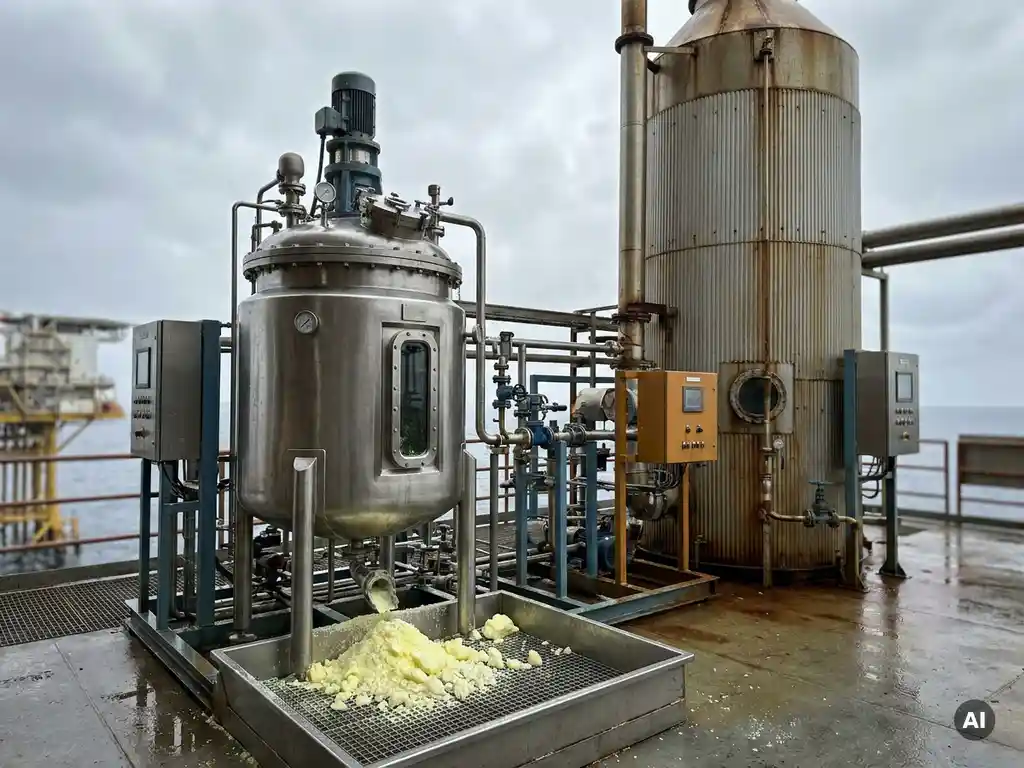
Choosing between LO-CAT and biological H₂S removal is one of the more consequential technology decisions you will make for a gas treating project. Both systems remove hydrogen sulfide and recover elemental sulfur, but they do so through fundamentally different chemistry, and the wrong choice can cost you significantly in capital, operating expenses, or operational headaches over the life of the asset. If you are early in your evaluation and want guidance tailored to your specific gas stream, feel free to get in touch and we will be happy to help you work through the parameters. This guide walks you through a structured, six-step comparison methodology so you can arrive at a defensible, data-backed technology selection.
Gather the Key Parameters for a Valid Comparison
Before you can compare LO-CAT H₂S removal against a biological alternative, you need a complete picture of your gas stream and site conditions. Skipping this step leads to apples-to-oranges comparisons that collapse under scrutiny during front-end engineering.
Collect the following data points as a minimum before proceeding:
- Gas flow rate (normal cubic meters per hour or MMSCFD), including turndown scenarios
- H₂S concentration in the feed gas (ppm or mol%)
- CO₂ content and CO₂ to H₂S ratio
- Operating pressure and temperature at the battery limit
- Presence of hydrocarbons, mercaptans, or other contaminants
- Required outlet H₂S specification
- Sulfur production rate and intended end use of the sulfur product
- Utility availability: water, power, chemicals, and instrument air
- Site location, climate, and any remote operation requirements
Once you have this data assembled in one document, you have the foundation for every subsequent comparison step. If any parameter is uncertain, define a realistic range rather than leaving it blank. Both technologies respond differently to variability, and that sensitivity will matter later.
Map Each Technology’s Process Design to Your Gas Stream
Understand how each technology physically handles your gas before you evaluate cost or performance. LO-CAT is a liquid redox process that uses a chelated iron catalyst solution to oxidize H₂S to elemental sulfur in an aqueous loop. Biological H₂S removal, such as the THIOPAQ O&G process, uses naturally occurring sulfur-oxidizing bacteria in a bioreactor to convert H₂S to solid elemental sulfur under controlled conditions.
Map your gas stream characteristics against each process design using these checks:
- Assess whether your H₂S concentration falls within the typical operating envelope of each technology. Biological systems are well-suited to small and mid-scale streams with variable or unfavorable gas compositions, while LO-CAT performance can be sensitive to high CO₂ concentrations that cause bicarbonate buildup in the solution.
- Determine whether your feed gas arrives directly from the source or as tail gas from an amine unit, since both technologies can be configured differently depending on feed origin.
- Check whether contaminants in your gas stream (heavy hydrocarbons, oxygen, or mercaptans) are compatible with the catalyst or biological culture in each system.
- Confirm the physical footprint each technology requires and whether your site can accommodate it.
After this mapping exercise, you should be able to rule out any configuration that is technically incompatible with your gas stream. What remains is a shortlist of viable options to carry forward into cost evaluation. You can also review the range of supported gas treating applications to see where biological systems have been successfully deployed.
Evaluate Capital and Operating Costs Side by Side
Cost comparison between LO-CAT H₂S removal and biological H₂S removal requires you to look beyond the equipment purchase price. Total cost of ownership over a 20-year asset life often tells a very different story than the upfront capital number.
Structure your cost comparison across two categories:
Capital Expenditure (CAPEX)
Request budgetary quotes from technology licensors using the gas stream parameters you gathered in Step 1. Compare installed costs including vessels, instrumentation, civil works, and interconnecting piping. Biological systems typically integrate gas desulfurization and sulfur recovery in a single unit, which can reduce the number of equipment items and associated installation costs compared to a two-stage LO-CAT arrangement.
Operating Expenditure (OPEX)
Build a side-by-side OPEX table that includes chemical consumption, power consumption, water usage, waste disposal, and maintenance labor. LO-CAT requires ongoing chelated iron catalyst replenishment and management of degradation byproducts. Biological systems rely on naturally occurring bacteria that self-regulate, which eliminates the need for hazardous chemical inputs and reduces chemical logistics costs. Quantify these differences in your local currency per year so the comparison is directly actionable.
Verify your cost model by sense-checking it against the sulfur production volume. The value of recovered elemental sulfur as an agricultural input can partially offset operating costs and should appear as a credit in your OPEX model.
Score Operability, Safety, and Sulfur Product Quality
Cost alone does not determine the right technology. Operational complexity, safety profile, and the quality of the sulfur product are equally important criteria, particularly for remote or unmanned installations.
Score each technology against the following criteria using a simple 1-to-5 scale:
- Ease of operation: Biological systems use self-regulating bacteria and require minimal operator intervention. LO-CAT requires active management of solution chemistry, pH, and catalyst concentration.
- Chemical hazard profile: LO-CAT uses chelated iron solutions that require careful handling and disposal. Biological systems use non-hazardous, naturally occurring microorganisms, which simplifies chemical management and reduces HSE risk.
- Sulfur product form and purity: Both technologies produce solid elemental sulfur. Assess whether the particle size, moisture content, and purity of the sulfur from each process meet your offtake requirements.
- Turndown capability: Evaluate how each system handles flow rate variability. Biological systems can adapt to changes in gas load through natural microbial response, while LO-CAT solution chemistry may require more active adjustment during turndown.
- Remote operability: If your installation is in a remote location with limited operator access, weight this criterion heavily. Systems with lower chemical complexity and self-regulating behavior score higher here.
Total your scores across all criteria. This scoring table becomes one of the inputs to your decision matrix in the next step.
Apply a Decision Matrix to Select the Right Technology
A decision matrix forces you to make your weighting assumptions explicit and prevents any single factor from dominating the selection without justification. Build the matrix now using the data from the previous four steps.
- List your evaluation criteria in the left column: CAPEX, OPEX, operability, safety, sulfur quality, fit to gas stream, and any site-specific factors.
- Assign a weight to each criterion that reflects its importance to your project. A remote offshore installation might weight operability and safety at 30% combined, while an onshore refinery application might weight OPEX more heavily.
- Enter the scores you developed in Steps 3 and 4 for each technology against each criterion.
- Multiply each score by its weight and sum the results to produce a weighted total for each technology.
- Review the outcome: if one technology scores significantly higher, the selection is clear. If the scores are close, identify which criteria are driving the difference and stress-test your weighting assumptions.
The decision matrix does not make the decision for you, but it does make your reasoning transparent and auditable. That matters when you are presenting a technology recommendation to project sponsors or procurement teams who were not part of the evaluation process.
Validate Your Selection with a Technology Fit Check
Before committing to a technology, run a structured fit check to confirm that your preferred option holds up under scrutiny. This step catches assumptions that may have slipped through the earlier analysis.
Work through the following validation questions for your selected technology:
- Does the technology have a documented operating reference list with gas streams comparable to yours in terms of flow rate, H₂S concentration, and gas composition?
- Has the licensor provided performance guarantees that cover your specific outlet specification?
- Are there any regulatory or permitting constraints at your site that affect the use of chemicals, biological organisms, or sulfur disposal?
- Have you confirmed that spare parts and technical support are accessible within an acceptable response time for your location?
- Does the technology scale appropriately if your gas volumes increase over the project life?
If your selected technology passes this fit check without significant gaps, you have a well-supported technology selection that you can carry into the next phase of project development. If gaps emerge, return to your decision matrix and adjust accordingly. It is far better to revisit the selection now than after contracts are signed. For a rapid preliminary assessment of whether a biological H₂S removal solution fits your specific situation, the technology fit scan is a practical next step. To discuss your project in detail with a specialist, get in touch and we will help you move forward with confidence.
Related Articles
- What is a hydrogen sulfide meter and when do you need one on site?
- What are the symptoms of hydrogen sulfide poisoning at low concentrations?
- How does amine-based gas sweetening remove H2S from natural gas?
- What does H2S smell like?
- What types of H2S gas detectors are available in 2026?
This content was generated with the help of AI and it may contain mistakes
