

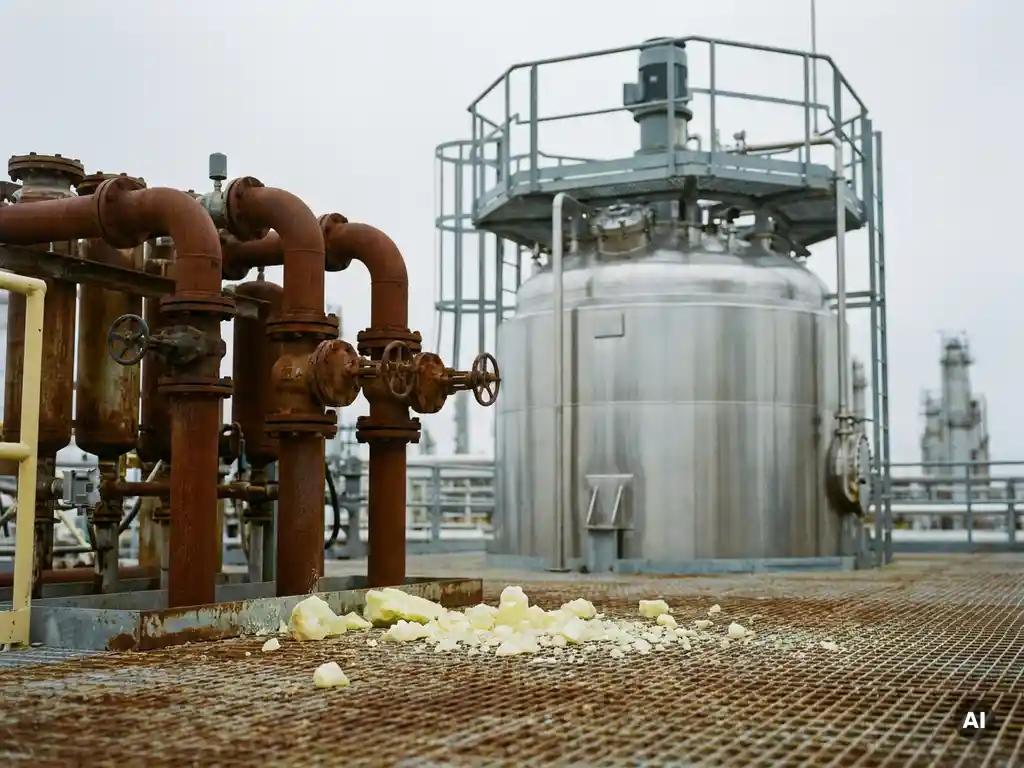
Choosing between iron redox and biological H₂S removal is one of the most consequential decisions in any gas treatment project. Get it right and you reduce costs, simplify operations, and meet regulatory targets with confidence. Get it wrong and you face expensive retrofits, compliance gaps, or a process that simply does not suit your gas stream. This guide walks you through a structured, six-step comparison process so you can arrive at a defensible technology selection. If you are unsure where to start, feel free to get in touch, and we will be happy to help you frame the evaluation.
Both iron redox and biological desulfurization convert hydrogen sulfide into elemental sulfur, but they do so through fundamentally different chemistry. Iron redox processes use a chelated iron solution as the oxidizing agent, while biological processes rely on naturally occurring sulfur-oxidizing bacteria to drive the same conversion. Understanding that distinction is the foundation for everything that follows.
Key Criteria for Evaluating H₂S Removal Technologies
Before comparing specific technologies, establish the criteria that will govern your decision. Without a defined framework, evaluations drift toward vendor preference or familiarity rather than project fit. Identify the dimensions that matter most for your specific context.
The core evaluation criteria for any H₂S removal technology comparison include:
- Gas stream composition: H₂S concentration, CO₂ content, hydrocarbon content, and flow rate variability
- Sulfur recovery efficiency: The percentage of inlet H₂S converted to recoverable elemental sulfur
- Capital expenditure (CAPEX): Equipment, installation, and commissioning costs
- Operating expenditure (OPEX): Chemicals, energy, maintenance, and labor
- Scalability: How well the technology accommodates throughput changes over the project lifecycle
- Operational complexity: Skill requirements, automation potential, and sensitivity to upsets
- Regulatory compliance: Emission limits, sulfur disposal requirements, and permitting implications
- Safety profile: Hazardous chemical handling, process stability, and emergency response demands
Weight these criteria according to your project priorities before you begin gathering technology-specific data. A remote upstream facility will weight operational simplicity and safety differently than a large refinery with on-site engineering support.
Map Your Gas Stream to the Right Process Chemistry
Characterize your gas stream in detail before comparing technologies. Both iron redox and biological processes have operating envelopes, and a mismatch between your gas composition and a technology’s design range will undermine performance regardless of how attractive the economics look on paper.
- Obtain a representative gas analysis that includes H₂S concentration (in ppm or mol%), CO₂ partial pressure, total flow rate, and temperature at the point of treatment.
- Identify whether the gas stream is a direct wellhead or pipeline stream, an amine unit tail gas, a refinery fuel gas, or a flare gas: the source affects contaminant load and flow variability.
- Check whether your H₂S concentration falls within the small-to-medium range typical of biological systems, or whether it is high enough to require a different approach.
- Assess CO₂ content carefully. High CO₂ partial pressure can affect the pH balance in biological reactors and the stability of chelated iron in redox systems differently.
Biological H₂S removal, such as the THIOPAQ O&G process, is particularly well suited to small and mid-sized sour gas streams with challenging or variable compositions, because the self-regulating nature of the bacteria provides inherent buffering against feed fluctuations. Iron redox systems are also effective in this range but rely on chemical dosing to maintain solution chemistry. Once you have mapped your gas stream data, you can begin to see which chemistry aligns more naturally with your conditions. Review the range of supported gas applications to cross-check your stream type.
Assess Capital and Operating Cost Trade-offs
Cost comparison between iron redox and biological H₂S removal is rarely straightforward because CAPEX and OPEX move in opposite directions depending on scale and site conditions. Approach this step systematically to avoid drawing conclusions from incomplete cost pictures.
Capital Cost Drivers
Biological systems integrate gas absorption and sulfur recovery into a single unit, which reduces the number of equipment items and associated civil works. Iron redox systems also combine absorption and oxidation but typically require more active chemical management infrastructure. For both technologies, the dominant CAPEX variables are gas flow rate, H₂S loading, and site location.
Operating Cost Drivers
Identify the recurring cost components for each technology against your specific stream:
- For iron redox: calculate chelated iron solution consumption, degradation losses, and the cost of chemical replenishment over the project life.
- For biological systems: estimate nutrient dosing costs (typically minor), energy for aeration, and any waste handling for sulfur cake.
- For both: include labor, maintenance intervals, and any third-party service contracts in your total cost of ownership model.
Biological systems generally carry lower OPEX at comparable scales because the bacterial catalyst is self-regenerating and the process does not consume significant volumes of chemical reagent. The sulfur produced is non-hazardous and can often be sold for agricultural use, which may offset disposal costs. Verify these economics with vendor-supplied data for your specific flow rate and H₂S load before drawing conclusions.
Evaluate Scalability and Operational Flexibility
With cost data in hand, turn your attention to how each technology behaves as your project evolves. Gas production profiles change over field life, and a technology that fits today’s throughput may constrain you in five years.
Consider the following dimensions when assessing flexibility:
- Turndown ratio: How low can throughput drop before the process becomes unstable or uneconomical?
- Capacity expansion: Can additional treatment capacity be added modularly, or does expansion require a new unit?
- Response to feed upsets: How quickly does each technology recover from a sudden change in H₂S concentration or flow rate?
- Unattended operation: Is the process stable enough for remote or minimally staffed sites?
Biological systems benefit from the self-regulating behavior of the bacterial community, which adapts to moderate feed changes without operator intervention. This makes them well suited to remote locations or sites with limited technical staffing. Iron redox systems require more active monitoring of solution chemistry to maintain performance across variable conditions. Score each technology against your expected operating envelope rather than its theoretical maximum performance.
Validate Your Shortlist Against Regulatory and Safety Requirements
Before finalizing your comparison, confirm that each technology on your shortlist can meet the regulatory and safety requirements that apply to your project location. This step often eliminates options that appeared technically viable but create compliance or permitting complications.
- Confirm the sulfur emission limits that apply to your facility and verify that each technology’s guaranteed outlet specification meets those limits with adequate margin.
- Review the hazardous materials classification for each process. Iron redox solutions may require specific handling, storage, and spill containment infrastructure. Biological systems use non-hazardous, naturally occurring bacteria, which simplifies safety case documentation.
- Check local regulations governing sulfur byproduct disposal or sale. Elemental sulfur from biological processes is typically classified as non-hazardous and is accepted in agricultural markets, but local rules vary.
- Confirm whether the technology has relevant operating references in your regulatory jurisdiction, as permitting authorities often require demonstrated precedent.
Safety profile differences between the two technologies are meaningful. Biological desulfurization eliminates the need to handle large volumes of hazardous chelated iron chemicals on site, which reduces both the risk profile and the associated safety management burden. If your site operates under strict hazardous substance regulations or is located near populated areas, this distinction can be decisive. Use the technology scan tool to quickly check whether your project conditions align with established operating references.
Build the Final Comparison Matrix for Your Project
You now have the data needed to make a structured, defensible technology selection. Consolidate everything into a comparison matrix that maps each technology against the criteria you defined in step one, weighted by your project priorities.
- List your evaluation criteria in rows, with the weights you assigned at the outset.
- Score each technology against each criterion using a consistent scale (for example, one to five, where five is the best fit for your project).
- Multiply each score by its weight and sum the results to produce a weighted total for each technology.
- Review any criterion where the technologies score very differently and confirm that the underlying data is reliable and project-specific rather than generic.
- Document the assumptions behind each score so the comparison can be revisited if project conditions change.
A well-constructed matrix does more than identify a winner. It shows your project team and stakeholders exactly why one technology was selected over another, and it creates a baseline for revisiting the decision if gas composition or project scope changes before final investment. For most small-to-mid-scale sour gas projects with variable feed compositions, biological H₂S removal consistently scores well on OPEX, safety, and operational simplicity. Iron redox systems may score higher in specific niche conditions, particularly where very rapid startup is required or where biological system precedent is limited in a given regulatory environment. The right answer depends entirely on your weighted criteria. Get in touch to discuss your project parameters and accelerate your evaluation.
Related Articles
- How to Determine When Triazine Consumption Makes H₂S Treatment Too Expensive
- How is desulfurization applied in biogas upgrading to biomethane?
- How does activated carbon desulfurization compare to biological methods?
- What is the role of desulfurization in meeting emissions regulations?
- How quickly can H2S cause loss of consciousness?
This content was generated with the help of AI and it may contain mistakes
