

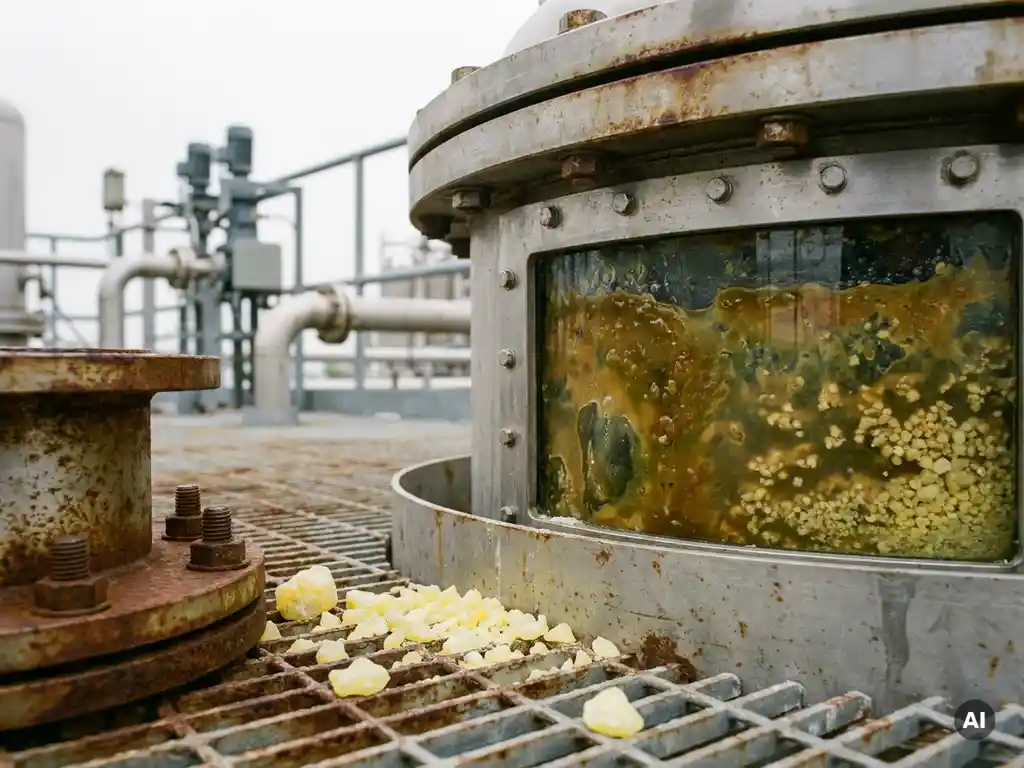
Switching from batch chemical dosing to a continuous H₂S removal process is one of the more consequential decisions you will make for a gas treatment facility. Chemical scavengers and periodic injection systems work in some contexts, but they introduce ongoing chemical costs, waste disposal obligations, and operational variability that compound over time. A continuous biological or catalytic alternative can eliminate many of those drawbacks, but only if the technology matches your specific gas stream and operational reality. If you are evaluating your options and want a second perspective, feel free to get in touch with Paqell’s engineering team. This guide walks you through the five steps that will help you select the right continuous treatment technology with confidence.
Assess Your Gas Stream Characteristics First
Before comparing any technologies, gather precise data on the gas stream you need to treat. The composition, flow rate, pressure, and temperature of your feed gas will determine which continuous H₂S removal processes are physically compatible with your application. Skipping this step leads to technology shortlisting based on marketing claims rather than engineering fit.
- Measure the H₂S concentration in your feed gas across representative operating conditions, including peak and off-peak periods, not just average values.
- Record the CO₂-to-H₂S ratio, total hydrocarbon content, and the presence of other contaminants such as ammonia or heavy metals that could interfere with biological or chemical catalysts.
- Document flow rate variability. Many continuous processes are sensitive to turndown ratios, and a technology optimized for steady flow may struggle with intermittent or fluctuating feed conditions.
- Note operating pressure and temperature ranges at the point of treatment, since these affect both process selection and equipment design.
After completing this inventory, you should have a one-page technical summary of your gas stream. If any parameters are unknown or highly variable, prioritize getting better measurement data before moving forward. A technology selected against incomplete data will underperform from day one.
Define Your Sulfur Recovery and Disposal Requirements
Continuous H₂S removal technologies differ significantly in what they produce as an output. Some convert hydrogen sulfide into elemental sulfur that can be recovered and reused. Others produce sulfate-containing liquid streams or require downstream incineration. Your regulatory environment and site logistics will determine which output is acceptable.
Clarify the following before you begin comparing technologies:
- Sulfur recovery target: Do you need to recover elemental sulfur for resale or agricultural use, or is disposal your primary concern?
- Waste stream constraints: Are there local regulations governing liquid effluent, sulfur-containing solids, or SO₂ emissions that rule out certain process outputs?
- Downstream integration: Will the treated gas feed into a pipeline, a combustion system, or a refinery process with its own H₂S specification?
Biological desulfurization processes, for example, convert H₂S directly into solid elemental sulfur within a single unit. That sulfur is non-hazardous and suitable for agricultural applications, which simplifies disposal significantly compared to liquid sulfate streams. Understanding your output requirements at this stage will narrow your technology list considerably before you invest time in detailed comparisons.
Compare Continuous Treatment Technologies Against Your Criteria
With your gas stream data and output requirements defined, you can now evaluate the main families of continuous H₂S removal technology against your specific criteria. The goal here is structured elimination, not an exhaustive survey of every vendor offering.
The primary continuous treatment categories to assess include:
- Biological desulfurization: Uses naturally occurring bacteria to oxidize H₂S to elemental sulfur. Well suited to small and mid-scale sour gas streams with variable or unfavorable gas compositions. Requires low chemical input, uses a self-regulating catalyst, and produces recoverable solid sulfur.
- Amine treating with Claus sulfur recovery: Mature technology for high-volume, high-concentration H₂S streams. Capital-intensive and operationally complex, typically justified at large scale.
- Liquid redox processes: Use iron-chelate solutions to oxidize H₂S. Effective but introduce ongoing chemical management and chelate degradation challenges.
- Membrane separation: Selective permeation for specific gas compositions. Generally not suited to high H₂S concentrations or streams requiring deep removal.
Map each technology against the criteria you established in steps one and two. Eliminate any option that fails a hard constraint, such as pressure compatibility or regulatory output requirements, before spending time on cost modeling. You can also review the range of supported gas applications to understand where biological desulfurization has been deployed successfully across different stream types.
Evaluate Total Cost of Ownership, Not Just CAPEX
A common mistake at this stage is comparing technologies on installed capital cost alone. For continuous H₂S removal, operating costs often dominate the lifetime economics, and the technology with the lowest CAPEX frequently carries the highest total cost over a ten-year horizon.
- Estimate annual chemical consumption for each shortlisted technology. Biological processes require only air and trace nutrients; chemical and liquid redox processes require ongoing reagent supply and management.
- Assess staffing requirements. Some continuous processes are highly automated and self-regulating, while others require frequent operator intervention or specialist maintenance.
- Factor in waste disposal costs. Technologies that produce hazardous liquid streams or require incineration of byproducts carry costs that do not appear in the CAPEX figure.
- Include downtime risk. A technology with a complex catalyst or reagent system may require planned shutdowns for regeneration or replacement that a biological system avoids.
Build a simple ten-year net present value model for your top two or three candidates. Even rough estimates will reveal whether a higher-CAPEX option with low operating costs outperforms a cheaper installation over the expected asset life. This analysis frequently changes the ranking of shortlisted technologies.
Validate the Shortlisted Technology Against Operational Constraints
Before committing to a technology, stress-test it against the operational realities of your specific site. A process that performs well in a reference installation may face challenges at your facility due to location, staffing, utilities, or feed variability.
Work through the following validation checks with your shortlisted vendor or technology provider:
- Turndown and upset tolerance: Confirm how the process behaves during feed gas interruptions, composition spikes, or reduced flow periods. Biological systems, for instance, can tolerate intermittent operation because the bacterial population recovers after short shutdowns.
- Utility requirements: Verify that the process can be supported by available power, water, and compressed air at your site without significant infrastructure additions.
- Operator skill requirements: Match the complexity of the process to the skill level and availability of your operations team. A highly automated, self-regulating system reduces dependency on specialist knowledge.
- Reference installations: Request contact with operators running the same technology on a comparable gas stream. First-hand operational feedback is more reliable than vendor performance data alone.
If you want support running through this validation process for a biological H₂S removal option, you can use Paqell’s technology scan tool to get a structured assessment of your gas stream against the THIOPAQ O&G process. Once you have completed this final validation step, you will have a defensible, site-specific technology recommendation ready for internal review and procurement. Get in touch with the Paqell team if you want to discuss your findings or explore a detailed feasibility assessment for your application.
Related Articles
- What are the main industrial sources of hydrogen sulfide?
- What are the capital costs of sour gas treatment installations?
- How does hydrogen sulfide (H2S) impact biomethane certification?
- What does H2S smell like?
- How do you calculate the ROI of a desulfurization investment?
This content was generated with the help of AI and it may contain mistakes
