

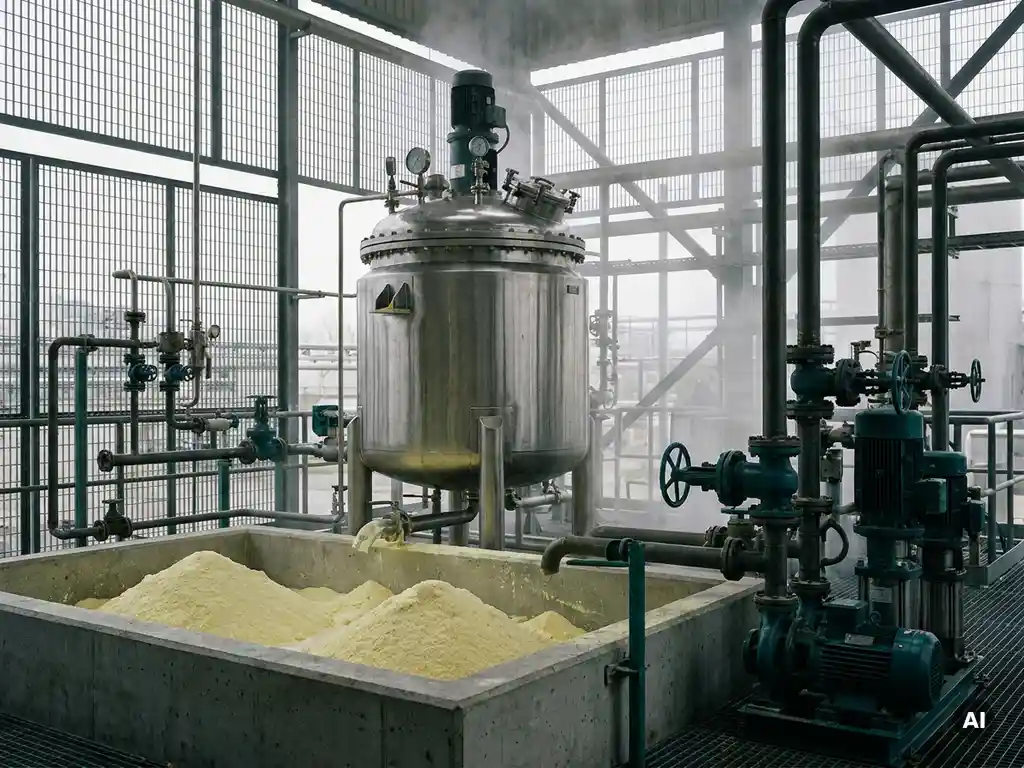
Integrating H₂S removal with sulfur recovery into a single process is one of the most effective ways to reduce operational complexity, cut costs, and meet environmental discharge standards simultaneously. Rather than treating gas desulfurization and sulfur handling as two separate challenges, a combined biological approach addresses both in one unit. If you are working through the specifics of your own project and want guidance tailored to your situation, feel free to get in touch with a specialist. This guide walks you through each stage of the integration process, from initial gas stream assessment through to ongoing operational optimization.
Assess Your Gas Stream Before Integration
Before selecting any equipment or process configuration, you need a clear picture of what your gas stream actually contains. Integration only works well when the process is matched to the real composition and flow characteristics of the feed gas. Skipping this step leads to undersized reactors, unstable biological activity, or insufficient sulfur recovery rates.
- Measure the H₂S concentration across the full operating range, not just at average conditions. Peak concentrations determine the sizing of your biological reactor.
- Record CO₂ content, as high CO₂ levels affect the alkalinity balance in the biological scrubbing liquid and influence how the bacteria perform.
- Document gas flow rate variability over a representative operating period, including low-load and high-load scenarios.
- Identify any co-contaminants such as hydrocarbons, ammonia, or trace metals that could inhibit bacterial activity or foul downstream equipment.
After completing this assessment, you should have a data sheet covering H₂S range, CO₂ content, flow variability, pressure, and temperature. This document becomes the input specification for every downstream design decision. If your gas stream falls outside typical parameters, note it clearly before moving to configuration selection.
Select the Right Process Configuration for Your Source
Not all gas sources behave the same way, and the integration layout needs to reflect where the gas is coming from. A direct wellhead feed behaves very differently from an amine unit tail gas, and the configuration you choose determines how stable and efficient the combined H₂S removal and sulfur recovery process will be.
For small to mid-scale sour gas streams, a biological desulfurization process that handles the feed directly from the source is often the most practical choice. This avoids the need for a separate amine absorption step and reduces the total number of process units. For amine unit off-gas or tail gas streams, the biological unit operates on a leaner feed, which simplifies liquid management but requires careful pH control. Review the range of applicable gas sources to confirm which configuration matches your stream type before finalizing the design basis.
At this stage, confirm whether your site requires continuous operation or can tolerate planned shutdowns for maintenance. This affects redundancy requirements and the sizing of buffer capacity within the integrated unit.
Design the Single-Unit Integration Layout
With your gas stream data and configuration selected, you can now design the physical layout of the integrated unit. The core principle of single-unit integration is that gas absorption and sulfur separation happen within the same system boundary, eliminating the intermediate handling steps that add cost and risk in conventional two-stage approaches.
Reactor and Scrubber Sizing
Size the biological reactor based on the peak H₂S load identified during assessment. The reactor must maintain a sufficient liquid volume and residence time to allow the sulfur-oxidizing bacteria to convert dissolved H₂S into elemental sulfur reliably. Undersizing at this stage is the most common cause of poor H₂S removal efficiency during commissioning.
Sulfur Separation and Handling
Design the sulfur separation stage to handle the expected sulfur production rate continuously. Elemental sulfur produced by the biological process is a non-hazardous solid that can be dewatered and recovered for agricultural use. Ensure the separation equipment is accessible for routine maintenance and that the sulfur discharge path is clear of bottlenecks.
- Specify the scrubbing liquid circulation rate to match the gas-to-liquid contact requirement for your H₂S concentration range.
- Include a caustic dosing system for pH control, with automated feedback based on continuous pH measurement in the reactor.
- Integrate an air supply system sized to provide the stoichiometric oxygen needed for sulfur oxidation, with a margin for control flexibility.
- Plan the sulfur slurry discharge and dewatering path before finalizing the layout, as this is often treated as an afterthought and causes problems during startup.
Commission and Stabilize the Biological Process
Commissioning a biological desulfurization unit requires more patience than commissioning a purely chemical process. The bacteria need time to establish a stable population at the correct density before the system reaches its design H₂S removal performance. Rushing this phase leads to inconsistent results and extended troubleshooting periods.
- Inoculate the reactor with an active bacterial culture sourced from a reliable supplier or from an existing operating unit.
- Start gas introduction at a reduced load, typically 20 to 30 percent of design flow, and increase gradually over several days as bacterial activity is confirmed by outlet H₂S measurements.
- Monitor pH daily during the first two weeks and adjust caustic dosing to maintain the target range for your bacterial strain.
- Check sulfur production visually and through slurry sampling to confirm that biological conversion is occurring rather than simple absorption without oxidation.
The system is considered stable when outlet H₂S remains consistently below the target specification across the full operating load range for at least five consecutive days. If you observe instability or poor removal during ramp-up, check air supply rate and pH before assuming a bacterial health issue, as both are more common causes of early-stage problems.
Verify Sulfur Recovery Output and Gas Quality
Once the biological process is stable, conduct a formal performance verification before declaring the unit operational. This step confirms that both objectives of the integration are being met: the treated gas meets the required H₂S specification, and the sulfur recovery rate is consistent with the design basis.
- Measure outlet H₂S concentration using a calibrated analyzer at multiple points across the operating load range.
- Quantify sulfur production by collecting and weighing dewatered sulfur over a defined period, then comparing this against the theoretical yield based on inlet H₂S load.
- Analyze the recovered sulfur for purity and moisture content to confirm it meets the quality standard required for its intended end use.
- Document all results against the design specification and note any gaps that require adjustment before full-load operation.
A well-integrated unit should achieve H₂S removal to below the target specification while recovering the majority of the sulfur input as usable elemental sulfur. If recovery is lower than expected, review the air-to-H₂S ratio in the reactor and check whether any sulfur is being lost to the treated gas stream as carry-over.
Optimize Ongoing Operations and Reduce Costs
The biological process is inherently self-regulating to a significant degree, but there are several operational levers that directly affect both performance and cost over the life of the unit. Systematic attention to these areas compounds into meaningful savings and reliability improvements over time.
Focus optimization efforts on three areas: air supply efficiency, nutrient consumption, and sulfur handling throughput. Air is typically the largest ongoing energy cost in a biological desulfurization unit. Calibrate your air supply to the actual H₂S load rather than running at a fixed rate, and use outlet oxygen measurements in the reactor off-gas to avoid over-aeration. Nutrient dosing can often be reduced once the bacterial population is fully established and the system is running steadily. For sites where sulfur handling is a bottleneck, increasing dewatering capacity or improving slurry pump reliability has a direct effect on uptime.
If you want to benchmark your current unit performance or explore whether your existing configuration could be improved, the process scan service provides a structured assessment of operational efficiency. Regular performance reviews, even simple ones based on your own operating data, help catch gradual drift before it becomes a significant problem. Consistent logging of inlet H₂S load, outlet concentration, sulfur production, and chemical consumption gives you the trend data needed to make informed adjustments rather than reactive ones.
Integrating H₂S removal with sulfur recovery in a single biological unit is a proven path to simpler operations, lower costs, and reliable compliance with gas quality requirements. Following the steps in this guide gives you a structured approach from initial assessment through to optimized long-term performance. To discuss your specific gas stream or project requirements, get in touch and we will help you find the right configuration.
Related Articles
- What are the hydrogen sulfide hazards in confined spaces?
- What is the difference between in-situ and ex-situ biogas desulfurization?
- How does hydrogen sulfide affect air quality near refineries?
- What is a fatal level of H2S?
- What to do after inhaling H2S?
This content was generated with the help of AI and it may contain mistakes
