

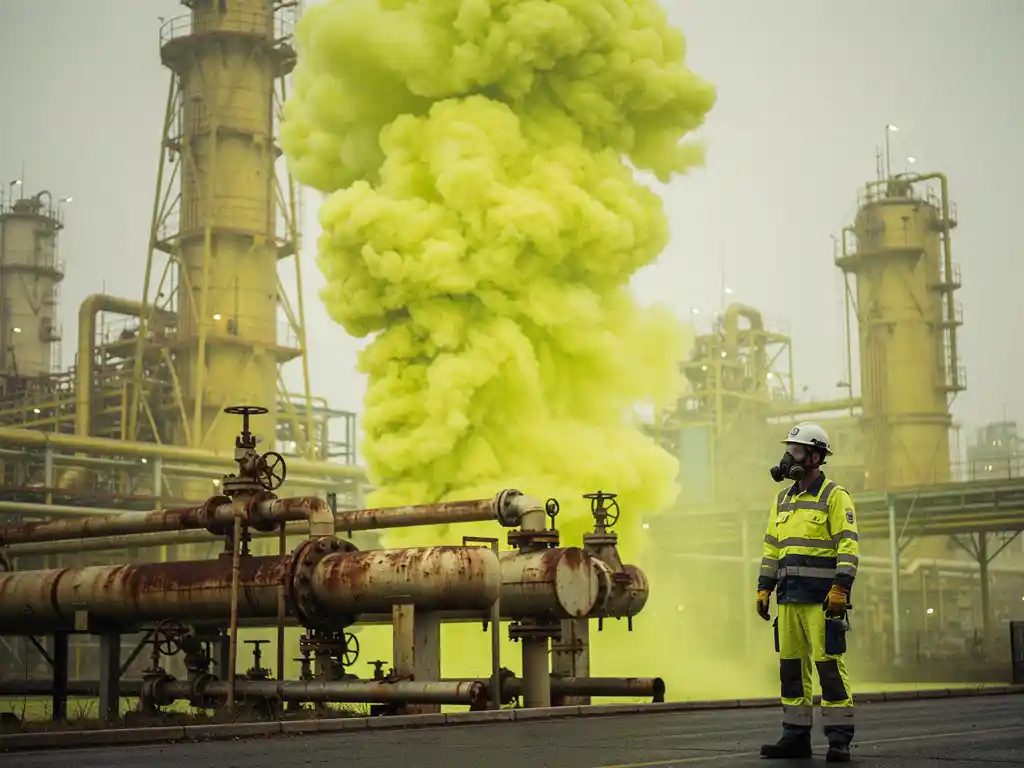
The main industrial sources of hydrogen sulfide are oil and gas processing, petroleum refining, natural gas treatment, wastewater treatment, and certain fermentation and biogas production processes. These industries either encounter H₂S as a naturally occurring contaminant in raw feedstocks or generate it as a byproduct of chemical and biological reactions. Understanding where hydrogen sulfide originates is essential for anyone working with gas treatment applications, and if you have questions about a specific process or source, feel free to get in touch with our specialists.
Which industries produce the most hydrogen sulfide?
The oil and gas industry is by far the largest industrial source of hydrogen sulfide, followed by petroleum refining, natural gas processing, wastewater treatment, and biogas production. Mining operations, paper and pulp manufacturing, and certain chemical plants also generate significant quantities of H₂S as a process byproduct or contaminant.
Hydrogen sulfide is produced wherever sulfur-containing compounds are subjected to heat, pressure, or microbial activity. In the oil and gas sector, raw natural gas and crude oil frequently contain dissolved H₂S that must be removed before the gas or liquid can be transported or used safely. In wastewater treatment and biogas production, anaerobic bacteria break down organic matter and sulfates, releasing hydrogen sulfide as a metabolic byproduct. Paper mills using the kraft process also generate H₂S during the cooking of wood pulp with sulfur-containing chemicals.
Across all these industries, the hydrogen sulfide hazards are the same: the gas is highly toxic, corrosive to metal infrastructure, and dangerous even at low concentrations. This is why H₂S detection, accurate H₂S measurement, and reliable removal systems are critical safety and operational requirements in every sector where it appears.
How does oil and gas processing generate H₂S?
Oil and gas processing generates hydrogen sulfide because crude oil and natural gas reservoirs naturally contain sulfur compounds, including H₂S dissolved directly in the gas or bound within heavier hydrocarbon molecules. When these raw streams are extracted and processed, the H₂S either emerges as free gas or is released during separation and heating stages.
Natural gas sourced from deep geological formations is frequently classified as sour gas when it contains elevated levels of H₂S. This sour gas must undergo gas sweetening before it can be distributed through pipelines, because pipeline specifications strictly limit hydrogen sulfide content to protect infrastructure from corrosion and to safeguard end users. The gas sweetening process typically uses amine-based absorption to strip H₂S from the gas stream, producing a concentrated acid gas that then requires further treatment or sulfur recovery.
In offshore and onshore production facilities, workers face direct hydrogen sulfide inhalation risks whenever they handle raw wellhead gas or work near processing equipment. The combination of high pressure, elevated temperature, and variable gas compositions makes H₂S detection and continuous H₂S measurement a non-negotiable operational requirement. A calibrated hydrogen sulfide detector or H₂S meter is standard personal protective equipment in these environments, and facilities maintain strict protocols around the H₂S threshold value that triggers evacuation or shutdown procedures.
Why does petroleum refining produce hydrogen sulfide?
Petroleum refining produces hydrogen sulfide primarily because crude oil contains organic sulfur compounds that break down into H₂S during high-temperature processing. Refinery processes such as hydrodesulfurization, hydrocracking, and catalytic cracking intentionally or incidentally cleave sulfur from hydrocarbon molecules, releasing it as hydrogen sulfide gas.
Hydrodesulfurization is the most significant source within a refinery. This process reacts sulfur-containing hydrocarbons with hydrogen at high temperatures and pressures over a catalyst, converting the organic sulfur into H₂S gas, which is then separated from the treated fuel stream. The resulting H₂S-rich gas stream, often called refinery fuel gas or acid gas, must be processed through a sulfur recovery unit to prevent it from being vented or flared.
The sulfur recovery step is both an environmental obligation and an economic opportunity. Recovering elemental sulfur from refinery H₂S streams prevents the release of sulfur dioxide, a significant air pollutant, and produces a saleable sulfur product used in fertilizer manufacturing. Refineries that handle high-sulfur crude oils face particularly large volumes of hydrogen sulfide and invest heavily in desulfurization capacity to meet fuel quality standards and environmental regulations.
What biological processes create hydrogen sulfide industrially?
Biologically generated hydrogen sulfide in industrial settings comes primarily from sulfate-reducing bacteria, which convert sulfate ions into H₂S under anaerobic conditions. This process occurs in wastewater treatment plants, biogas digesters, landfill gas systems, and any enclosed environment where organic material decomposes without oxygen.
Biogas production and H₂S
Biogas desulfurization is a major concern in anaerobic digestion systems because the same microorganisms that break down organic waste also reduce sulfate compounds present in the feedstock, producing hydrogen sulfide as a metabolic byproduct. The concentration of H₂S in biogas varies widely depending on feedstock composition, but it can reach levels that are both toxic to workers and damaging to engines and boilers that burn the biogas. Biogas cleaning and biogas upgrading processes must remove H₂S before the gas can be used as a fuel or injected into the gas grid.
Wastewater and sewer systems
In wastewater treatment, sulfate-reducing bacteria thrive in the anaerobic conditions found in sewer pipes, holding tanks, and digesters. The H₂S they produce corrodes concrete infrastructure, creates hydrogen sulfide odor complaints from nearby communities, and poses serious hydrogen sulfide poisoning risks to maintenance workers who enter confined spaces. Continuous H₂S monitoring and reliable hydrogen sulfide detectors are essential in these environments to protect workers and trigger ventilation systems before dangerous concentrations build up.
How is hydrogen sulfide removed and recovered from industrial gas streams?
Hydrogen sulfide is removed from industrial gas streams through processes including amine gas treating, physical absorption, membrane separation, and biological desulfurization. The right method depends on the H₂S concentration, gas flow rate, and whether sulfur recovery is required alongside removal.
Amine-based gas sweetening is the most widely used approach for large-scale sour gas treatment, absorbing H₂S into a liquid amine solution that is then regenerated to release a concentrated acid gas stream. This acid gas is typically fed into a Claus sulfur recovery unit, which converts H₂S into elemental sulfur through a series of thermal and catalytic reactions. The Claus process is effective at scale but requires significant capital investment and careful management of tail gas emissions.
For smaller and medium-sized gas streams, or for streams with challenging compositions, biological desulfurization offers a compelling alternative. The THIOPAQ O&G technology developed by Paqell integrates gas desulfurization and sulfur recovery into a single unit using naturally occurring, self-regulating bacteria. These microorganisms convert H₂S into solid elemental sulfur under mild operating conditions, without the need for hazardous chemicals. The resulting sulfur product is suitable for agricultural use, and the process delivers high sulfur recovery rates at lower capital and operating costs than conventional approaches. You can scan your gas stream to assess whether biological desulfurization is suitable for your application.
Regardless of the removal method chosen, accurate H₂S measurement before and after treatment is essential to verify process performance, protect downstream equipment, and demonstrate compliance with emissions standards. Selecting the right combination of H₂S detection, desulfurization, and sulfur recovery technologies depends on the specific industrial context, and our team is ready to help you evaluate your options. Get in touch to discuss your gas treatment challenge.
Frequently Asked Questions
What is the difference between 'sour gas' and 'acid gas,' and why does it matter for H₂S treatment?
Sour gas refers to natural gas containing hydrogen sulfide before treatment, while acid gas is the concentrated H₂S-rich stream separated out during the gas sweetening process. The distinction matters because they require different handling and treatment strategies: sour gas undergoes desulfurization to meet pipeline specifications, whereas the resulting acid gas must then be processed through a sulfur recovery unit such as a Claus plant or a biological desulfurization system to prevent harmful emissions and recover usable sulfur.
How do I know which H₂S removal technology is right for my specific gas stream?
The best technology depends on several key factors: the H₂S concentration in your gas stream, the total gas flow rate, the presence of other contaminants such as CO₂ or hydrocarbons, and whether you need to recover elemental sulfur as a usable product. For large, high-concentration streams, amine-based sweetening combined with a Claus unit is a proven choice, while biological desulfurization with technologies like THIOPAQ Ou0026G is often more cost-effective and operationally simpler for small to medium streams. Using a stream assessment tool or consulting with a gas treatment specialist is the most reliable way to match the right solution to your process conditions.
What are the most common mistakes operators make when managing H₂S in industrial facilities?
One of the most frequent mistakes is relying on smell as an early warning system — hydrogen sulfide actually deadens the sense of smell at concentrations well below immediately dangerous levels, making odor an unreliable and dangerous indicator. Another common error is under-investing in continuous H₂S monitoring, particularly in confined spaces and low-lying areas where the gas can accumulate undetected. Operators also sometimes neglect to regularly calibrate their H₂S detectors, which can lead to false readings and either unnecessary shutdowns or, more dangerously, missed hazard alerts.
Can hydrogen sulfide concentrations in biogas vary enough to cause problems for downstream equipment, even after treatment?
Yes — H₂S concentrations in biogas can fluctuate significantly depending on changes in feedstock composition, temperature, and microbial activity, meaning that a treatment system calibrated for average conditions may occasionally allow breakthrough concentrations to reach downstream engines, boilers, or gas upgrading equipment. Even relatively low residual H₂S levels can cause accelerated corrosion of metal components and catalyst poisoning in upgrading systems over time. Continuous post-treatment H₂S measurement is therefore essential to detect these fluctuations early and protect equipment before costly damage occurs.
What happens to the elemental sulfur recovered from industrial H₂S treatment processes?
Recovered elemental sulfur is a commercially valuable product with well-established end markets, most notably in the production of sulfuric acid and in the fertilizer industry, where it is used directly as a soil amendment or converted into ammonium sulfate. Sulfur recovered through biological desulfurization processes like THIOPAQ Ou0026G is particularly well-suited for agricultural applications due to its fine particle size and high purity. Rather than being a waste disposal challenge, effective sulfur recovery turns an unavoidable process byproduct into a revenue-generating or cost-offsetting output.
Are there regulatory limits on how much H₂S industrial facilities are allowed to emit?
Yes, hydrogen sulfide emissions are regulated in most jurisdictions through a combination of occupational health and safety standards, air quality regulations, and pipeline gas quality specifications. Occupational exposure limits typically set a ceiling on the concentration workers can be exposed to over a shift, while environmental regulations may cap the amount of H₂S or sulfur dioxide that can be released into the atmosphere from process vents or flares. Pipeline operators also enforce strict H₂S content limits — often in the single-digit parts-per-million range — meaning that gas failing to meet these specifications cannot legally enter the distribution network.
What steps should a facility take when first implementing an H₂S monitoring and removal program?
The first step is a thorough characterization of your gas streams — measuring H₂S concentrations, flow rates, and the presence of other compounds — so that both the safety monitoring and the removal technology can be correctly sized and specified. From there, facilities should map all confined spaces and high-risk areas where H₂S can accumulate, install fixed continuous monitors at critical points, and ensure all personnel working near potential sources are equipped with calibrated personal H₂S detectors and trained in emergency response procedures. Finally, selecting and commissioning the right desulfurization technology, backed by ongoing measurement to verify performance, completes a robust program that addresses both worker safety and process compliance.
Related Articles
- What are the capital costs of sour gas treatment installations?
- How does H2S affect the human body?
- What are the hydrogen sulfide symptoms that workers often mistake for other conditions?
- What industries are most at risk for H2S exposure?
- What questions should you ask before investing in a gas desulfurization system?
This content was generated with the help of AI and it may contain mistakes
